h.höschen 1919






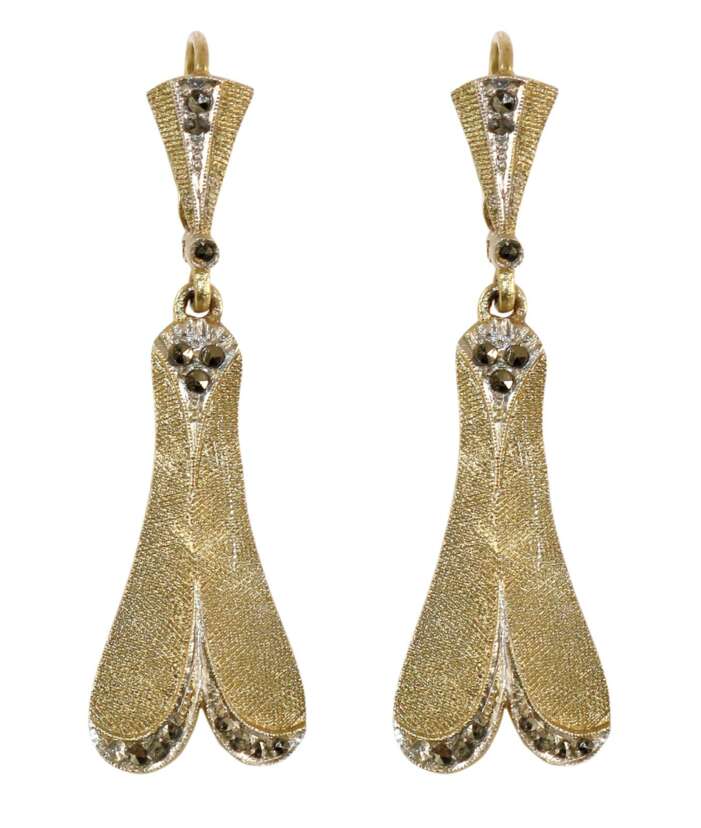
Theodor Fahrner stands out as a pioneering jewelry designer hailing from Pforzheim, Germany. Renowned for his exquisite Art Nouveau and Jugendstil creations, Fahrner's legacy extends beyond his lifetime. His pieces, known for their affordability, became synonymous with impeccable craftsmanship and unique design. Taking the reins of his father's ring factory after his passing in 1883, Fahrner swiftly rose to prominence. By 1895, he was the sole proprietor, venturing into innovative territories by registering patents and utility models during the upheaval leading up to the 20th century. Fahrner's breakthrough moment arrived at the 1900 Paris World Exposition, where his jewelry, designed by Max J. Gradl, earned a prestigious silver medal.
As the years progressed, Fahrner's design prowess flourished. From 1899 to 1906, he primarily undertook design work himself, infusing each piece with his artistic vision. Collaborations with designers such as Maria Obrich, Patriz Huber, and Ludwig Knupper later defined the firm's trajectory. The brand's focus shifted towards affordable yet elegant Art Deco jewelry, solidifying an international reputation. Fahrner's life journey concluded on July 22, 1919, leaving behind a rich heritage and two daughters, Vera and Yella. His legacy endured as jeweler Gustav Braendle acquired the Fahrner brand, passing it on under the name Bijouteriewarenfabrik Gustav Braendle, while the distinctive label "Fahrnerschmuck" continued to grace exquisite creations.


Theodor Fahrner stands out as a pioneering jewelry designer hailing from Pforzheim, Germany. Renowned for his exquisite Art Nouveau and Jugendstil creations, Fahrner's legacy extends beyond his lifetime. His pieces, known for their affordability, became synonymous with impeccable craftsmanship and unique design. Taking the reins of his father's ring factory after his passing in 1883, Fahrner swiftly rose to prominence. By 1895, he was the sole proprietor, venturing into innovative territories by registering patents and utility models during the upheaval leading up to the 20th century. Fahrner's breakthrough moment arrived at the 1900 Paris World Exposition, where his jewelry, designed by Max J. Gradl, earned a prestigious silver medal.
As the years progressed, Fahrner's design prowess flourished. From 1899 to 1906, he primarily undertook design work himself, infusing each piece with his artistic vision. Collaborations with designers such as Maria Obrich, Patriz Huber, and Ludwig Knupper later defined the firm's trajectory. The brand's focus shifted towards affordable yet elegant Art Deco jewelry, solidifying an international reputation. Fahrner's life journey concluded on July 22, 1919, leaving behind a rich heritage and two daughters, Vera and Yella. His legacy endured as jeweler Gustav Braendle acquired the Fahrner brand, passing it on under the name Bijouteriewarenfabrik Gustav Braendle, while the distinctive label "Fahrnerschmuck" continued to grace exquisite creations.




Jacob Nöbbe was a German painter.
He was based in Flensburg and was recognised as a portrait painter. As a drawing teacher, he privately taught the young Emil Hansen, who later became famous under the name Emil Nolde.












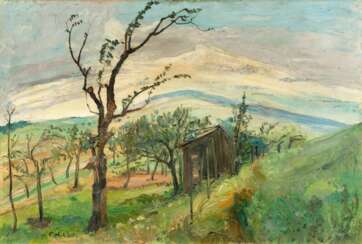

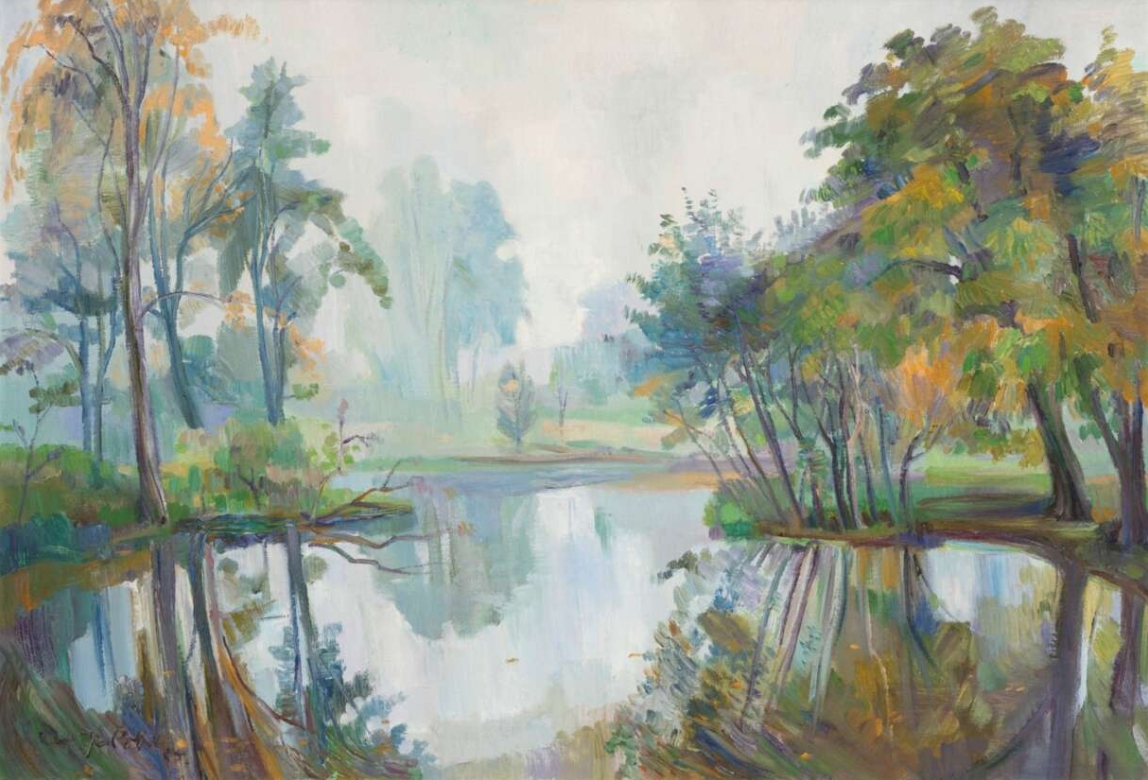
Karl Peter Röhl was a German painter and graphic artist.













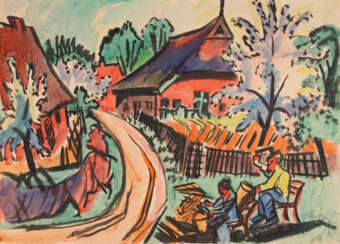

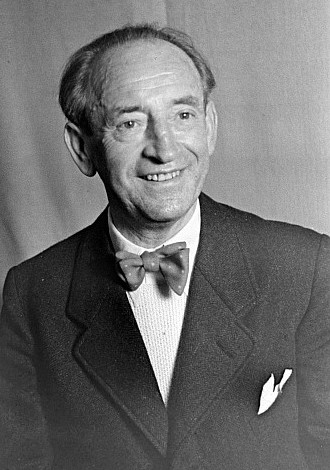
Max Pechstein, a German Expressionist painter and printmaker, was a significant figure in the art world known for his vibrant use of color and dynamic compositions. Born in Zwickau in 1881, Pechstein's journey into the realms of expressionism began with his training as a decorator's apprentice before moving to Dresden to further his studies at the Kunstgewerbeschule. His career took a pivotal turn in 1906 when he met Erich Heckel and joined the Die Brücke group, alongside other notable artists such as Ernst Ludwig Kirchner and Karl Schmidt-Rottluff, which marked the beginning of his foray into revolutionary art and expressionism.
Pechstein's art was not just confined to painting; he was also a master printmaker, with a prolific output that included 421 lithographs, 315 woodcuts and linocuts, and 165 intaglio prints, predominantly etchings. His works often depicted scenes from nature, social gatherings, and elements of primitive art, reflecting his interest in the raw and unrefined aspects of culture and humanity. This diverse body of work was recognized for its bold innovation and unique perspective, which significantly contributed to the expressionist movement.
The Nazis' rise to power in 1933 had a profound impact on Pechstein's career. His works were deemed degenerate, and he faced severe repression, including the removal of 326 of his paintings from German museums and his dismissal from his teaching position at the Preussische Akademie der Künste. Despite these challenges, Pechstein's legacy endured, and after World War II, he was reinstated to his teaching post and received numerous accolades for his contributions to art.
Pechstein's works are held in high esteem in museums and galleries worldwide. Notably, his etchings, which depicted the grim realities of war, are housed in the Imperial War Museum in London, showcasing his ability to convey profound emotional and psychological experiences through art. Additionally, his painting "Summer in Nidden," which captures the idyllic beauty of the Baltic coast, is part of the collection at the Museo Nacional Thyssen-Bornemisza in Madrid, illustrating his love for natural landscapes and vibrant, expressive use of color.
For collectors and experts in art and antiques, Hermann Max Pechstein's works offer a fascinating glimpse into the early 20th-century expressionist movement, characterized by a bold exploration of color, form, and social commentary. His contributions to modern art are invaluable, providing insight into the cultural and historical context of his time.
To stay informed about new product sales and auction events related to Hermann Max Pechstein, we invite you to sign up for updates. This subscription will ensure that you are the first to know about opportunities to acquire works by this influential artist, allowing you to add to your collection of significant expressionist art.