

Artists Fauvism
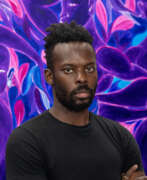

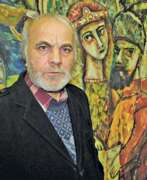

Vladimir Ivanovich Akulov (Russian: Владимир Иванович Акулов) is a Soviet and contemporary Belarusian artist. He is known as a painter, graphic artist and teacher, a representative of the second wave of Belarusian avant-garde.
Vladimir Akulov in his work has developed a unique style under the influence of expressionism, cubism, primitivism, fauvism. He is a master of portrait, landscape, still life, compositions with symbolic and allegorical subjects, illustrations of literary works. During his career the artist created several cycles of portraits, including those of famous people.
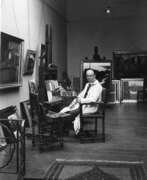

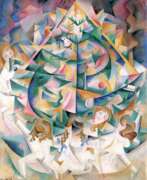


Roger Bezombes was a 20th century French painter, sculptor, medallist and designer. He studied in Paris at the École des Beaux-Arts and was greatly influenced by his friendship with Maurice Denis. Bezomb worked mainly as a painter, adopting Henri Matisse's rich colours in landscapes and figures, often based on observations of 'exotic' cultures, particularly those of the Mediterranean and North Africa.
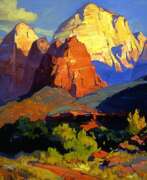


Camille Bombois was a French painter known for his colorful depictions of rural life and everyday scenes.
Bombois began painting as a hobby, but his talent was quickly recognized, and he soon became a professional artist. He was largely self-taught and developed his own unique style, characterized by bold, bright colors and a loose, expressive brushwork.
Bombois was influenced by the Fauvist movement, which was known for its use of vibrant colors and bold, simplified forms. He also drew inspiration from the rustic landscapes and working-class people he encountered in his daily life.
Bombois's paintings often depicted scenes of rural life. He also painted portraits and still lifes.
Bombois exhibited his work at the Salon d'Automne and the Salon des Indépendants in Paris, and his work was well-received by critics and collectors. He was awarded the Legion of Honor in 1953.
Bombois continued to paint throughout his life, and his work is held in many major collections, including the Musée d'Orsay in Paris and the Hermitage Museum in St. Petersburg, Russia.


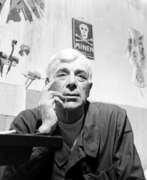

Georges Braque, a French artist, is celebrated as a pivotal figure in the development of Cubism, alongside Pablo Picasso. Braque's artistic journey transitioned from Impressionism to Fauvism before he delved into the groundbreaking realm of Cubism, characterized by its innovative use of perspective and geometric forms. His partnership with Picasso during the early 20th century marked a significant phase in art history, as they collectively pioneered the Analytic and Synthetic phases of Cubism.
Georges Braque's oeuvre is renowned for its technical precision, introspective quality, and harmonious color palettes. His contributions extended beyond painting to include sculpture and collage, demonstrating his versatile mastery over various mediums. Notable works like "Violin and Candlestick" and "Man with a Guitar" underscore his talent in transforming everyday objects into abstracted, multifaceted compositions.
Throughout his career, Georges Braque remained deeply committed to exploring the boundaries of visual perception and form. After World War I, his style evolved, incorporating brighter colors and new themes, yet he maintained a steadfast adherence to Cubist principles. His later years saw a focus on personal motifs, such as birds, which symbolized freedom and dynamism in his art.
Georges Braque's legacy is preserved in prestigious collections worldwide, including the Museum of Modern Art (MoMA), which houses a significant number of his works. His artistic innovations continue to inspire and influence the realms of art and culture.
For collectors and art enthusiasts, Georges Braque's work offers a profound insight into the evolution of modern art and the enduring allure of Cubism. His pieces are a testament to the enduring power of creativity and innovation in the face of changing artistic landscapes.
If you're keen on exploring Braque's contributions to art and wish to stay updated on exhibitions and sales featuring his work, consider subscribing for updates on Georges Braque's pieces and their presence in the art market today.


Anselmo Bucci was an Italian painter, printmaker, writer and one of the founders of the Neoclassical trend in Italian art in the early 20th century, the Novecento.
Anselmo Bucci studied painting in Venice and the Brera Academy in Milan. From 1906 to 1914, he lived in Paris where he joined the Groupe libre, a group of artists who accepted a departure from academic canons, but did not share the ideas of avant-gardism.
Anselmo Bucci is a modernist painter, symbolist with strong Fauvist features. Created a number of monumental works, as well as small paintings of a lyrical nature.
Along with painting, he was actively engaged in literary activities. In 1930 he was one of the first recipients of the prestigious Viareggio literary prize.
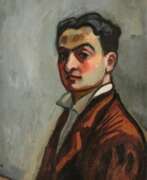

Charles Camoin, a French expressionist landscape painter, was a prominent figure associated with the Fauvism movement. Born in Marseille, France, on September 23, 1879, Camoin's journey into the art world began at a young age, leading him to Paris where he joined Gustave Moreau's class at the École des Beaux-Arts. It was here that he met Henri Matisse and other artists who would form the nucleus of the Fauve group, a circle known for their wild, expressionist-like use of color, which earned them the moniker "the wild beasts".
Camoin's art is celebrated for its vibrant color palette and expressive landscapes, a testament to his association with the Fauvists. Despite this, his work displayed a chromatic moderation, attributed to his intuitive and non-systematic approach to fauvism, setting him apart from his contemporaries. His masterpiece, the Portrait of Albert Marquet, epitomizes Camoin's unique style and is considered a pivotal piece of his oeuvre.
Throughout his career, Camoin's works were widely exhibited, earning him a place in major French collections, including the Musée d'Art Moderne de la ville de Paris and the Centre Georges Pompidou. Notably, his contributions to art were recognized with the Prix du Président de la République at the Biennale of Menton in 1955. His legacy includes a significant body of work that remains influential in the study of Fauvism and early 20th-century French art. Camoin passed away in Paris on May 20, 1965, leaving behind a rich legacy that continues to inspire art enthusiasts and collectors alike.
For collectors and experts in art and antiques, Camoin's work represents not only a pivotal moment in the evolution of modern art but also an opportunity to engage with the vibrant and emotive expressions of Fauvism. His paintings, characterized by a joyful and luminous use of color, offer a captivating glimpse into the artist's perception of the world around him.
If you're interested in staying updated on new discoveries, sales, and auction events related to Charles Camoin, signing up for updates can be a valuable resource. This ensures you're informed about the latest opportunities to acquire works by this remarkable artist, enhancing your collection with pieces that embody the spirit and innovation of early 20th-century art.
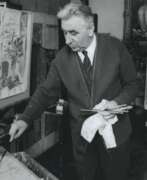

Jules Cavailles was a French painter.
He started as a technical draughtsman. In 1925 he enrolled at the Académie Julian and he began exhibiting at the various Parisian Salons from 1928 – the Société des Artistes Français, Société des Artistes Indépendants and Salon d'Automne. He was soon invited to participate at the Salon des Tuileries and in 1936 he organised the 14th exhibition of the Artistes de ce temps in the Petit-Palais. In the same year he received the prestigious Grant Blumenthal and he was soon awarded the commission to decorate the Pavilion of Languedoc for the Exposition Universelle. He was part of a group of artists called “La Realite Poetique”. His artistic style is characterised by the juxtaposition of pure colour, derived from an interpretation of fauvist painting which was less interested in the early Fauve artists’ search for intensity and dynamism than a simple expression of ‘joie de vivre’.
He worked in oils, gouache, and pastel, and his subject matter featured figures, portraits, nudes, still lifes, flowers, landscapes, and animals. His work is represented in many leading collections and museums, including the Modern Art Museum in Paris, and the museums in Toulouse, Albi, Marseilles, Chicago, and Helsinki.
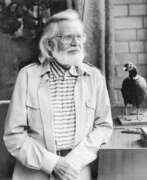

Jonas Čeponis was a Lithuanian painter and representative of the Fauvism movement.
Čeponis graduated from the Lithuanian Art Institute and the Vilnius Institute of Engineering Construction, and was a professor at the Lithuanian Art Institute. Influenced by Fauvism, the artist mainly painted expressive landscapes of Lithuanian villages and Vilnius. His paintings are characterized by decorative, contrasting color combinations. Čeponis also painted portraits, still lifes, figurative compositions and nudes.
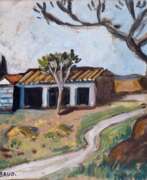

Auguste Chabaud was a French painter and sculptor. At the age of fourteen Chabaud joined the Ecole des Beaux-Arts in Avignon. In 1899 he went to Paris to continue his artistic training at the Academie Julian and the Ecole des Beaux Arts. There he met Henri Matisse and André Derain. In 1900 he returned to his parents' vineyard in southern France. In 1901, he was forced to leave Paris again in order to secure his livelihood. He worked on a ship and got to know the West African coast. In the following years he became acquainted with the Parisian nightlife. In the Paris neighborhood Montmartre, where he had his studio, he painted various scenes of Parisian life. Chabaud's Cubist phase began in 1911, where he also began sculpting. In the following years he had many exhibitions, including 1913 in New York, where his works were exhibited alongside those of artists such as Matisse, Derain, Vlaminck and Picasso. After his return from the first World War Chabaud settled down in Graveson. From 1920 he had his "blue period". He used the Prussian Blue as the only color in his works. From then, he focused exclusively on the south of France. He painted scenes of rural life, the farmers, and the hills and trails of the Alpilles. In 1992, the Regional Council of Provence-Alpes-Côte d'Azur opened the Musée Auguste Chabaud in his honor.


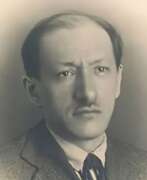
Jacques (Ya'akov) Chapiro was a painter of the School of Paris.
Chapiro's works can be found in museums in the United States (Chicago), Russia (Moscow) and France (Jeu de Paume, Paris). As to his artistic style, it seems that Chapiro was fond of experiments. His many paintings are much different from one another; some are classified as Cubistic in style, some as Impressionist and others as Fauvist. Throughout his artistic career, Chapiro kept sketching in his unique signature, with a light and talented hand. It is in his realistic sketching, which are somewhat casual, that one can be truly impressed by his talent.
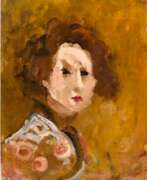



Giuseppe Cominetti was an Italian painter of the divisionist movement. He studied painting in Turin and also attended the Academy of Fine Arts in Milan.
His paintings by Giuseppe Cominetti are a mixture of symbolism and divisionism. He participated in the Promotrice of Genoa from 1903 to 1912. In 1909 he moved to Paris and exhibited at the Salon d'Autumn and signed Filippo Marinetti's Manifesto for Futurism. His painting was later influenced by Fauvism and Futurism.
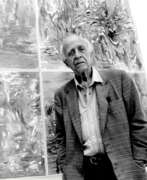

Antonio Corpora was a Tunisian born Italian painter who followed the Tachisme style of Abstract art.
In the 1930s, Corpora's style was abstract and geometric, heavily influenced by Cubism and Fauvism. His work later shifted more towards abstract expressionism.


Leon de Smet was a Belgian painter who is known for his contributions to the development of Fauvism and Post-Impressionism. He was studied at the Academy of Fine Arts in Ghent before moving to Paris to further his artistic education.
De Smet's early work was heavily influenced by the Impressionist movement, but he soon became interested in the use of bold colors and expressive brushstrokes that were characteristic of the Fauvist style. His paintings often featured rural landscapes, still lifes, and portraits, and he was known for his ability to capture the fleeting effects of light and color in his scenes.
During World War I, de Smet returned to Belgium and began to focus more on still lifes and interiors. His style became more subdued and introspective, reflecting the difficult conditions of the war years. In the 1920s and 30s, he returned to the use of bright colors and bold brushstrokes, and his work continued to evolve throughout his career.
His work continues to be celebrated for its contribution to the development of modern art in Belgium and beyond, and his paintings are highly valued by collectors and art enthusiasts around the world.
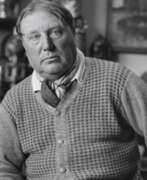

Maurice de Vlaminck was a French artist renowned for his vibrant use of color and contribution to the Fauvist movement. Born in Paris in 1876, Vlaminck's early work was marked by a passionate application of paint and a bold palette, drawing inspiration from Vincent van Gogh and Henri Matisse. His participation in the 1905 Salon d'Automne, alongside other Fauvist painters, was met with critical disdain, leading to the term "fauves" (wild beasts) being coined to describe their unorthodox use of intense color.
Vlaminck's career was characterized by a continuous exploration of color and form. Early on, he depicted scenes of daily life, landscapes, and portraits, imbuing them with a sense of motion through his dynamic brushwork. Notable works from this period include "Sur le zinc" (At the Bar) and "L'homme a la pipe" (Man Smoking a Pipe), which highlighted his departure from traditional portraiture and landscapes towards more expressive and mood-driven compositions. His landscapes, in particular, showcased a disregard for detail in favor of conveying atmosphere, a technique that was revolutionary at the time.
Throughout his life, Vlaminck's style evolved, showing influences from Post-Impressionism and later, a more monochromatic palette reminiscent of Paul Cézanne. Despite this evolution, he maintained a critical stance towards Cubism and its leading figure, Pablo Picasso, believing that Cubism had led French painting into a "wretched dead end". In his later years, Vlaminck's work adopted a darker palette and more naturalistic style, moving away from the Fauvist emphasis on color to explore the dramatic and expressive potential of landscapes and seascapes.
Vlaminck's impact on modern art is undeniable. His works are held in prestigious collections worldwide, including the Hermitage Museum in Saint Petersburg and the Minneapolis Institute of Art, attesting to his enduring influence and the continued fascination with his bold, expressive approach to painting.
For collectors and experts in art and antiques, Vlaminck's oeuvre represents a pivotal moment in the history of modern art, where the emotional intensity and visual impact of color were explored as never before. To stay informed on new product sales and auction events related to Maurice de Vlaminck, signing up for updates is recommended, offering exclusive insights into the vibrant world of Fauvism and modernist painting.
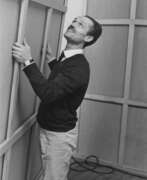

Jean Degottex was a French painter and a pioneer of lyrical abstraction.
Self-taught, in the army in Tunisia and Algeria when he was in his early 20s, Jean painted his first figurative paintings influenced by Fauvism. In 1951, Degottex was awarded the Kandinsky Prize, and from 1954 he began to paint in the style of gesture abstraction. He was also particularly inspired by East Asian calligraphy and Zen philosophy.
Degottex painted large-scale works, often in series, and in the 1970s began experimenting with paper art, folding and tearing paper. His work has always been characterized by extreme minimalism, and the artist meditates for a long time before starting to draw.
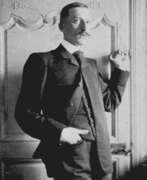

André Derain was a French artist, renowned as a painter, sculptor, and a pivotal figure in the development of Fauvism alongside Henri Matisse. Born on June 10, 1880, in Chatou, Yvelines, just outside Paris, Derain's artistic journey began in his youth. Despite initially studying to become an engineer, his passion for art led him to the Académie Julian and to acquaintances with notable artists like Matisse and Maurice de Vlaminck.
Derain's work, especially his paintings, is celebrated for its vibrant, expressive use of color and innovative compositions. His contributions to Fauvism, a movement characterized by the use of bold, non-naturalistic colors, marked a significant shift in the art world. The Fauvist period, particularly his collaboration with Matisse in the summer of 1905 in Collioure, culminated in works that were distinguished by their startling hues and wild brushwork, earning them the nickname "the wild beasts" or "les Fauves."
A notable period in Derain's career was his time in London in 1906, commissioned by art dealer Ambroise Vollard. His London series, including views of the Thames and Tower Bridge, are celebrated for their unique perspective and use of color, differing significantly from the traditional depictions of the city by artists like Whistler or Monet. These works stand out for their Pointillist influence and the effective conveyance of light and movement.
Derain's artistic evolution continued as he experimented with Cubism and was influenced by African art, as seen in his primitivist woodcuts for Guillaume Apollinaire's book "L'enchanteur pourrissant" (1909). His career, however, was not without controversy, particularly during World War II, when he was perceived as a collaborator due to his interactions with the Germans.
Despite the challenges and transformations in his career, André Derain left an indelible mark on the art world. His works are held in prestigious collections worldwide, including the Musée Cantini in Marseille and the Musée d'art moderne de Troyes. Derain's contribution to modern art, particularly through Fauvism, remains a subject of admiration and study among art collectors and experts.
If you're captivated by the artistic journey and pioneering spirit of André Derain, don't miss the opportunity to stay updated on his legacy. Sign up now to receive exclusive alerts on new product sales and auction events related to André Derain's work. Embrace your passion for art and culture, and ensure you're always informed about the latest offerings and unique pieces linked to this iconic artist.
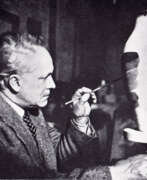

Raoul Dufy, a renowned French artist, is celebrated for his vibrant and decorative style, which left a significant mark in the realms of Fauvism and Post-Impressionism. Born in 1877 in Le Havre, France, Dufy's artistic journey was profoundly influenced by Henri Matisse's Fauvist work "Luxe, Calme et Volupté," which he encountered at the Salon des Indépendants in 1905. This experience steered him towards Fauvism, a style that emphasized bold contours and bright colors.
Dufy's artistic evolution saw him briefly embrace Cubism around 1920, after which he developed a unique approach. This approach, often referred to as stenographic, was characterized by skeletal structures, foreshortened perspectives, and the use of thin, quickly applied washes of color. His works, known for their cheerful and fashionably decorative nature, often depicted scenes of leisure like yachting, the French Riviera, and chic parties, capturing the essence of the period's optimism.
In addition to his painting, Dufy was also a commercial artist, illustrator, and designer, contributing significantly to textile design and public murals. His large-scale public art commissions combined modern and allegorical subjects with exuberant outlines and intense colors, showcasing a modernist take on traditional mural work. Notable works by Dufy include "The Regatta," "The Harvester," and the monumental "The Electricity Fairy," a large mural commissioned for the 1937 World's Fair in Paris.
His works are housed in prestigious public collections worldwide, including the Art Institute of Chicago, the Musée d'Art Moderne de Paris, and the National Gallery of Art in Washington, D.C. Despite his artistic achievements, Dufy's focus on decorative art and the lack of engagement with wider social concerns has led to a varied critical reception of his work. Nonetheless, his contribution to 20th-century art, particularly in popularizing a vibrant and illustrative style, remains undisputed.
If Raoul Dufy's artistry captivates you and you wish to stay informed about the latest artworks, exhibitions, and auction events related to this remarkable artist, we invite you to sign up for our updates. By subscribing, you'll receive timely notifications about new pieces for sale and upcoming auctions. This is a wonderful opportunity for collectors and art enthusiasts to enhance their appreciation and possibly their collections of Dufy's work. Stay connected with the world of art and don't miss any chance to acquire unique pieces by this celebrated artist.
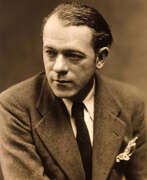

Jean Dufy was a French painter of the late 19th century and the first half of the 20th century. He is known as a painter and designer who worked in various styles, including Cubism and Fauvism. Contemporaries appreciated Dufy's talent as a colorist who constantly experimented with colors, finding inspiration, in particular, in jazz music.
Jean Dufy preferred to depict life in Paris in his oil and watercolor paintings. One of his favorite subjects was the spectacle, especially the circus. Dufy was also in demand as a designer. For 30 years he designed porcelain and in 1925 at the International Exhibition of Decorative Arts, Dufy was awarded the gold medal for his design of the porcelain service Chateaux of France. Jean Dufy also helped his brother Raoul Dufy create a 600 square meter fresco for the Electricity Pavilion at the 1937 World Fair in Paris.
Jean Dufy's work was exhibited in prestigious museums and galleries throughout his career. Today his paintings are in the public collections of the Museum of Modern Art in New York, the Pompidou Center in Paris, the Albertina Gallery in Vienna and other world art centers.
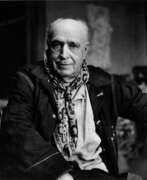

André Albert Marie Dunoyer de Segonzac was a French painter, graphic artist and illustrator known for his contribution to the Post-Impressionist and Fauvist movements.
Dunoyer de Segonzac's style was defined by his bold use of colour, his expressive brushwork, and his desire to capture the essence of the subject. In his work, he explored a variety of subjects, including landscapes, still lifes and scenes of everyday life. His paintings often displayed a sense of vitality and energy, with vibrant hues and dynamic compositions. The master often used intense hues to evoke an emotional response. His palette was characterised by a bold and expressive use of colour, giving his works a sense of vibrancy and dynamism.
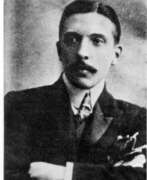

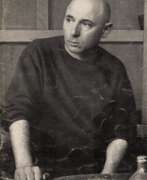

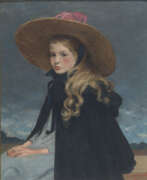

Henri-Jacques-Edouard Evenepoel was a Belgian artist whose most important works are associated with Fauvism. The artist debuted a portrait of his cousin (Louise in Mourning) at the 1894 Salon des Artistes Français. He showed four portraits at the Salon du Champ-de-Mars in 1895 and continued to exhibit there until his death. His first solo exhibition came at the Brussels Cercle Artistique (December 1897 – January 1898). Family and friends were the artist's preferred subjects; his full-length portraits, often against a neutral background, show the influence of Édouard Manet and James Abbott McNeill Whistler. His Parisian scenes were influenced by Henri de Toulouse-Lautrec and Jean-Louis Forain. Though his early scenes had a somber palette, his paintings while in Algeria (where he first wintered during his solo exhibition) were very different in style, anticipating the bold colours of Fauvism (e.g., Orange Market, Blidah).
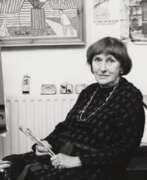

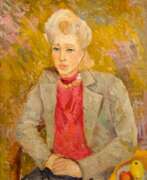


Othon Friesz was a French artist, pivotal in the Fauvism movement, celebrated for his vivid use of color and dynamic composition. Born in Le Havre, his artistic journey began under the guidance of Charles Lhuillier, which deeply influenced his foundational style. Initially, Friesz experimented with the luminous palette of Fauvism, creating works alongside contemporaries like Henri Matisse and André Derain. His Fauvist period was marked by bold, unmodulated colors aimed at capturing the emotional effect of a scene rather than its realistic depiction.
However, the later years of his career saw a significant shift in his artistic approach. Moving away from the Fauvist style, Friesz embraced a more classical and structured composition, drawing inspiration from the likes of Poussin, Chardin, and Corot. This transition reflected his respect for Cézanne's principles of logical composition and simple tonality. Despite this evolution, his work retained a baroque vitality, particularly in his landscapes, still lifes, and figure paintings, where the careful arrangement of planes and volumes spoke of his deep understanding of spatial relationships.
Friesz's oeuvre is a testament to his versatility and ability to adapt and evolve his style while remaining rooted in classical traditions. His works, spanning from vibrant Fauvist landscapes to more restrained classical compositions, are housed in prestigious collections and museums worldwide, offering a comprehensive view of his artistic development.
For art collectors and enthusiasts, Friesz's body of work offers a unique insight into the early 20th-century European art scene, particularly the transition from avant-garde movements like Fauvism to more traditional approaches. His paintings not only reflect his personal artistic journey but also the broader shifts in art history during his lifetime.
To stay informed on new product sales and auction events related to Othon Friesz, signing up for updates can be a valuable resource. This subscription ensures that collectors and experts in art and antiques are always in the know regarding opportunities to acquire works by this influential artist.
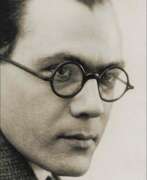

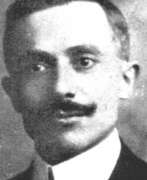

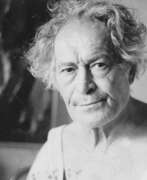


Ida Gerhardi was a German artist of the late nineteenth and early twentieth centuries. She is known as a painter, representative of classical modernism.
Ida Gerhardi at the beginning of her career worked mainly in the genre of landscape, was an adherent of the Barbizon school of painting. Later she began to specialize in portraits, then switched to marine subjects, and in the last years of her life she created still lifes and genre paintings. Beginning in 1900, she was strongly influenced by the Post-Impressionists and Fauvists, and from 1911 by Rhenish Expressionism.
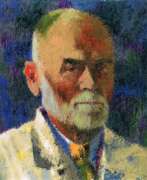


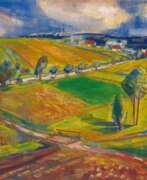

Jaroslav Grus was a Czech painter, graphic artist, illustrator and engraver. He was influenced by Impressionism and Post-Impressionism at the beginning of his career. During study trips to Germany and France (1922-1925), he gained experience and knowledge of Fauvism, thanks to which he developed his own concept of landscape painting.
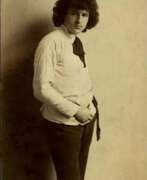

Nikolai Mikhailovich Gushchin (Russian: Николай Михайлович Гущин) was a Russian and Soviet artist, celebrated for his portraits, landscapes, and still lifes. His journey through art and life spanned continents and eras, marked by both acclaim and adversity. Gushchin's formative years were enriched by academic training, leading to early works that showcased his talent through pencil drawings like "Portrait of mother" and "portrait of a nephew of Victor". His evolution as an artist is noted for a transition from Impressionism to incorporating elements of Cubism and Futurism, demonstrating a vibrant exploration of modern art movements.
Gushchin's career took a pivotal turn during his years in exile from 1919 to 1947, a period that saw him achieve recognition across Europe. He became a member of the expert council of the Louvre, and his works were acquired by museums in Paris, Grenoble, Monte Carlo, and Nice. His style during these years melded Art Nouveau, Symbolism, Expressionism, and Fauvism into a distinctive mode of expression. Despite his success abroad, Gushchin's return to the Soviet Union in 1947 brought challenges, including the ideological ostracism that limited his opportunities to teach and exhibit his work.
Gushchin's legacy includes a significant body of work that remains influential. His paintings and drawings, characterized by expressive color and dynamic compositions, are held in high regard both in Russia and internationally. The Radishchev Museum boasts the largest collection of his works, illustrating the breadth of his talent and the diversity of his subjects.
For collectors and experts in art and antiques, Gushchin's oeuvre offers a fascinating glimpse into the intersection of individual creativity and historical tumult. His works not only embody the stylistic shifts of the 20th century but also reflect the personal resilience and artistic integrity of their creator.
To stay informed about sales and auction events featuring Nikolai Mikhailovich Gushchin's work, sign up for updates. This subscription will ensure you're the first to know about opportunities to acquire pieces by this remarkable artist.


Henri Hayden is a Polish artist who spent most of his career in France. He is known for his contribution to the Cubist movement and his use of bold, geometric forms in his paintings.
Hayden was born in Warsaw, Poland, and studied art in Paris at the Académie Julian and the École des Beaux-Arts. In the 1910s he became associated with the Cubist movement and exhibited his work at the Salon of Independent Artists and the Autumn Salon.
After World War I, Hayden continued to develop his style, incorporating elements of Fauvism and Surrealism.
In the 1930s Hayden became a French citizen and his work was included in major exhibitions, including the Carnegie International Exhibition in Pittsburgh and the Venice Biennale. His paintings often featured landscapes, still lifes and portraits in a bold, graphic style.
Hayden continued to work throughout his life, leaving behind a legacy of innovative and influential art. His work can be found in major museums and collections all over the world.


Alfred Hermann Helberger was a German impressionist painter.
He received his art education in Frankfurt/Main and Karlsruhe, then opened a studio in Berlin. Helberger painted vivid, colorful and cheerful landscapes of the Netherlands and Norway, as well as portraits. In Paris in 1905 he was very impressed by French Impressionism and later by Fauvism, which of course had an effect on his work.
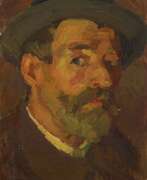

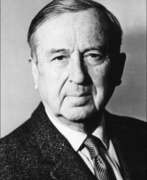

Mykola Petrovich Hlushchenko, a prominent Ukrainian post-impressionist painter, was born in 1901 in Novomoskovsk, Russia, and is celebrated for his diverse artistic contributions that span across various European landscapes, still life, nudes, and notable portraits. His early exposure to art in Yuzivka (now Donetsk), and further education at the Academy of Art in Berlin in 1924, laid the foundation for his illustrious career. Hlushchenko's work caught the attention of French critics soon after he moved to Paris in 1925, marking his transition from the New Objectivity style to post-Impressionism.
Hlushchenko's involvement with the Association of Independent Ukrainian Artists in the early 1930s, and his exhibitions across major European cities and the United States, underscored his role as a leading figure in Ukrainian post-impressionism. His work was characterized by vibrant color use and a unique blend of styles influenced by his time in Germany, France, and later in the Soviet Union. Throughout his life, Hlushchenko's art reflected his extensive travels and deep appreciation for landscapes, earning him numerous awards including the Shevchenko National Prize in 1972.
For art collectors and enthusiasts, Hlushchenko's pieces not only represent the zenith of Ukrainian post-impressionism but also embody the artist's rich, multifaceted life experiences. His paintings, such as the portraits of Oleksandr Dovzhenko and Volodymyr Vynnychenko, along with commissioned works for the Soviet government, showcase his adaptability and mastery over his medium.
To stay informed on Mykola Petrovich Hlushchenko's works and related auction events, signing up for updates is advisable. This subscription ensures you're always in the loop for new sales and exhibitions, enriching your collection with the vibrant legacy of a distinguished Ukrainian artist.


Hans Hofmann, a German-American painter, stands as a towering figure in the 20th-century art world, celebrated for his vibrant contributions to abstract expressionism. Born in Germany in 1880, Hofmann's journey in art took him across continents, from Europe to the United States, where his innovative teaching methods and bold, color-filled canvases left an indelible mark on generations of artists. His unique approach to painting, characterized by a dynamic interplay of color and form, helped bridge the gap between the European modernist traditions and the emerging American abstract art scene.
Hofmann's work is distinguished by its intense color palettes and the technique he termed "push and pull," which refers to the careful balance of color and shape to create depth and movement within the canvas. This technique not only showcased his mastery over the medium but also influenced the development of abstract expressionism, making Hofmann a pivotal figure among his contemporaries. His paintings, such as "The Gate" (1959-60), exemplify this approach and are celebrated in prestigious museums worldwide, including the Museum of Modern Art in New York and the San Francisco Museum of Modern Art.
Beyond his personal contributions as an artist, Hofmann was an esteemed educator, guiding the next generation of artists through his schools in New York and Provincetown. His teaching philosophy emphasized the importance of understanding the fundamental elements of art—color, form, and space—and their interrelation, which he believed was key to achieving harmony and expression in painting.
For collectors and experts in art and antiques, Hans Hofmann's works represent not just significant artistic achievements but also valuable pieces of cultural history. His paintings and teachings continue to inspire and influence the art world, making his pieces highly sought after in galleries and auctions.
We invite you to sign up for updates on new product sales and auction events related to Hans Hofmann. This subscription is your gateway to owning a piece of art history, ensuring you're informed of the latest opportunities to add to your collection. Join us in celebrating the legacy of a master whose work transcends time and continues to dazzle the art world.
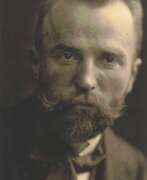


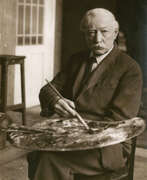




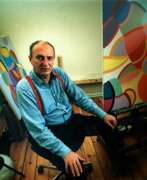

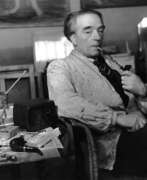

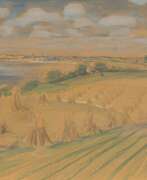

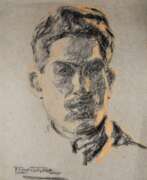

Fernand Lantoine is a French painter and draughtsman, often associated with the Belgian School.
Without adhering to all the artistic innovations of his time, he constantly developed his painting technique.
This evolution is related to the deep need for renewal in European societies, highly civilised and industrialised but scarred by the horrors of war.
A close friend of Paul Signac, he moved from the neo-impressionist movement with divided brushstrokes and bright, almost fauvist tones, to a symbolist inspiration close to Henri Martin, before opting for a style marked by the pre-eminence of line and structure over colour.
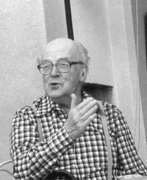

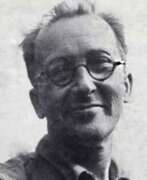

Jean Lébédeff, birth name Ivan Konstantinovich Lebedev was a French painter and graphic illustrator of Russian origin. He was an activist of the anarchist movement. Representative of the Russian creative and political emigration in France. Author of drawings and engravings depicting literary heroes from the works of Pushkin, Gorky, Kuprin and Tolstoy.
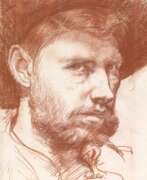


Dietmar Lemcke was a German painter, graphic artist and professor at Berlin University of the Arts and member of the Deutscher Künstlerbund.
Dietmar Lemcke studied with Karl Schmidt-Rotluff and Karl Hofer at the Berlin Academy of Fine Arts from 1948 to 1954. Immediately after completing his studies he received a one-year scholarship to the Académie de Montmartre in Paris, whose director at the time was Fernand Léger.
The master mainly worked in genres such as landscape and still life. He never sought to dissolve representation, but preferred colour to form. Expressionism had a great influence on Dietmar Lemke's work.
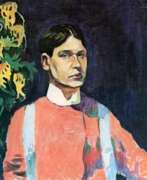

Aristarkh Vasilyevich Lentulov (Russian: Аристарх Васильевич Лентулов) was a prominent figure in Russian avant-garde art, celebrated for his distinctive use of color and innovative approach to Cubism. Born in Nizhneye Lomovo, Penza oblast, Russia, in 1882, Lentulov's early years were spent in a religious family, setting a foundation that would influence his rich and vibrant artistic style. His education at the art institutes in Penza and Kiev, followed by his studies under Dmitry Kardovsky in St. Petersburg, prepared Lentulov for a groundbreaking artistic career.
Lentulov's artistic journey took a significant turn when he moved to Paris in the winter of 1911. There, he was exposed to the works of leading French Cubists at the Académie de la Palette, including Henri Le Fauconnier. This period marked Lentulov's deep dive into Cubism and Orphism, influenced by his interactions with avant-garde artists such as Jean Metzinger, Albert Gleizes, and Fernand Léger. Upon his return to Russia, he became one of the founders of the Jack of Diamonds, a group that exhibited artists with "leftist tendencies" and embraced foreign, mostly French Cubists.
Lentulov's style uniquely combined the spatial concepts of Cubism with the vibrant colors of Fauvism, drawing on Russian folk art to create compositions that were both innovative and deeply rooted in Russian culture. His works, characterized by their luminous color and dynamic composition, played a significant role in the development of Russian Futurism and Cubo-Futurism. Notably, his involvement in theatrical projects, including set designs for the Kamerny Theatre and the Bolshoi Theatre, highlighted his versatility and creative genius.
Aristarkh Lentulov's legacy is preserved in his contributions to the avant-garde movement, and his works continue to be celebrated for their bold experimentation and vibrant expression. His paintings, such as "Saint Basil's Cathedral" and "The Belfry of Ivan the Great," are held in high esteem, showcasing his ability to capture the essence of Russian architecture and culture through a modernist lens.
Art enthusiasts and collectors recognize Lentulov as a pivotal figure in the evolution of modern Russian art. His innovative techniques and bold use of color have cemented his place in art history as a master of Russian avant-garde.
For updates on exhibitions and auction events featuring Aristarkh Vasilyevich Lentulov's work, sign up for our newsletter. Stay informed about the latest sales and opportunities to add a piece of Russian avant-garde history to your collection.


Sonia Lewitska (Ukrainian: Sofia Pilipivna Lewitska) was a Ukrainian émigré artist who worked in Paris. She is known for her paintings and drawings in the styles of Cubism and Post-Impressionism with the influence of Ukrainian folk art.
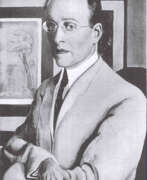

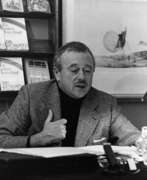

Roger Loewig was a German artist, illustrator and writer.
In addition to working as a teacher of Russian, German and history, Loewig independently practiced painting and drawing. In 1963, he organized an exhibition of his work, but was arrested on charges of "incitement endangering the state". Most of his paintings and literary texts were confiscated.
In 1972, he left for the Federal Republic of Germany, where he found recognition for his talent. Along with Günter Grass, Christoph Meckel and others, he joined the wide circle of "Berlin poets-artists", and Loewig's visual art became recognized as fantastic realism. Loewig's artworks and texts about war, flight, exile, and unfreedom placed him among the most important German artists of the postwar period.
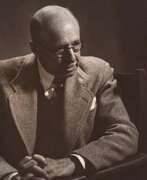

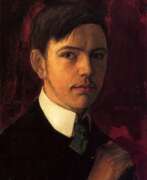

August Robert Ludwig Macke was a German Expressionist painter, celebrated for his vibrant use of color and innovative artistic techniques. Born in 1887 in Meschede, Germany, Macke played a pivotal role in the German Expressionist movement and was a founding member of Der Blaue Reiter (The Blue Rider) group. His work is characterized by a blend of Impressionism, Post-impressionism, and Fauvism, marked by an expressive use of color and form to convey emotions and moods rather than realistic depictions.
Macke's artistic journey was significantly influenced by his travels and encounters with other artists. His first trip to Paris in 1907 introduced him to Impressionism, and his subsequent time in Berlin and interactions with artists like Lovis Corinth further shaped his style. A key turning point in his career was his meeting with Robert Delaunay in Paris in 1912, which introduced him to chromatic Cubism, or Orphism, influencing his work thereafter, such as in "Shops Windows," which reflects Delaunay's impact combined with elements of Italian Futurism. Macke's travels to Tunisia in 1914 with Paul Klee and Louis Moilliet were instrumental in developing the luminist approach of his final period, producing masterpieces like "Türkisches Café."
Macke's contributions to art extend beyond his paintings; he was actively involved in the art community, establishing networks with other modernist artists across Europe. His collaboration with artists like Franz Marc and his role in organizing avant-garde art exhibitions helped promote modernist movements in Germany and beyond. Unfortunately, Macke's promising career was cut short when he was killed in action in 1914 during the First World War.
Macke's works are housed in prestigious museums and galleries worldwide, including the Sprengel Museum in Hanover, Museum Ludwig in Cologne, Städel Museum, and Museum Kunstpalast. His paintings, such as "Lady in a Green Jacket" and "Promenade," continue to be celebrated for their innovative approach to color and composition, leaving a lasting impact on the art world.
For art collectors and experts, Macke's oeuvre offers a fascinating insight into the evolution of early 20th-century European art, showcasing the intersections of cultural influences and artistic innovation. His works not only reflect the artistic movements of his time but also his personal explorations and responses to the world around him.
To stay informed about new product sales and auction events related to August Robert Ludwig Macke, consider signing up for updates. This subscription will provide exclusive access to the latest offerings and insights into the work of this influential Expressionist artist, ensuring enthusiasts and collectors don't miss out on valuable acquisitions.
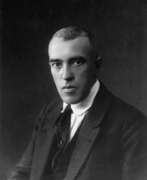

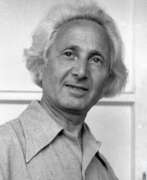

Emmanuel Mané-Katz (Hebrew: מאנה כץ) was a Ukrainian-born Jewish artist who is best known for his depictions of Jewish life and culture.
Mané-Katz studied art in Kiev and Paris, where he was influenced by the Fauvist and Cubist movements. He became a prominent figure in the Jewish art world, painting scenes of Jewish life in Eastern Europe and the Middle East. He was particularly interested in Jewish religious ceremonies and rituals, and often depicted rabbis, Hasidic Jews, and other members of the Jewish community.
Mané-Katz was also a collector of Jewish art and artifacts, and his collection of Judaica became world-renowned. He wrote several books on Jewish art and culture, including "The Jew in Art" and "The Jewish Festivals in Painting."
Today, Mané-Katz's work can be found in the collections of museums such as the Israel Museum in Jerusalem, the Jewish Museum in New York City, and the Musée d'Art Moderne de la Ville de Paris. His legacy continues to be celebrated by those who appreciate his contributions to the representation of Jewish life and culture in art.
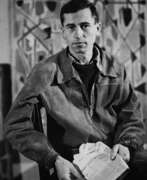

Alfred Manessier was a French painter and graphic artist, a representative of the New Paris School and the Salon de May.
He was educated at the Ecole Nationale Supérieure des Beaux-Arts in Paris and was fascinated by Cubism, Surrealism, Fauvism, like many artists of that generation. But at the same time he studied with the old masters and with the coryphaei of Impressionism. In the middle of his life, Manassier reconsidered his views and turned to religious subjects and landscapes with sea views. He became involved in stained glass and tapestry art.
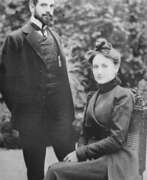

Henri Charles Manguin was a French painter, renowned for his vital role in the Fauvism movement, alongside luminaries such as André Derain and Henri Matisse. Born on March 23, 1874, in Paris, Manguin studied under Gustave Moreau at the École des Beaux-Arts, where he developed close ties with Henri Matisse and Charles Camoin. His work is characterized by the use of bright pastel hues and a fascination with Mediterranean landscapes, which became the hallmark of his career. Manguin's talent for capturing the vivid colors of the French Riviera and the joyful essence of its nude bathers earned him the nickname "the voluptuous painter" by Apollinaire.
Manguin's career was marked by several significant milestones, including his participation in the pivotal Salon d'Automne exhibition of 1905, which historically marks the birth of Fauvism. The critic Louis Vauxcelles famously described the Fauves' work with the phrase "Donatello among the wild beasts," highlighting the contrast between their vibrant paintings and a Renaissance-style sculpture present in the same room. In 1906, Ambrose Vollard, a major art dealer, recognized Manguin's genius, purchasing over a hundred of his canvases. Manguin continued to embrace the Fauvist vision throughout his life, dividing his time between Paris and the Riviera, and finally settling in Saint-Tropez, where he passed away on September 25, 1949.
Manguin's legacy is preserved in the collections of several major museums around the world, including the Pushkin Museum in Moscow, the Museum of Modern Art in New York, and the Musée d'Orsay in Paris. His works, such as "Baigneuse" (1906) at the Pushkin Museum and "La Baigneuse" (1906) at the Museum of Grenoble, showcase his mastery of color and form.
For collectors and experts in art and antiques, Manguin's oeuvre represents a critical chapter in the evolution of modern art, capturing the luminosity and vibrancy of the early 20th century's avant-garde movements. His contributions to Fauvism not only underline the movement's break from Impressionism but also its role in paving the way for the expressive possibilities of color in modern art.
To stay informed about new sales and auction events featuring Henri Charles Manguin's work, we invite you to sign up for updates. This subscription is tailored for enthusiasts eager to enrich their collections with pieces from this pivotal Artist and ensures you're among the first to know about opportunities to acquire his celebrated works.


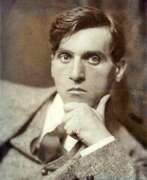


Albert Marquet was a French painter, renowned for his affiliation with the Fauvist movement, a group characterized by their use of wild, vivid colors to depict emotional expression. Unlike his contemporaries who embraced bright and violent colors, Marquet distinguished himself with a more subdued palette, employing less intense tones by mixing complementary colors to achieve a naturalistic style, primarily in landscapes. His work is celebrated for its simplicity in form and color, often focusing on serene water scenes, bustling city views, and the animated life of waterfront cities, particularly in North Africa and across various European locales like Naples and Venice.
Marquet's technique involved painting water as a broad area of simple tone, which cleverly held the plane of the water's surface without resorting to illusionistic perspective, allowing ships to emerge into a different plane with ease. This method, alongside his unique approach to color and composition, drew parallels with Japanese Shijo style work, emphasizing simplicity, movement, and the effective use of color to capture scenes' essence.
Throughout his career, Marquet frequently returned to favored subjects, capturing subtle variations in light and atmosphere. His landscapes, cityscapes, and maritime scenes are noted for their tranquility and the artist's keen observation of light and color. His works are housed in prestigious museums worldwide, including the Musée National d'Art Moderne, the Metropolitan Museum of Art, and the Pushkin Museum, showcasing his versatile talent in capturing the natural and urban environment.
Marquet's legacy is significant, admired for his astute sense of color and the ability to convey atmospheric mood with minimal elements. His influence extends beyond the canvas, impacting subsequent generations of artists and collectors who appreciate the subtlety and depth of his work. For collectors and experts in art and antiques, Albert Marquet represents a pivotal figure in modern art, whose works continue to inspire and captivate audiences with their serene beauty and emotional depth.
To stay informed about new sales and auction events related to Albert Marquet's works, signing up for updates can offer exclusive insights and opportunities to acquire pieces by this influential artist. This subscription is an invaluable resource for those keen to enhance their collection with works by one of the masters of Fauvism and modern landscape painting.
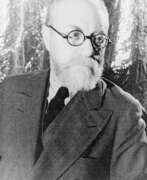

Henri Matisse, a renowned French visual artist, was celebrated for his vibrant use of color and fluid, original draughtsmanship. Born on December 31, 1869, in Le Cateau-Cambrésis, France, Matisse initially pursued a career in law before turning to art. He first began painting in 1889, a change inspired by convalescence art supplies his mother provided. This marked the beginning of a journey that would see him become a leading figure in modern art.
Matisse's career is notable for its stylistic evolution yet consistent aim to capture the "essential character of things." His early works, characterized by intense colorism, earned him recognition as one of the Fauves, or "wild beasts." The period from 1908 to 1913 was marked by significant developments, with works like "Reclining Odalisque" and "The Red Studio" showcasing his mastery in balance and serenity. In the 1920s, his style evolved to more relaxed forms, with a focus on light, color, and decorative patterns in paintings like his odalisque series.
Matisse's exploration of various mediums, including sculpture and paper collage, reflects his innovative spirit. His later years were dominated by cut paper collages, as health challenges limited his ability to paint. These works, alongside his bold drawings and sculptures, cemented his status as a pioneer in visual art.
For collectors and art experts, Matisse's work remains a testament to creative evolution and expressive use of color and form. His masterpieces can be found in prominent museums and galleries worldwide, continuing to inspire and fascinate art enthusiasts.
To stay updated on new product sales and auction events related to Henri Matisse's art, sign up for our updates. This subscription will keep you informed about opportunities to appreciate and acquire works connected to this iconic artist.


Alfred Henry Maurer was an American painter. He is considered one of the first artists of American modernism. His extensive and multifaceted oeuvre ranges from painterly realism, through a Fauvist and Cubist phase under clear European influence, to an independent pictorial language.
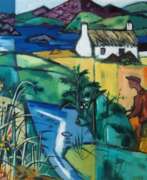

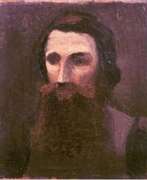

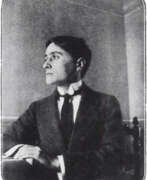

Jean Metzinger, a French Divisionist artist born in 1883, was instrumental in the development of Cubism. His approach to painting was revolutionary, challenging classical representations by emphasizing dynamism and the validity of multiple perspectives. Metzinger's early works were influenced by Neo-Impressionism, evident in his participation in exhibitions alongside Fauvist artists like André Derain and Henri Matisse. His transition to Cubism marked a significant evolution in his style, characterized by geometric simplification and an exploration of spatial complexities.
One notable work, "La Femme au Cheval," embodies Metzinger's 'mobile perspective,' a concept that mirrored the scientific advances of the time, specifically in quantum mechanics. This painting was even admired by Niels Bohr, a pioneer of quantum mechanics. Metzinger's contributions to Cubism extended beyond his paintings; he was a key figure in the movement's theoretical underpinnings, co-authoring with Albert Gleizes the first major treatise on Cubism.
Metzinger's later works ventured into greater realism and were marked by Art Deco influences, reflecting a shift towards classical beauty and balance post-World War I. This period of his work is characterized by bold colors and streamlined forms, with notable works such as "Femme au Faisan" illustrating this transition.
Metzinger's influence on modern art extends beyond his Cubist works. He was a central figure in the Parisian art scene, regularly exhibiting his work and engaging with other avant-garde artists. His legacy is preserved in museums worldwide, including significant pieces at the Albright-Knox Art Gallery and the Thyssen-Bornemisza Museum.
For collectors and experts in art and antiques, Jean Metzinger remains a pivotal figure in the history of modern art. His innovative approach to painting, theoretical contributions to Cubism, and later explorations of realism and Art Deco aesthetics offer a rich portfolio of work for appreciation and study. Sign up for updates to stay informed about new product sales and auction events related to Jean Metzinger's art.
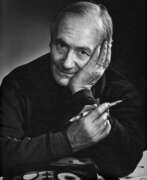

Joan Miró, a celebrated Spanish artist, was a master in painting, sculpture, and ceramics, renowned for his unique style that blurred the lines between Surrealism, Fauvism, and Expressionism. Born in Barcelona to a family of a goldsmith and a watchmaker, Miró grew up immersed in the rich cultural heritage of the Barri Gòtic neighborhood. His artistic journey began with drawing classes at the age of seven and continued at the prestigious La Llotja art academy. Despite an initial venture into the business world, Miró's passion for art prevailed, leading him to abandon his clerical career after a nervous breakdown.
Miró's work is noted for its exploration of the subconscious, often depicting a childlike perspective. This approach was both a critique of traditional painting methods and a means of expressing Catalan pride. His art, challenging to categorize, often featured symbolic elements and nationalistic qualities. One of his notable early works, "The Farm," reflects a transition to a more individual style, blending elements of his Catalan roots with broader artistic influences. This piece, later purchased by Ernest Hemingway, encapsulated the essence of Spain in its imagery.
In Paris, Miró joined the Surrealist movement in 1924, where his work began to reflect the influence of automatism, emphasizing spontaneous, automatic, or subconscious creation. He experimented with various mediums, including painting-poetry and collage, and even ventured into set and costume design for Sergei Diaghilev's Ballets Russes.
During World War II, Miró remained in Spain, and his work from this period, including the 22 Constellations series, reflected an interest in the night, music, and stars. His forms became increasingly abstracted, and he experimented with various techniques, often incorporating primary colors and evocative titles.
Miró's career spanned several decades, during which he continually evolved his style and explored new mediums. His contributions to art were recognized with numerous awards and retrospectives, including a major career retrospective at MoMA in 1941 and the Spanish Gold Medal for Fine Arts in 1980. Among his last major works was a tapestry for the World Trade Center in New York City, created in 1974.
For art collectors and enthusiasts, Joan Miró remains a figure of immense interest, not only for his distinct style and contributions to Surrealism but also for his ability to blend poetic imagery with political commentary. To stay updated on new product sales and auction events related to Joan Miró, sign up for our updates and immerse yourself in the world of this extraordinary artist.


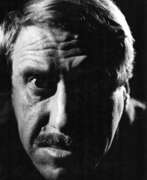

Mattia Moreni is an Italian painter and sculptor, a representative of the abstract trend in Italian art.
The artist is interesting because he went through all the significant phases in the art of the 20th century. Beginning with figurative fovea and expressionism, he turned to post-cubism and then to abstract-concrete forms. Later Moreni turns to informal and neo-expressionism. Decay, death and splendor become the themes of his work. After anthropoid watermelons, the decline of the human species is captured by the artist through other images: sterile female macros and sets of symbols, including the relationship between humanoid computer and humanoid computer.
Moreni's paintings have received wide international acclaim.


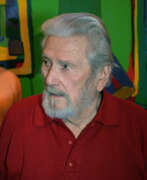

Marcel Mouly was a French artist who painted in an abstract style.
Mouly's style was influenced by the deep, bold colors typically used in Matisse's fauvist works, and by the cubism of Picasso. Beginning in the mid-1950s, Mouly created many lithographs.
Marcel Mouly's work has been exhibited all over the world, including in the permanent collections of more than 20 museums, such as the Museum of Modern Art in Paris, the Museum of Modern Art in Japan, the Museum of Geneva, the Museum of Modern Art in Helsinki, and Paris' Bibliotheque Nationale. He has also been the subject of numerous books, and recognized by such honors as the Chevalier de L'Orde des Arts et Lettres (1957) and the Premier Prix de Lithographie (1973).
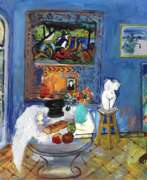

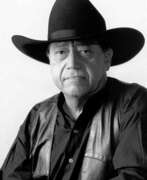

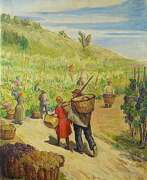


Willem Adriaan Paerels was a Dutch-Belgian painter. He painted in the style of Impressionism, Fauvism and Expressionism. He in 1898 he joined the artists' group "Le Labeur". Until 1912 he would also regularly stay in Paris, where he was mainly inspired by the French impressionists. In addition, the influence of Pierre Bonnard and Édouard Vuillard became visible and from 1906, after visiting an exhibition in Ghent, of Fauvism. He quickly made a name for himself in this style. He exhibited at the Vie et Lumière and La Libre Esthétique societies and at the Salon d'Automne in Paris, among others. His later work is considered to be Expressionism. Paerels was mainly known for his harbor views, but he also made landscapes, cityscapes, portraits and still lifes. He also made posters and designed sets.


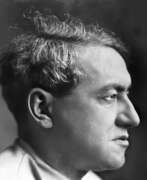

Jules Pascin, born Julius Mordecai Pincas, was a Bulgarian-born American painter and draftsman. He studied art in Vienna, Munich, and Paris, where he settled in 1905.
Pascin became known for his portraits and nudes, which often featured elongated figures and fluid lines. He was also noted for his use of watercolors and his depictions of Parisian nightlife, cafes, and brothels. His work was influenced by the Fauvists and the German Expressionists.
Pascin was a member of the Montparnasse artistic community in Paris, and he was friends with many of the leading artists and writers of the day, including Pablo Picasso, Henri Matisse, and Ernest Hemingway. He was married twice, but his personal life was marked by numerous affairs and a struggle with alcoholism.
His work is held in many major collections, including the Museum of Modern Art in New York and the Art Institute of Chicago.
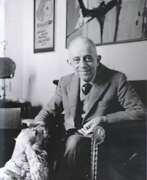

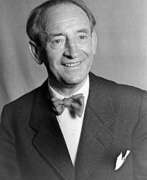

Max Pechstein, a German Expressionist painter and printmaker, was a significant figure in the art world known for his vibrant use of color and dynamic compositions. Born in Zwickau in 1881, Pechstein's journey into the realms of expressionism began with his training as a decorator's apprentice before moving to Dresden to further his studies at the Kunstgewerbeschule. His career took a pivotal turn in 1906 when he met Erich Heckel and joined the Die Brücke group, alongside other notable artists such as Ernst Ludwig Kirchner and Karl Schmidt-Rottluff, which marked the beginning of his foray into revolutionary art and expressionism.
Pechstein's art was not just confined to painting; he was also a master printmaker, with a prolific output that included 421 lithographs, 315 woodcuts and linocuts, and 165 intaglio prints, predominantly etchings. His works often depicted scenes from nature, social gatherings, and elements of primitive art, reflecting his interest in the raw and unrefined aspects of culture and humanity. This diverse body of work was recognized for its bold innovation and unique perspective, which significantly contributed to the expressionist movement.
The Nazis' rise to power in 1933 had a profound impact on Pechstein's career. His works were deemed degenerate, and he faced severe repression, including the removal of 326 of his paintings from German museums and his dismissal from his teaching position at the Preussische Akademie der Künste. Despite these challenges, Pechstein's legacy endured, and after World War II, he was reinstated to his teaching post and received numerous accolades for his contributions to art.
Pechstein's works are held in high esteem in museums and galleries worldwide. Notably, his etchings, which depicted the grim realities of war, are housed in the Imperial War Museum in London, showcasing his ability to convey profound emotional and psychological experiences through art. Additionally, his painting "Summer in Nidden," which captures the idyllic beauty of the Baltic coast, is part of the collection at the Museo Nacional Thyssen-Bornemisza in Madrid, illustrating his love for natural landscapes and vibrant, expressive use of color.
For collectors and experts in art and antiques, Hermann Max Pechstein's works offer a fascinating glimpse into the early 20th-century expressionist movement, characterized by a bold exploration of color, form, and social commentary. His contributions to modern art are invaluable, providing insight into the cultural and historical context of his time.
To stay informed about new product sales and auction events related to Hermann Max Pechstein, we invite you to sign up for updates. This subscription will ensure that you are the first to know about opportunities to acquire works by this influential artist, allowing you to add to your collection of significant expressionist art.


Vilmos Perlrott-Csaba was a Hungarian avant-garde artist and one of the brightest representatives of this trend.
He studied at the Julian Academy in Paris, was impressed by the work of Pablo Picasso, Cubism and Fauvism and became one of the creators of the Hungarian avant-garde style.
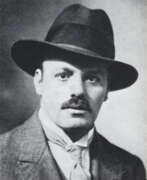

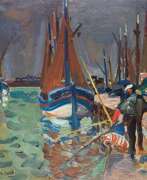

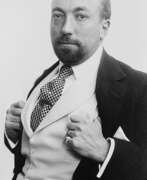


Constantin Polastri was a Swiss painter. He lived in Hombrechtikon (Switzerland) and Sanremo, Italy. His work includes oil paintings on canvas and wood, watercolours, drawings, lithographs and decorative works on furniture and walls. Influenced by Post-Impressionism and Fauvism, he painted gardens, landscapes, still lifes and nudes.
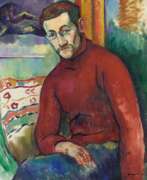

Jean Puy was a French painter associated with the Fauvist movement, known for his colourful and colourful works.
Jean Puy's early work was influenced by Impressionism, but he later adopted the bold and expressive use of colour characteristic of Fauvism. Inspired by artists such as Henri Matisse and André Derain, Puy developed a unique style that emphasised the emotional and decorative qualities of colour.
Puig's paintings often depicted landscapes, still lifes and scenes of everyday life. He was particularly interested in conveying the effects of light and colour in his works, using intense and unnatural colours to show mood and expression.
During his career, Puig exhibited at the Salon d'Autumn and the Salon des Artistes Indépendants, which were important exhibitions of avant-garde art in Paris.

Abraham Rattner was an American artist known for his powerful and emotional expressionist paintings, as well as his work in sculpture, lithography, and other media.
Rattner studied art in New York City and Paris, where he was influenced by the modernist art movements of the early 20th century, including cubism, fauvism, and expressionism. He developed a unique style that blended elements of these movements with his own personal vision and experiences.
Rattner's paintings often featured deeply spiritual themes, such as the struggle between good and evil, the nature of human suffering, and the search for transcendence. His work was characterized by bold colors, dramatic brushstrokes, and a sense of raw emotional intensity.
Rattner was an important member of the New York School of Abstract Expressionism, and his work was exhibited in many prominent galleries and museums, including the Museum of Modern Art in New York City and the Art Institute of Chicago. He was also a prolific writer and lecturer, and his work was the subject of several books and monographs.
Today, Rattner's paintings and other artworks can be found in the collections of museums and private collectors around the world. He is considered one of the most important American expressionist artists of the 20th century, and his work continues to be celebrated for its emotional power and spiritual depth.
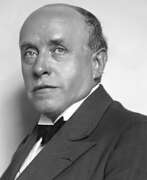

Georges Rouault was a French painter, printmaker and ceramicist whose profound works combined art and spirituality, making him a key figure in the contemporary art world. Born into a modest family in Paris during the turbulent times of the Paris Commune, Rouault's early exposure to art came through his grandfather's collection of lithographs by Honoré Daumier. His initial apprenticeship in a glazier's workshop had a profound influence on his artistic style, especially his work with stained glass, which later became a hallmark of his painting technique.
Rouault's career took a significant turn under the tutelage of Symbolist painter Gustave Moreau, who introduced him to avant-garde circles, leading Rouault into the Fauvist movement alongside Henri Matisse. However, Rouault's unique approach was characterized by a more instinctive and spontaneous style that was deeply influenced by Vincent van Gogh and which eventually led him to Expressionism. His works from this period, dealing with subjects such as courts, clowns, and prostitutes, served as a form of moral and social criticism, motivated by his deep Christian faith and concern for human nature. This period marked a significant evolution in Rouault's style; his paintings reflect a mixture of religious iconography and human suffering, demonstrating his mastery of conveying deeply emotional and spiritual stories.
One of Rouault's most notable contributions to art was his involvement in the scenography for Sergei Diaghilev's ballet The Prodigal Son and his famous series of paintings and prints such as Miserere. His later works are renowned for their explosive use of color and texture, highlighting his mastery of expressing the spiritual harmony and beauty of nature. The end of Rouault's career was marked by a gesture of humility and dedication to his craft: he destroyed a significant number of his unfinished works, feeling that he could not complete them to his satisfaction.
Rouault's legacy has been preserved through his impressive works in renowned museums and galleries around the world. His art continues to inspire and resonate with collectors, experts and lovers of art and antiques, serving as a testament to his enduring influence on the art world.
For those deeply interested in exploring the life and work of Georges Rouault, it is important to stay abreast of new discoveries, sales, and auction events related to his art. We encourage you to subscribe to updates so that you don't miss out on the opportunity to engage with the legacy of this remarkable artist. This subscription will be your gateway to the world of Georges Rouault, offering exclusive insights into his contribution to contemporary art.
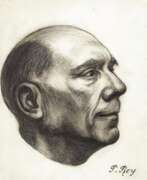

Pierre Roy was a French surrealist painter. He is known for his realistically painted compositions of ordinary objects in unexpected arrangements. After gaining his baccalauréat at the local school he joined a firm of architects before enrolling at the Ecole des Beaux-Arts in Paris. Disappointed with the course, he left to work on the designs for the 1900 Paris Exposition.
His work is classed as surrealism, and is based on assemblages of everyday objects such as shells, vegetables and fruits, woollen reels, ears and seeds, eggs and ribbons arranged to create poetic images.


Reuven Rubin (Hebrew: ראובן רובין) was an Israeli modernist painter, one of the founders of Israeli painting.
Reuven Rubin's early works were influenced by European art movements such as Post-Impressionism and Fauvism. The artist often used bright colours and expressive brushwork. Over time, his style evolved to incorporate elements of cubism and abstraction, while maintaining a focus on depicting Jewish identity and connection to the land of Israel.
As one of the pioneering artists in Palestine, Reuven Rubin was instrumental in shaping the unique artistic identity of Israeli art. He was one of the founders of the Jerusalem House of Artists, a cultural institution that promoted art in the region. Rubin also served as director of the Tel Aviv Museum of Art.
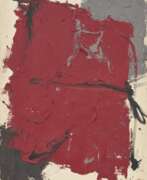


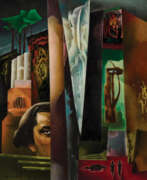

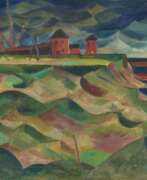

Paul Adolf Seehaus, also known as Barnett, was a German expressionist painter.
Under the guidance of expressionist August Mack (1887-1914) Seehaus mastered the styles of Fauvism, Cubism and Futurism. At the "Rhenish Expressionist Exhibition" in 1913, Seehaus earned the respect of critics as an independent expressionist painter. The talented young artist was expected to produce exciting new works, but sadly he died of pneumonia at the age of 27.
Paul Seehaus painted urban industrial landscapes, futuristic and rural views, and paintings on religious themes. His colors changed from a bright palette to a dark palette during the tragedy of World War I, but then he returned to optimistic watercolors.
As part of the Nazi "Degenerate Art" campaign of 1937, the Nazis withdrew some of Seehaus's expressive paintings from collections.
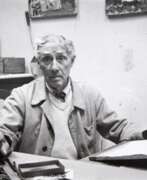

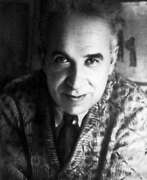

David Petrovich Shterenberg (Russian: Давид Петрович Штеренберг) was a Ukrainian-born Russian artist, recognized for his significant contributions to painting and graphic art. Born into a Jewish family in Zhitomir, Ukraine, Shterenberg's journey in art began in Odessa, leading him to Paris between 1906 and 1912, where he immersed himself in the vibrant artistic community. His studies at the Académie Vitti and interactions with notable artists like Kees van Dongen shaped his early artistic endeavors. Shterenberg's work, influenced by Paul Cézanne and Cubism, is celebrated for its expressive imagery, clear composition, and the strategic use of space.
Shterenberg's art evolved significantly over time, reflecting his deep engagement with the cultural shifts of his era. After returning to Russia post-1917 Revolution, he became an influential figure in Soviet art, leading the Department of Fine Arts at the People's Commissariat for Education and founding the Institute of Artistic Culture. Despite facing challenges under Soviet authority, which pushed him towards a more 'realistic' style, Shterenberg remained true to his unique artistic vision. His later years saw a return to themes of lyrical contemplation, notably in his Biblical Subjects series, completed before his death in 1948.
Today, Shterenberg's legacy lives on in major public galleries in Russia, including the Tretyakov Gallery, the Pushkin Museum, and the Russian Museum, as well as in private collections worldwide. His work encompasses a broad spectrum, from avant-garde experiments to intimate expressionist pieces, securing his place in the annals of modern art.
For enthusiasts and collectors alike, David Petrovich Shterenberg's oeuvre offers a rich exploration of early 20th-century art, marked by its innovative use of form and color, and its reflective engagement with the artist's cultural heritage and contemporary political landscape. Sign up for updates on new product sales and auction events related to Shterenberg, and discover more about this pivotal artist's contributions to the world of art.


Henri Sié was a French painter, a representative of the avant-garde Fauvism movement.
His favorite subject, which inspires this artist, is the sunny and bright vistas of Saint-Tropez. The Henri Sié Art Gallery in this city has been open all year round since its creation in 1986.
Henri Sié has exhibited in many countries, including Japan, Germany and the United States.


Jan Sluijters was a Dutch painter and co-founder of the Moderne Kunstkring.
Sluijters (in English often spelled "Sluyters") was a leading pioneer of various post-impressionist movements in the Netherlands. He experimented with several styles, including fauvism and cubism, finally settling on a colorful expressionism. His paintings feature nude studies, portraits, landscapes, and still lifes. His work was part of the painting event in the art competition at the 1928 Summer Olympics.


Václav Spála is a Czech artist, graphic artist, designer and illustrator, one of the most important figures in Czech contemporary art.
He studied at the Prague Academy, was a member of the group Tvrdošížní ("Stubborn") and was a member of the Manes association. He was also a member of the Group of Fine Artists in Prague, a group of young Czech Cubist modernists.
He is again and again inspired by the summer landscape, partly Czech, partly Mediterranean, flowers in a vase or still life with fruit. To this day, Vaclav Spala's work still attracts with its linear and colorful rhythms, lightness of form, expressive handwriting and clear and playful intonation. By combining two opposing worlds - the world of French modernism and the world of the Czech countryside, cubism and folk art - unique works were created, not only for the Czech Republic. Spala also worked on stage designs, posters, book covers and created a series of toys.
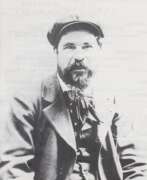


Bob Thompson was an African-American figurative painter known for his bold and colorful canvases, whose compositions were influenced by the Old Masters. His art has also been described as synthesizing Baroque and Renaissance masterpieces with the jazz-influenced Abstract Expressionist movement.