Decorators Portrait
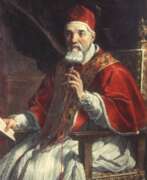

Guido Ubaldo Abbatini was an Italian Baroque painter, celebrated for his fresco works and significant contributions during the artistic fervor of 17th-century Rome. Born around 1600 in Città di Castello, Umbria, and later active in Rome and Usigni, Abbatini's career was marked by his apprenticeships under prominent artists such as Giuseppe Cesari and Pietro da Cortona. He is also noted for his association with Gian Lorenzo Bernini, under whom he worked on notable projects like the frescoes in the Cornaro Chapel.
Abbatini's works are characterized by their dynamic compositions and vibrant use of color, which were typical of the Baroque movement's dramatic style. His artistic contributions extend to several churches in Rome, where his frescoes continue to be admired for their artistic and historical significance.
For art collectors and enthusiasts interested in Baroque art, Guido Ubaldo Abbatini's works represent a pivotal chapter in Italian art history. His paintings not only reflect the rich cultural heritage of the era but also showcase the evolution of Baroque artistic expressions in Italy.
To stay updated on exhibitions and sales related to Guido Ubaldo Abbatini's works, consider subscribing to updates. This service will keep you informed about new discoveries and auction events, enhancing your collection and appreciation of Baroque art.
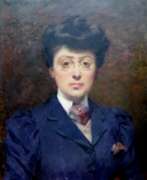

Louise Abbéma was a French painter, sculptor, and designer, celebrated for her work during the Belle Époque. Born in Étampes in 1853 into an affluent Parisian family, she became well known for her portraits, particularly of the famous actress Sarah Bernhardt, and for decorative panels commissioned for various public buildings in Paris and the Palace of the Governor in Dakar, Senegal.
Abbéma's art often depicted the upper echelons of French society and reflected the Impressionist style through her light and rapid brushstrokes. She was also notable for her involvement in the women's movement, where she contributed to the emerging image of the 'New Woman' by portraying androgynous figures and themes of intellectualism and freedom.
Among her many honors, Abbéma was awarded the Palme Academiques in 1887, nominated as the Official Painter of the Third Republic, and in 1906, she became a Chevalier of the Legion of Honour. Her works, such as "Lunch in the Greenhouse" and "Portrait of Sarah Bernhardt," have seen a resurgence in popularity as the contribution of women to historical art gains more recognition.
For those interested in the evocative and historically rich artworks of Louise Abbéma, consider subscribing to our updates. We'll keep you informed about new sales, auctions, and exhibitions featuring Abbéma's work, ensuring you're always connected to the latest offerings in the art and antique collectors' sphere.
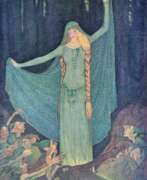

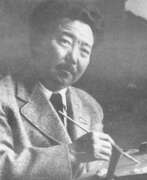

Gapar Aitievich Aitiev (Russian: Гапар Айтиевич Айтиев), a pioneering figure in Soviet Kyrgyz art, was born in 1912 and became a cornerstone of Kyrgyz cultural heritage through his impactful contributions as an artist and educator. Aitiev's journey in art began at the Moscow Art School in Memory of 1905, where he studied under N. P. Krymov between 1935 and 1938, laying the groundwork for his illustrious career. His profound connection to his Kyrgyz roots was reflected in his artwork, characterized by epic, poetic landscapes of Kyrgyzstan, such as "Midday on Issyk Kul" (1954), and detailed portraits like the "Gallery of portraits of contemporaries" (1979). Aitiev's contributions to the art world earned him the prestigious titles of People’s Artist of the USSR and Hero of Socialist Labor, marking his influence on Soviet and Kyrgyz art history.
The Gapar Aitiev Kyrgyz National Museum of Fine Arts, named in his honor, stands as a testament to his legacy, showcasing not only his work but also a broad spectrum of Kyrgyz and Russian art, spanning from traditional Kyrgyz artifacts to contemporary works post-independence. This museum, alongside the Gapar Aitiev Memorial Studio Museum in Bishkek, provides insight into Aitiev's life, offering a personal glance at his workspaces and the art that filled his surroundings. These institutions preserve and celebrate Aitiev's dedication to portraying the tranquil beauty of Kyrgyz landscapes and the spirit of its people, making his work an integral part of Kyrgyz national identity.
For those interested in the rich tapestry of Central Asian art, visiting these museums in Bishkek is a journey through the heart of Kyrgyz culture and history, brought alive by Aitiev's artistic vision. His work not only captures the essence of Kyrgyzstan's landscapes and people but also serves as a bridge between the traditional and the modern, embodying the nation's cultural evolution.
To stay updated on exhibitions and events celebrating Gapar Aitievich Aitiev's legacy and to explore more about his contributions to art and culture, consider signing up for updates. This subscription will keep you informed about new product sales and auction events dedicated to Aitiev's work, ensuring that enthusiasts and collectors alike remain connected to the vibrant world of Kyrgyz art.

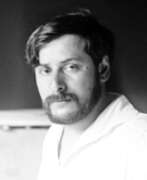

Boris Izraelievich Anisfeld (Russian: Борис Израилевич Анисфельд) was a Russian-American painter, set designer, illustrator, and educator, celebrated for his vivid use of color and imaginative scenery. Born in Bessarabia, Russian Empire, in 1878, Anisfeld's artistic journey led him from the Odessa School of Art to the Imperial Academy of Arts in Saint Petersburg, where he absorbed the influences of prominent artists like Ilya Repin and Igor Grabar. His distinct style caught the attention of Sergei Diaghilev, leading to his work with the Ballet Russe before World War I.
Anisfeld's contributions to art extend beyond his canvas, as his theater designs for Diaghilev's Ballets Russes and collaborations with notable figures like Michel Fokine and Anna Pavlova showcased his ability to blend fantasy with performance. His work with the Ballets Russes, including designing the production of "Sadko" and executing the visions of other celebrated artists for stage sets, marked a significant period in his career before he immigrated to the United States in 1917.
In America, Anisfeld continued his legacy, taking on roles such as a teacher at the Art Institute of Chicago and contributing to the cultural landscape through his stage designs and paintings. His work is recognized for its innovative approach to color and form, bridging the realms of painting and theater design to create immersive, emotionally resonant artworks. Anisfeld passed away in 1973, leaving behind a body of work that continues to inspire and captivate audiences.
For collectors and experts in art and antiques, Anisfeld's work represents a fusion of Russian and American art traditions, enriched by his imaginative approach and vibrant palette. His contributions to the development of modern art and theater design underscore the enduring relevance of his creative vision.
To stay updated on exhibitions, sales, and auctions related to Boris Israelievich Anisfeld, sign up for updates. This subscription will ensure you're informed about new opportunities to explore and acquire works by this influential artist.

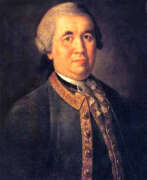

Alexei Petrovich Antropov (Russian: Алексей Петрович Антропов), a prominent Russian painter of the Baroque period, is celebrated for his significant contributions to art, particularly in portrait painting and church frescoing. Born into a family connected to the governmental sphere, Antropov's early exposure to the arts came through his work in the Chancellory of Buildings, where he began his career under the guidance of various Russian and foreign artists, including Andrey Matveyev and Ivan Vishnyakov.
Antropov's work is distinguished by his mastery in oil painting, miniatures, and icons, with a career that saw him active mainly in St. Petersburg, Moscow, and Kiev. His artistic journey was notably influenced by his studies with the French court painter Louis Caravaque and later with the Italian painter Pietro Rotari, which helped him refine his portrait artistry. The 1760s emerged as his most productive period, where he crafted numerous notable portraits, including those of Elizabeth Petrovna and Peter III of Russia, showcasing his preference for traditional icon and parsuna portrait styles characterized by sharp contrasts and dark backgrounds.
Antropov's legacy extends beyond his artworks; his dedication to art education and the community is evident in his decision to transfer his only house to the Department of Education for the establishment of a Free School. He passed away in 1795, leaving behind a rich collection of works that continue to be celebrated in museums such as the Tretyakov Gallery in Moscow and the Russian Museum in St. Petersburg.
Collectors and art experts value Antropov for his unique contributions to Russian art, his role in the transition of portrait styles, and his influence on future generations of artists, including his apprentice Dmitry Levitzky. His works, including the portraits of Catherine II and Archbishop Gavriil Petrov, are pivotal in understanding the artistic and cultural shifts of 18th-century Russia.
For those interested in exploring the depths of Russian Baroque art and the significant figures who shaped its contours, Alexei Petrovich Antropov's oeuvre offers a fascinating journey. Collectors and aficionados are encouraged to sign up for updates on new product sales and auction events related to Antropov's works, ensuring they remain informed about opportunities to own a piece of this illustrious artist's legacy. This subscription is a gateway to the vibrant world of art collection, where the beauty of the past is preserved for the future.
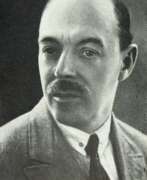

Anatoly Afanasyevich Arapov (Russian: Анатолий Афанасьевич Арапаов) was a Russian and Soviet artist, born in St. Petersburg in 1876 and passing away in Moscow in 1949. His artistic journey began after graduating from high school in 1892, leading him to study at the Moscow Boundary Institute where he initially acquired artistic skills. Arapov's dedication to art became undeniable, prompting him to enroll in the Moscow School of Painting, Sculpture and Architecture in 1897, where he was deeply involved in applied art, book design, and theater.
Arapov's early works, particularly around 1900 and 1910, were influenced by Symbolism, but he transitioned through a phase of Constructivism in the 1920s before dedicating himself to Socialist Realism from the 1930s onward. His versatile talent spanned across painting, graphic arts, and set design, making significant contributions to theater and film. Notably, he designed plays for leading theaters across major Russian cities and worked on popular films in the 1920s and 1930s.
His oeuvre includes portraits, still lifes, and landscapes, featuring views of ancient parks and Russian architecture. Arapov's works are celebrated for their stylistic diversity, capturing the essence of Symbolism, Constructivism, and Socialist Realism. His contributions are recognized in museum collections, including the State Tretyakov Gallery and the Saratov State Art Museum named after Radishchev, among others.
For collectors and art experts, Arapov's works offer a glimpse into the evolving art styles of early to mid-20th century Russia. To stay informed on sales and auction events featuring Anatoly Afanasyevich Arapov's art, signing up for updates can provide exclusive access to new discoveries and opportunities to acquire pieces by this multifaceted artist.
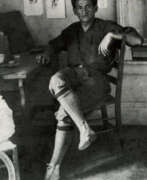

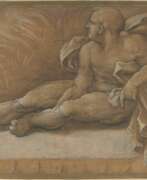

Amico Aspertini was an Italian Renaissance painter, draughtsman, and sculptor, considered one of the leading representatives of the Bolognese school of painting.
He was trained in the family workshop and was influenced by the artists of the Ferrara school, Ercole de'Roberti, Lorenzo Costa, and Francesco Francia. He worked as a painter and sculptor, and was also an excellent draughtsman, as evidenced by his many surviving drawings and sketches. Contemporaries marveled at his complex and impulsive character and noted that he worked with both hands simultaneously.
Aspertini painted splendid portraits as well as numerous frescoes and altarpiece paintings in chapels and churches in Italy. Many of his works are eccentric and eclectic, even whimsically fantastical, his complex style anticipating Mannerism.
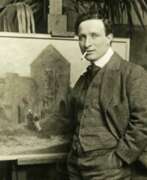

Charles Garabed Atamian is a French artist of Armenian origin born in Turkey.
He studied for a time at the Academy of Fine Arts in Venice, then worked as chief designer at a porcelain factory in Istanbul. In 1894, Atamian worked with a team of artists to decorate the new palace of Sultan Abdul-Hamid Il in Yildiz, on the European side of the Bosphorus. He designed, among other things, the patterns for the ceramic tiles of the palace walls.
In 1897, Atamian emigrated to France and began illustrating books and magazines, as well as working on sets for several Parisian theaters. Since 1903 Atamian participated in various exhibitions with unquestionable success. He painted landscapes, sea and beach scenes with children (including some 200 paintings at Saint-Gilles in the Vendée, where he resided each year during the summer months from 1923 to 1939). Throughout his career he was a fine portrait painter. He became a member of the National Society of Artists in 1927.
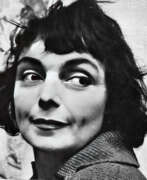

Bele Bachem (real name Renate Gabriele Bachem) was a German painter, graphic designer, book illustrator, interior designer and writer. In 1997 Bachem was awarded the Order of Merit of the Federal Republic of Germany.
Bachem is considered one of the most important post-war German artists and one of the few surrealists in the illustration of German literature.
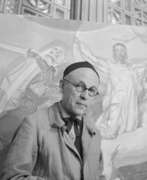

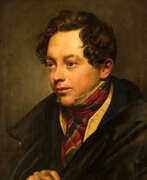

Pyotr Vasilievich Basin (Russian: Пётр Васильевич Басин) was a Russian painter, born in 1793 and passed away in 1877, renowned for his large-scale religious, historical, and portrait artworks. A distinguished member of the Imperial Academy of Arts in Saint Petersburg, Basin's career was marked by a significant period in Rome, where he studied under a fellowship and produced nearly a hundred paintings.
Basin's artistic legacy includes notable works such as the allegorical figures for the Winter Palace and several religious scenes for the Saint Isaac's Cathedral and Kazan Cathedral. His contributions extend to teaching roles at the Imperial Academy, where he influenced future generations until his retirement due to a progressive eye disease.
Basin's works are prominently displayed in the Russian Museum among other locations, serving as a testament to his skill and dedication to the arts. For collectors and enthusiasts looking to explore more about Basin's works or receive updates on sales and auctions featuring his art, signing up for specialized newsletters can provide timely and exclusive information.
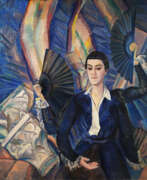

Elena Mikhailovna Bebutova (Russian: Елена Михайловна Бебутова) was a Russian and Soviet artist of the mid-twentieth century of Georgian-Armenian origin. She is known as a painter, graphic artist and scenographer.
Elena Bebutova evolved from a fascination with cubism and futurism in her early work to a more decorative and realistic style. In 1917, she began working on the decoration of performances in various theaters in Russia, and held a personal exhibition in Moscow in 1923. Returning to the USSR after business trips to Berlin and Paris, she became one of the founding members of the society "Four Arts". Her work in the theater was closely linked to the directing activities of her brother Valery Bebutova; their last collaboration was a production of Hamlet at the Vitebsk Belorussian Theater in 1946 and 1955.
Bebutova is also known as a model for portraits created by her husband Pavel Kuznetsov.
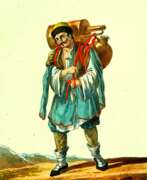

Karl Petrovich Beggrov (Russian: Карл Петрович Беггров) was a Russian artist known for his exceptional lithographs and watercolor paintings. Born in 1799, Beggrov studied at the St. Petersburg Academy of Arts under M.N. Vorobyov and later worked in his brother's lithographic workshop. His talent spanned various art forms, including portraits, landscapes, and cityscapes, which captured the essence of 19th-century St. Petersburg.
Beggrov's work is particularly celebrated for its detailed and vivid portrayals of St. Petersburg. His series "Views of St. Petersburg and Its Environs," created between 1821 and 1826, remains one of the most significant contributions to early Russian lithography. These works were a collaborative effort with other artists, yet Beggrov's distinctive style is evident in the 28 lithographs he produced for the series.
Several of Beggrov's artworks are housed in major museums, including the Metropolitan Museum of Art. Notable pieces like "Our Lady of Vladimir Church in St. Petersburg" and "View of the Arch of the General Staff Building Towards the Winter Palace" showcase his mastery of lithography and his ability to convey architectural grandeur with precision.
For collectors and art enthusiasts, staying updated on Karl Petrovich Beggrov's works is essential. Subscribe to our updates for notifications on new product sales and auction events related to Beggrov's art.
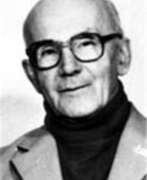

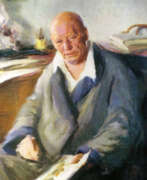

Pavel Petrovich Benkov (Russian: Павел Петрович Беньков) was a Russian and Soviet artist of the first half of the twentieth century. He is known as a painter, graphic artist, theater decorator, and teacher.
Pavel Benkov created portraits, landscapes, cityscapes, genre paintings. His style in his mature years can be described as impressionist, with attention to color and light. In 1929 he moved to Central Asia, where his style took on unique characteristics, reflecting local landscapes and culture. His work has had a significant influence on the painting traditions of Uzbekistan and Central Asia.
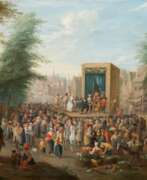

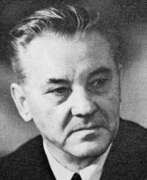

Georgy Nikolaevich Bibikov (Russian: Георгий Николаевич Бибиков) was a Russian and Soviet artist of the mid-20th century. He is known as a painter, graphic artist, illustrator, muralist and theater artist of the Leningrad school, working in the genres of landscape, portrait, still life and thematic painting.
Georgy Bibikov began participating in art exhibitions in 1920. Among his famous works are "Loaders", "Young Red Fleets Receive Uniforms", "Greetings to the Winners", "Trench Truth" and others. His works are in the State Russian Museum and in museums and private collections in Russia, Ukraine, Germany and France.
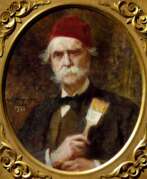

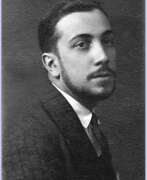

Boris Konstantinovich Bilinsky (Russian: Борис Константинович Билинский) was a Russian-born artist and designer, renowned for his significant contributions to set and costume design in theater, cinema, and ballet, as well as his accomplishments as a graphic artist. Bilinsky's career took him across Europe, from Russia to Germany, France, and eventually Italy, reflecting a life influenced by political and social upheavals of the early 20th century. His departure from Russia in 1920 marked the beginning of a prolific period in Berlin where he collaborated with prominent Russian emigre movie directors and theater companies. By 1923, Bilinsky had moved to Paris, becoming an integral part of the French cinema scene, notably designing posters and publicity material for the French release of Fritz Lang’s "Metropolis" in 1927, a commission that solidified his reputation as a leading cinema poster artist.
Bilinsky's creative vision extended beyond the cinema to the world of ballet and opera, where he made significant contributions, including designing for the Teatro alla Scala in Milan. His work for the "Follie viennesi" ballet in 1947, with music by Johann Strauss, showcased his ability to blend artistic freedom with the thematic requirements of the productions, employing vibrant colors and shapes that echoed the circular motion of a waltz.
Throughout his career, Bilinsky's versatility and talent were evident in the range of his work, from cinema posters to set and costume designs for prestigious theater productions. His legacy is preserved through collections and exhibitions, ensuring his artistic contributions continue to inspire and influence.
For collectors and experts in art and antiques, Boris Konstantinovich Bilinsky remains a figure of great interest due to the breadth of his work and the artistic prowess he displayed across various mediums. His contributions to the visual arts, particularly in the realm of set and costume design, cement his place in history as a versatile and innovative artist whose work transcends time and geographic boundaries.
Sign up for updates on Boris Konstantinovich Bilinsky to stay informed about new product sales, auctions, and exhibitions related to this remarkable artist. Your subscription will ensure you are the first to know about these exclusive events and opportunities.
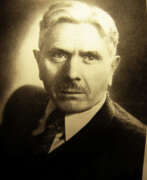

Mikhail Pavlovich Bobyshov (Russian: Михаил Павлович Бобышов) was a distinguished Soviet Russian painter, stage decorator, and professor, renowned for his contributions to the world of art. Born on November 7, 1885, in the Russian Empire and passing away on July 7, 1964, in the USSR, Bobyshov's artistic journey was marked by his affiliation with prestigious institutions and his recognition as a People's Artist of the Russian Federation. His work spanned various genres, including urban landscapes and portraits, demonstrating a unique style that blended realism with elements of impressionism, ornamentation, and decorationism.
Bobyshov's mastery in graphic art, particularly in book and magazine illustrations, as well as theatrical and decorative art, positioned him as one of the greatest masters of Soviet graphic art. His innovative approach to art was significantly influenced by the World of Art school, contributing to his legacy as a significant figure in the Leningrad School of Painting.
Among his notable works, "Evening in Moscow from the Series Victory Days in Moscow" stands out as an exemplar of his skill in capturing the essence of his subjects through gouache on paper. This piece, along with others, has been featured in prestigious auctions, highlighting Bobyshov's lasting impact on the art world.
For art collectors and experts, the work of Mikhail Pavlovich Bobyshov offers a rich tapestry of historical and cultural significance, encapsulating the essence of a pivotal era in Soviet art. His dedication to exploring and advancing the boundaries of artistic expression cements his status as a pivotal figure in the art community.
Stay updated on new product sales and auction events related to Mikhail Pavlovich Bobyshov by signing up for updates. This subscription ensures you're always informed about opportunities to engage with the enduring legacy of Bobyshov's art.
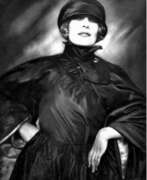

Kseniya Leonidovna Boguslavskaya (Russian: Ксения Леонидовна Богуславская) was a twentieth-century Russian artist who lived and worked in Germany and France for most of her career. She is known as a painter, graphic artist, theatrical artist and designer, and poetess.
Kseniya Boguslavskaya was a representative of the avant-garde school. She created semi-abstract cubo-futuristic compositions, including landscapes, still lifes, genre scenes, and images of interiors. In the same style, the artist drew sketches for articles of applied art. She also illustrated covers of publications and worked as a scenographer.
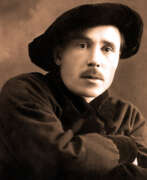

Alexei Nikolaevich Borisov (Russian: Алексей Николаевич Борисов) was a Russian and Soviet artist of the first half of the twentieth century. He is known as a painter, graphic artist, decorator, stage designer and teacher.
Alexei Borisov covered various themes in his work, from landscapes and portraits to works devoted to the partisan movement, industrialization and collectivization in Siberia, where the artist settled. His works, according to critics, stood out for their expressiveness, reverence, poetry and authenticity. The master left a significant creative legacy, including about 700 works of painting, graphics and decorative sketches.
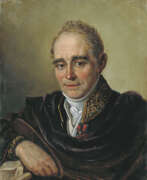

Vladimir Lukich Borovikovsky (Russian: Влади́мир Луки́ч Боровико́вский), a distinguished Russian artist of Ukrainian Cossack origin, was renowned for his mastery in portrait painting and ecclesiastical art. Born in Mirgorod, now Myrhorod, Ukraine, in 1757, Borovikovsky lived in Ukraine until the age of 31 before moving to St. Petersburg. His journey into the art world began under unusual circumstances when Empress Catherine II was impressed by his allegorical paintings, leading him to relocate to Saint Petersburg and adopt the more aristocratic surname Borovikovsky.
Borovikovsky's work epitomizes the sentimentalism era, capturing the essence and inner beauty of his subjects with a unique sensitivity and elegance. His ability to convey the nuanced emotions and dignified personalities of his sitters through intimate and detailed portraiture earned him acclaim, particularly among the Russian imperial family and nobility. Throughout his career, he produced about 500 portraits, with 400 surviving today, including notable figures such as Catherine II, Paul I, and Alexander Kurakin, as well as the celebrated "Portrait of M.I. Lopukhina".
In his later years, Borovikovsky's focus shifted towards religious painting, contributing significantly to the Kazan Cathedral and other ecclesiastical sites in St. Petersburg. Despite facing challenges, including court intrigues and a personal struggle with mental discord and alcohol, he left a lasting legacy through his art, which remains highly regarded for its depth, sincerity, and technical skill.
Collectors and experts in art and antiques cherish Borovikovsky's work for its historical significance and profound emotional resonance. His paintings, a fusion of classicist and sentimental styles, continue to inspire and captivate audiences, preserving the legacy of one of Russia's most gifted portraitists.
For updates on exhibitions and auction events featuring Vladimir Lukich Borovikovsky's work, sign up for our newsletter. Stay informed about the latest discoveries and opportunities to add a piece of history to your collection.
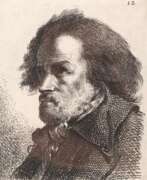

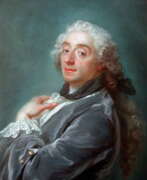

François Boucher, a French artist, is celebrated for his significant contributions to the Rococo style of painting. His works are renowned for their idyllic and voluptuous themes, which include classical subjects, decorative allegories, and pastoral scenes. Boucher's talent in creating intricate and charming paintings made him a favorite in the French court, especially with Madame de Pompadour.
François Boucher's skills were not confined to painting alone; he was also an adept draftsman and tapestry designer. His designs for the Beauvais tapestry workshops were highly successful, influencing decorative arts across Europe. Moreover, Boucher's influence extended to porcelain, with his designs being replicated on tableware and decorative pieces at the Vincennes and Sèvres factories.
Despite the later criticism of his style as overly frivolous and disconnected from the emerging Neoclassical trends, François Boucher's works continue to be admired for their aesthetic beauty and historical significance. His ability to blend various elements into a cohesive and appealing visual narrative demonstrates his mastery and enduring legacy in the art world.
For art collectors and enthusiasts, François Boucher's oeuvre offers a fascinating glimpse into 18th-century French art and culture, reflecting the opulence and delicate tastes of the Rococo period. His paintings and designs continue to be celebrated and studied for their artistic merit and historical context.
To stay updated on the latest exhibitions, sales, and events related to François Boucher's works, consider subscribing to updates from reliable art and antique sources. This way, you'll remain informed about opportunities to engage with the art of one of Rococo's most distinguished masters.
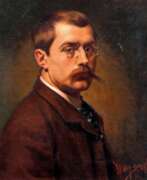

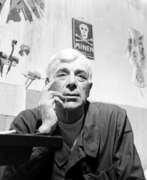

Georges Braque, a French artist, is celebrated as a pivotal figure in the development of Cubism, alongside Pablo Picasso. Braque's artistic journey transitioned from Impressionism to Fauvism before he delved into the groundbreaking realm of Cubism, characterized by its innovative use of perspective and geometric forms. His partnership with Picasso during the early 20th century marked a significant phase in art history, as they collectively pioneered the Analytic and Synthetic phases of Cubism.
Georges Braque's oeuvre is renowned for its technical precision, introspective quality, and harmonious color palettes. His contributions extended beyond painting to include sculpture and collage, demonstrating his versatile mastery over various mediums. Notable works like "Violin and Candlestick" and "Man with a Guitar" underscore his talent in transforming everyday objects into abstracted, multifaceted compositions.
Throughout his career, Georges Braque remained deeply committed to exploring the boundaries of visual perception and form. After World War I, his style evolved, incorporating brighter colors and new themes, yet he maintained a steadfast adherence to Cubist principles. His later years saw a focus on personal motifs, such as birds, which symbolized freedom and dynamism in his art.
Georges Braque's legacy is preserved in prestigious collections worldwide, including the Museum of Modern Art (MoMA), which houses a significant number of his works. His artistic innovations continue to inspire and influence the realms of art and culture.
For collectors and art enthusiasts, Georges Braque's work offers a profound insight into the evolution of modern art and the enduring allure of Cubism. His pieces are a testament to the enduring power of creativity and innovation in the face of changing artistic landscapes.
If you're keen on exploring Braque's contributions to art and wish to stay updated on exhibitions and sales featuring his work, consider subscribing for updates on Georges Braque's pieces and their presence in the art market today.
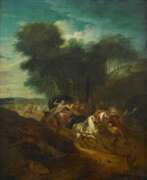


Arthur Brusenbauch was an Austrian painter. Arthur Brusenbauch learned from Johann Kautsky and then worked as a stage decorator himself. He studied in Vienna at the Staatsgewerbeschule and the Academy of Fine Arts, interrupted by military service and imprisonment. In 1920 he became a member of the Vienna Secession, and in 1939 he moved to the Künstlerhaus. In 1928 he had represented Austria in the art competitions of the 1928 Olympic Games. From 1937 to 1941 he participated in all major German art exhibitions in Munich with seven oil paintings. There, in 1939, Hitler acquired the picture of Melk an der Donau in festive decorations. Brusenbauch, who is attributed to late impressionism, dealt with fresco painting and graphics.
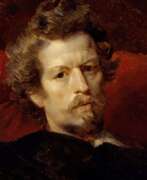

Karl Pavlovich Bryullov (Russian: Карл Па́влович Брюлло́в), a distinguished Russian artist, emerged as a pivotal figure in the world of 19th-century art, blending Western European Romanticism with his Russian heritage to create works that continue to captivate audiences today. His mastery in painting and architecture set him apart, making him a celebrated figure not just in Russia, but across Europe.
Bryullov's acclaim primarily stems from his remarkable ability to infuse his paintings with vibrant life and emotion, a testament to his profound understanding of human expression and the dramatic interplay of light and shadow. His most famous work, "The Last Day of Pompeii," exemplifies this skill, showcasing an epic narrative filled with vivid detail and emotional depth. This masterpiece, which is housed in the State Russian Museum in St. Petersburg, has garnered international praise for its innovative approach to historical painting, merging accuracy with dramatic storytelling.
Beyond "The Last Day of Pompeii," Bryullov's portfolio includes a range of subjects, from majestic portraits to serene landscapes, each bearing his signature blend of realism and romanticism. His works are featured in prestigious galleries worldwide, serving as a testament to his enduring influence on the art world. For collectors and experts in art and antiques, Bryullov's oeuvre offers a fascinating glimpse into the evolution of 19th-century European painting, marked by a unique intersection of culture, art, and history.
For those intrigued by the enduring legacy of Karl Pavlovich Bryullov and his contributions to painting and sculpture, we invite you to sign up for updates. Our subscription service provides exclusive alerts on new product sales and auction events related to this illustrious artist, ensuring that enthusiasts and collectors alike stay informed about opportunities to engage with Bryullov's remarkable works.
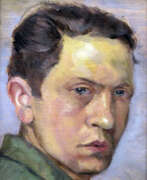

Hans-Ulrich Buchwald was a German painter, graphic artist, ceramist, stage designer and mask maker. His oeuvre comprises about 10,000 drawings, woodcuts and linocuts, paintings, ceramics, wooden sculptures and masks. It is characterised by a variety of artistic forms of expression. Buchwald felt committed to classical modernism, which he only became acquainted with after the war. He was inspired by George Grosz, Pablo Picasso, Edvard Munch, August Macke, Franz Marc, Oskar Schlemmer, Fernand Léger, but sought his own style in various fields.
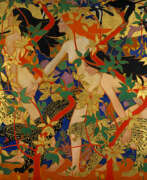

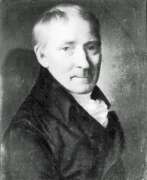

Daniel Caffé was a distinguished German pastel painter of portraits. Known for his meticulous craftsmanship and the emotive depth of his portraiture, Caffé initially embarked on a career in architectural decoration before his talents led him to Dresden to become a portrait artist.
Daniel Caffé's journey into the world of fine arts was marked by his study at the Dresden Academy of Fine Arts under the guidance of significant figures like Casanova and the influence of neoclassical artist Anton Raphael Mengs. His mastery of pastel made him a favored portraitist among the nobility and notable figures of his time, including Russian patrons like Prince Beloselski and Admiral Fyodor Grigoryevich Orloff.
His works, celebrated for their detailed and expressive nature, capture the essence of his subjects with striking realism and emotional depth. Among his notable works are portraits of prominent individuals such as Johann George Tromlitz and Karl August von Hardenberg, which not only exemplify his skill but also his contribution to the documentation of his era's influential figures.
Daniel Caffé's legacy as a pastel painter is preserved in various art collections and continues to be admired for its historical significance and artistic merit. He passed away on January 16, 1815, in Leipzig, leaving behind a body of work that continues to be studied and revered in the art community.
For collectors and experts in art and antiques, Daniel Caffé's portraits offer a glimpse into the refined pastel techniques and cultural narratives of the late 18th to early 19th century. His works remain a significant part of German art history, celebrated for their contribution to the development of portrait painting.
To explore more about Daniel Caffé’s life and works, consider signing up for updates on exhibitions and auctions where his art is featured. This will provide opportunities to engage more deeply with the legacy of this notable artist.
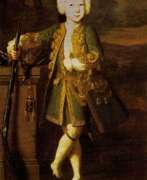

Louis Caravaque was a French portrait painter renowned for his contributions to Russian art during the early 18th century. Born in 1684 in Marseilles, France, Caravaque embarked on his artistic journey influenced by his family's background in decorative painting. His talent soon caught the attention of influential figures, leading to a pivotal contract in 1715 that took him to Russia. There, he famously painted Peter the Great and became a favored artist at the Russian court.
Caravaque's work is distinguished by his detailed and expressive portraiture, which earned him the position of the first court painter during Anna Ioannovna's reign. He played a significant role in the cultural exchanges between France and Russia, melding Western European techniques with Russian traditions. His notable works, which include portraits of Russian royalty and nobility, are held in prestigious collections such as the Hermitage and the Russian Museum in St. Petersburg.
Among his most celebrated paintings are the portraits of Peter the Great, Empress Elizabeth as an Olympic goddess, and Catherine II, showcasing his skill in capturing the grandeur and intricacy of his subjects. These artworks not only highlight his mastery of oil painting but also reflect the rich historical and cultural milieu of his time.
For collectors and art experts, the legacy of Louis Caravaque offers a fascinating glimpse into the intersection of French artistic influence and Russian imperial identity. His works remain a testament to his skill and the cultural bridge he helped forge between two distinct worlds.
For more information and to stay updated on exhibitions featuring Louis Caravaque’s work, consider signing up for updates related to this remarkable artist.
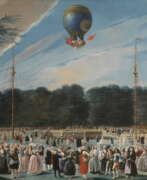

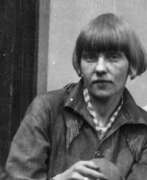


Jacques (Ya'akov) Chapiro was a painter of the School of Paris.
Chapiro's works can be found in museums in the United States (Chicago), Russia (Moscow) and France (Jeu de Paume, Paris). As to his artistic style, it seems that Chapiro was fond of experiments. His many paintings are much different from one another; some are classified as Cubistic in style, some as Impressionist and others as Fauvist. Throughout his artistic career, Chapiro kept sketching in his unique signature, with a light and talented hand. It is in his realistic sketching, which are somewhat casual, that one can be truly impressed by his talent.
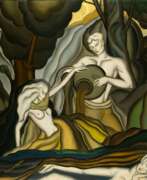

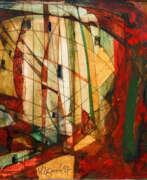

Ivan Ivanovich Chorny (Russian: Иван Иванович Чёрный) was a Soviet, Ukrainian and Russian artist of the second half of the twentieth and early twenty-first centuries. He was known for his monumental and decorative works in the style of socialist realism.
Ivan Chorny reoriented his style in the late 1990s, inventing a new technique and moving away from figurativeness in favor of abstract painting. His enigmatic compositions became an expressive expression of inner feelings enriched with colors and lines.
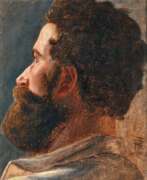

Hans Christiansen was a German painter, representative of classical modernism, decorator and illustrator.
Christiansen trained as a decorative painter in Flensburg and then at the School of Applied Arts in Munich, later studying at the Académie Julian in Paris. After a study trip to Italy in 1889, he moved to Hamburg, where he taught at the Technical University.
At the same time, Christiansen worked as a freelance decorative artist and was active in the Volkskunst-Verein, and was one of the founders and first residents of the Darmstadt artists' colony of the late 19th and early 20th century. Together with Josef Olbrich and Peter Behrens, he designed furniture, ceramics, tapestries, stained glass and graphic posters. He also designed his own house in the colony, which he called "Villa Rose," which was destroyed during World War II.
During this time, the versatile artist also wrote regularly for the magazine Jugend, creating many illustrations and covers. From 1911 he lectured at the Wiesbaden School of Arts and Crafts and was a member of the Wiesbaden Free Artists Association.
In 1933, Christiansen's work was banned by the Nazi Party of Germany because of his Jewish wife, and he was almost forgotten until his death in 1945.
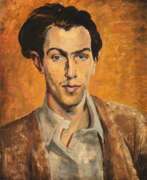

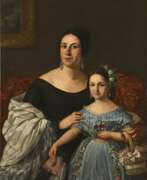

Antonio Gómez Cros was a Spanish painter, lithographer and decorator.
Antonio began studying painting at the Academy of Fine Arts of San Carlos in Valencia and completed his studies at the Royal Academy of Fine Arts of San Fernando. He was a representative of early romanticism with signs of classicism.
Antonio Gómez Cros specialized in historical scenes and was a recognized portrait painter. In 1846 he was appointed honorary chamber painter to Elizabeth II and painted several famous historical, battle and religious paintings in this position. The artist also painted walls and curtains in palaces and theaters.
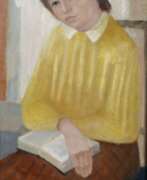

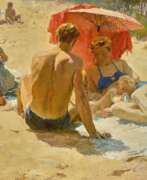

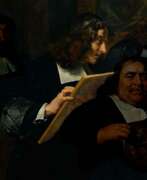

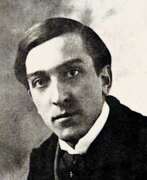

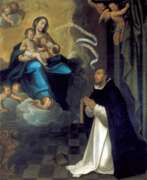

Pedro de Raxis was a Spanish painter and gilder known for his contributions to the Granadan school of art. Born in 1555 in Alcalá la Real, Jaén, Raxis became a key figure in Granada art of the Counter-Reformation era. Characterized by vivid narrative and Mannerist influences, his works are characterized by intense, luminous colors and delicate composition.
Raxis's career was marked by numerous significant commissions. Among his best-known works are the murals for the church of San Cecilio in Granada (1580), the retablos of Santa María Mayor de Alcaudete (Jaén) and Asunción de María in Granada Cathedral (1615). These works demonstrate his exceptional skill in estofado, a technique involving the gilding and polychroming of statues and altarpieces.
One of Raxis's most famous works is Aparicion de la Virgen a San Jacinto, preserved in the Granada Museum of Fine Arts. This painting, dating from around 1600, represents a significant achievement in Raxis's artistic journey. It illustrates the mystical ecstasy and contemplative rapture characteristic of Spanish Baroque culture. The expressive depth and rich tonal range of the painting became more evident after its restoration in 1998.
Pedro de Raxis's influence extended beyond his paintings. Contemporaries such as Francisco Pacheco praised his mastery of estofado and gilding. Raxis established one of the most prolific and versatile workshops in Granada, which left an indelible mark on the artistic landscape of Andalusia.
For collectors and art experts, Raxis' work remains a testament to the rich cultural heritage of the Granada school. His paintings not only reflect the artistic fervor of the era, but also provide a glimpse into the religious and cultural world of Counter-Reformation Spain.
To delve deeper into the world of Pedro de Raxis and to keep up to date with new sales and auction events related to this master of the Granada School, subscribe to our updates. Our subscription will keep you up to date with the latest offers and events.
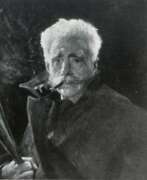

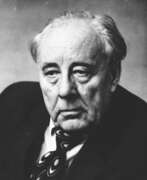

Mykhailo Hordiiovych Derehus (Russian: Михаил Гордеевич Дерегус) was a prominent Soviet Ukrainian graphic artist, painter, and educator, renowned for his significant contributions to the visual arts in Ukraine. Born on December 5, 1904, in Veseloye, Kharkiv Oblast, Derehus' artistic journey began at the Kharkiv Art Institute, where he not only honed his skills but also later imparted knowledge as a lecturer. His diverse body of work spans thematic painting, landscapes, still lifes, portraiture, etching, and book illustration, demonstrating his versatility across different mediums.
Derehus' art, particularly his expressionist lithographs, played a crucial role in illustrating significant Ukrainian literary works, such as Ivan Kotliarevsky's "Eneïda" and the writings of Nikolai Gogol, Lesya Ukrainka, Marko Vovchok, and Natan Rybak. His illustrations are celebrated for their depth and ability to capture the essence of the Ukrainian spirit. A testament to his mastery and significant impact on Ukrainian art, Derehus was awarded the prestigious Shevchenko National Prize in 1969. His legacy includes his leadership as Chairman of the National Union of Artists of Ukraine from 1955 to 1962 and his works being held in esteemed collections such as the Kuindzhi Art Museum in Mariupol, Ukraine.
For collectors and experts in art and antiques, Derehus' work represents a vital link in the chain of Ukrainian cultural heritage, offering unique insights into the nation's artistic evolution. His contributions have not only enriched Ukrainian visual arts but also ensured that the beauty of Ukraine's landscapes, its historical narratives, and the richness of its folklore continue to inspire future generations.
If you're intrigued by the artistic legacy of Mykhailo Derehus and wish to explore more about his works and their significance in the realm of Ukrainian art, consider signing up for updates. This subscription will keep you informed about new product sales and auction events related to Derehus, offering exclusive opportunities to connect with the rich tapestry of Ukrainian cultural expression.
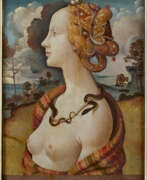

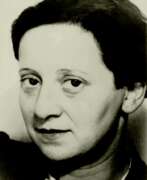





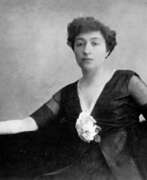

Aleksandra Aleksandrovna Ekster (Russian: Алекса́ндра Алекса́ндровна Эксте́р), a luminary of the Russian avant-garde, was a painter and designer whose work traversed the boundaries of Cubo-Futurism, Suprematism, and Constructivism, eventually influencing the Art Deco movement. Born in Białystok (then part of the Russian Empire, now Poland) and later splitting her life among Kiev, St. Petersburg, Moscow, Vienna, and Paris, Ekster played a pivotal role in bridging Russian and European artistic movements. Her innovative approach to art was characterized by dynamic movement, vibrant color contrasts, and geometric compositions, which were evident in her paintings, theater set and costume designs, and educational endeavors.
Ekster's studio became a hub for the intellectual and artistic elite, hosting figures like poets Anna Akhmatova and Osip Mandelstam, as well as painters Pablo Picasso and Georges Braque during her stays in Paris. Her involvement in significant art exhibitions, such as the Salon des Indépendants and the Salon de la Section d'Or in Paris, showcased her works alongside those of Jean Metzinger, Marcel Duchamp, and others, marking her as a key figure in the avant-garde community.
Beyond painting, Ekster's contributions to theater and design were profound. She worked on costume and set designs for Alexander Tairov's Chamber Theatre and participated in the revolutionary festivities' decoration in Kiev and Odessa. Ekster's pedagogical efforts included teaching at the Higher Artistic-Technical Workshop (VKhUTEMAS) in Moscow, fostering a new generation of avant-garde artists.
Ekster's work is housed in various international and private collections, reflecting her lasting impact on the art world. Her ability to integrate different genres and styles, along with her commitment to experimentation and innovation, made her one of the most influential women in the Russian avant-garde.
For those fascinated by the pioneering spirit of Aleksandra Aleksandrovna Ekster and the avant-garde movement, signing up for updates on new product sales and auction events related to her work is a compelling way to stay informed. This subscription ensures enthusiasts and collectors are always in the loop regarding opportunities to engage with Ekster's enduring legacy.
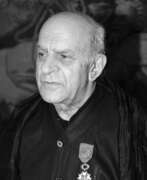

Aleсos Fassianos (Greek: Αλέκος Φασιανός), also Alexandre Fassianos, was a Greek painter, writer and poet. He is internationally known for his figurative paintings that depict the contemporary world in a mythological way.
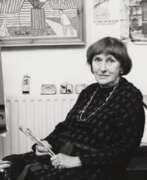

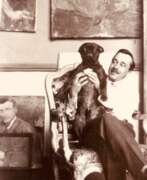

Serge Férat, born Count Sergei Nikolaevich Iastrebtsov (Russian: Сергей Николаевич Ястребцов), was a Russian and French avant-garde artist, painter, graphic artist and scenographer.
Sergei Iastrebtsov was born into a Moscow noble family, studied at the Kiev Art School, and in 1902 moved to Paris and entered the Académie Julian in Paris. In France, he first took the pseudonym Alexander Rudnev, and then began to sign his works with the name Serge Ferat. In the magazine Les Soirées de Paris he signed his publications with the pseudonym Jean Cérusse.
In 1910, Ferat began working on still lifes, combining the techniques of cubism with the warm colors of Russian folklore. Until the 1920s, Serge Fera painted in the style of Picasso's cubism, and on glass. Serge Ferat knew and was friends with many contemporary European artists, including Guillaume Apollinaire and Amedeo Modigliani. In the surrealist production of Apollinaire's play Mamelles de Tirésias (Théâtre René Mobel, Montmartre), he contributed to the set and costume design.
Ferat was engaged in book graphics and scenography, was a member of the group "Golden Section", and collaborated with the Russian magazine "Blow". In 1949 he took part in the design of the anthology Poetry of the Unrecognized, and in 1953 his works were exhibited at the Great Exhibition of Cubism at the Museum of Modern Art in Paris.
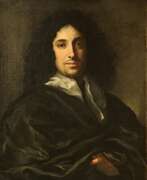


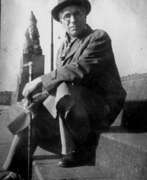

Rudolf Rudolfovich Frentz (Russian: Рудо́льф Рудо́льфович Фре́нц) was a Soviet and Russian painter, watercolorist, graphic artist, and art teacher, known for his contributions to the Leningrad School of Painting. Born on July 23, 1888, in Marienburg, a suburb of Saint Petersburg, he studied at the Imperial Academy of Arts under Vasily Savinsky and Nikolai Samokish. Frentz's early work focused on battle scenes, which became a hallmark of his style.
Frentz's work is celebrated for its dynamic composition and attention to historical detail, particularly in his depictions of military scenes. He was a member of the Leningrad Union of Artists and was deeply involved in the artistic community of Leningrad. His paintings, which often portrayed the heroism and struggles of Soviet soldiers, were exhibited in numerous prestigious shows and galleries throughout his career.
Notable works by Frentz include paintings like "Battle of Borodino" and "Storming of the Winter Palace," which are admired for their dramatic intensity and historical accuracy. His legacy continues to be honored in Russian art history, with his works held in collections such as the State Russian Museum and the Tretyakov Gallery.
Stay updated on new product sales and auction events related to Rudolf Rudolfovich Frentz by signing up for our updates. This subscription will only notify you of relevant sales and events.
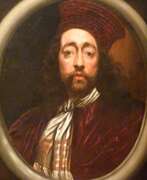

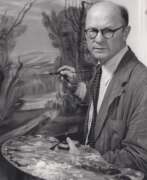

Adomas Galdikas was a Lithuanian painter, graphic artist, theatre artist and stage designer.
Adomas Galdikas painted landscapes, still lifes, portraits, abstract compositions. Author of prints, illustrated books. He created scenery for seventeen productions of the Kaunas State Theatre; among the most significant theatre works, apart from Kreve's Sharunas, is the opera Gražina by Jurgis Karnavičius (1933).


Frans Geffels, known in Italy as Francesco Geffels (25 August 1624 – 18 February 1694) was a Flemish painter, printmaker, architect, stage designer and designer of ephemeral structures for solemn and festive occasions. After training in his native Antwerp, he was mainly active in Mantua, where he was prefetto delle fabbriche to the Duke, a role that gave him the direction of the artistic and construction activities undertaken by the Ducal court. He worked also on projects for the local aristocratic class of Mantua. In addition, he completed projects for the Liechtenstein princes and for the imperial court in Vienna.
He was both a canvas and fresco painter. He created portraits, history subjects, military scenes, architectural scenes and genre art, in particular merry companies. Geffels is mainly remembered as the designer of some of the key examples of Baroque architecture in Mantua.

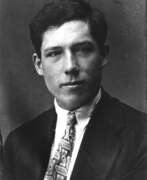

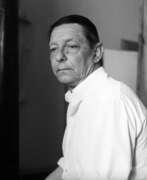

Anatoly Andreevich Gorpenko (Russian: Анатолий Андреевич Горпенко) was a Soviet artist of the mid-twentieth century. He is known as a painter and graphic artist, battle painter and portraitist.
Anatoly Gorpenko served as a war artist during the Great Patriotic War, creating propaganda posters and front sketches. His oeuvre includes pictorial works, including battle scenes and portraits of military figures. He also participated in the creation of dioramas and panoramas, and his works, including stained glass windows and mosaics, decorated monuments and buildings, including in Berlin.
Gorpenko also did graphics for publishers and magazines and created political posters.
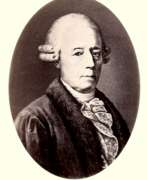

Georg Christoph Grooth was a German painter, renowned for his significant contributions to Russian art in the mid-18th century. Born in Stuttgart on January 21, 1716, Grooth moved to the Russian Empire in 1741, where he quickly became a favored portraitist at the Imperial Court under Empress Elizaveta Petrovna. His work during this period includes supervising and restoring royal painting collections and teaching Russian pupils, one of whom was the talented Ivan Argunov.
Grooth's most celebrated work is the 1743 equestrian portrait of Empress Elizabeth of Russia, which is preserved in the State Tretyakov Gallery in Moscow and has replicas in other major institutions like The Metropolitan Museum of Art. This iconic portrait shows Elizabeth in a green colonel's uniform, symbolizing her command over the Russian military and navy.
His role extended beyond painting; from December 1743, Grooth also served as the Keeper of the Palace art galleries, decorating interiors of palaces and other buildings in St. Petersburg and Tsarskoe Selo. This period marked a prolific phase where he created numerous portraits of the Russian aristocracy until his death on October 8, 1749, in St. Petersburg.
For collectors and experts in art and antiques, Grooth’s works offer a unique glimpse into the 18th-century Russian imperial court and its artistic preferences. Sign up for updates on new product sales and auction events featuring Georg Christoph Grooth’s work to enrich your collection with pieces of historical and artistic significance.
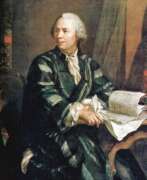

Georg Gsell was a Swiss Baroque painter, art consultant, and art dealer, renowned for his contributions to the arts during the early 18th century. Born in St. Gallen on January 28, 1673, Gsell's journey in the arts took him across Europe. He moved to Amsterdam in 1704, and later to Russia on the invitation of Peter the Great in 1716. In Russia, he served as the first curator of the Imperial art gallery, a significant cultural institution founded in 1720.
Gsell's work is appreciated for its meticulous detail and historical value. He catalogued the Kunstkamera, Russia's first museum, through detailed manuscript forms, a significant contribution to the preservation of early 18th-century European and Russian cultural artifacts. His artworks, which include portraits and still lifes, reflect the Baroque style's complexity and elegance.
For art collectors and experts, Georg Gsell's legacy offers a glimpse into the Baroque period's artistry and the early days of museum curation in Russia. His works and contributions remain subjects of study and admiration in art circles today.
For updates on exhibitions and sales related to Georg Gsell's works, sign up for our newsletter. This subscription will keep you informed about new findings and auction events specifically pertaining to Georg Gsell's art.
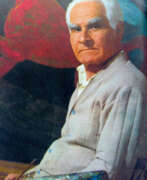

Lado Gudiashvili (Russian: Ладо Давидович Гудиашвили) was a Georgian artist, celebrated for his distinctive and innovative contributions to 20th-century art. Born in Tbilisi, Gudiashvili embarked on his artistic journey at the Tbilisi school of sculpture and fine art, later enhancing his skills in Paris's Ronson's private academy. His work, deeply influenced by Georgian life and culture, masterfully blends dramatic grotesque with poetic mystery, often incorporating elements of Caucasian and Persian traditions.
Gudiashvili's artistic repertoire was vast, encompassing painting, book design, graphic art, and teaching. He was an integral part of the Tbilisi Modernism and Socialist Realism periods, contributing significantly over a 60-year career. His engagement with avant-garde circles in Tbilisi and his murals for popular cafes showcased his versatility and creativity. Gudiashvili's Paris years (1919-1926) were marked by independence and recognition, as he exhibited alongside notable contemporaries and was encouraged to showcase his work independently.
His contributions were not limited to canvas; Gudiashvili also left an indelible mark on set design and book illustration, working on productions and literary classics that remain influential. Notably, his works adorn the Kashveti Church in Tbilisi, a testament to his monumental talent. Despite facing challenges, including political pushback for his church paintings, Gudiashvili's legacy as a pioneering Georgian artist remains undisputed. He received several high Soviet honors, underscoring his significance in the art world.
For collectors and experts in art and antiques, Gudiashvili represents a vital link between Georgian cultural heritage and modernist expressions. His works, which include engaging illustrations, set designs, and captivating paintings, continue to attract interest for their historical significance and artistic value.
To stay updated on sales and auction events featuring Gudiashvili's works, sign up for updates. This subscription will ensure you're informed about opportunities to acquire pieces by this remarkable Georgian artist.
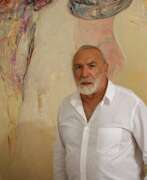

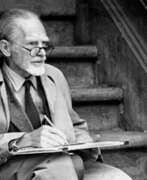





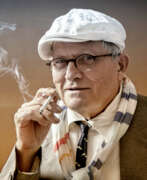

David Hockney, a British artist, has been a prominent figure in the art world for over six decades, renowned for his contributions to painting, drawing, printmaking, photography, and video art. His exploration of these mediums has made significant impacts on the Pop Art movement and beyond, making him one of the most influential artists of the 20th and 21st centuries. Hockney's work is celebrated for its vibrant color palette, emotional depth, and innovative use of technology in art.
One of Hockney's most distinctive features is his ability to blend traditional techniques with modern technology, notably in his iPad drawings and photographic collages. This fusion not only showcases his skillful adaptation to contemporary mediums but also highlights his ongoing quest to explore the nature of seeing and representation in art. Hockney's landscapes and portraits, characterized by their bright colors and meticulous detail, invite viewers to see the world through his unique perspective.
Significant works by Hockney, such as "A Bigger Splash" and "Portrait of an Artist (Pool with Two Figures)," are housed in major museums and galleries worldwide, attesting to his global influence and appeal. These pieces, among others, demonstrate Hockney's mastery over space, light, and narrative, securing his position as a pivotal figure in modern and contemporary art.
For collectors and experts in art and antiques, Hockney's oeuvre presents a fascinating study in the evolution of visual arts. His work not only offers insight into the artist's personal vision but also reflects broader cultural and technological shifts in society. As interest in Hockney's art continues to grow, keeping abreast of new sales and auction events becomes increasingly valuable.
To stay informed about the latest David Hockney sales and auction events, sign up for our updates. This subscription ensures that you receive timely notifications about new product sales and auction events related to David Hockney, offering unique opportunities for collectors and enthusiasts alike.


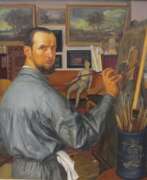

Aleksandr Evgenevich Iakovlev (Russian: Александр Евгеньевич Яковлев), a Russian painter, graphic artist, and designer, left an indelible mark on the world of art with his unique blend of classical and orientalist styles. Born in Saint Petersburg, Russia, in 1887, Iakovlev was part of the vibrant Russian artistic community that contributed significantly to the neo-classical and orientalist movements. His extensive travels across Mongolia, China, Japan, Africa, Syria, Iran, and Afghanistan enriched his art, leading to a prolific output of portraits, landscapes, still lifes, and figure compositions that combined elements of Italian Renaissance with Russian Primitivism.
Iakovlev's early involvement with the Mir Iskusstva exhibition in 1915 showcased his talent but also highlighted the mixed reactions from critics and the Academy of Arts, signaling his departure from traditional academic confines. His scholarship to study in the Far East and subsequent travels profoundly influenced his work, as seen in his orientalist paintings and ethnographic drawings. This period of exploration culminated in his significant contributions as an official artist on the Citroën expeditions across Central Africa and Asia, where he captured the essence of the diverse cultures he encountered.
His works, such as "Three Women in a Box at the Theatre" and his participation in designing the Prival Komediantov artistic cabaret, exemplify his mastery of merging traditional subjects with a modernist touch. Serving as the Director of the Painting Department at the School of the Museum of Fine Arts, Boston, between 1934 and 1937, Iakovlev influenced the art scene beyond the Russian borders before his death in Paris in 1938.
Iakovlev's legacy is preserved in museums and galleries worldwide, celebrating his contributions to bridging cultures through art. His ability to document his travels and experiences in such a vivid and artistic manner has left a lasting impact on the appreciation of cultural diversity in the art world.
For collectors and experts in art and antiques, Aleksandr Evgenevich Iakovlev's works represent a convergence of classical artistry and exploratory zeal, making them highly sought after. His pieces not only capture the beauty of the subjects he portrayed but also serve as a window into the cultures and landscapes that inspired him.
For updates on exhibitions and auction events featuring Aleksandr Evgenevich Iakovlev's works, sign up to stay informed about new discoveries and opportunities to add to your collection.
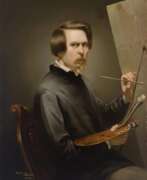

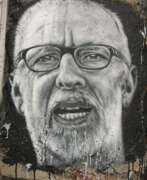

Jörg Immendorff was a German painter and sculptor, stage designer and decorator, and a member of the New Wild movement.
Immendorff painted in cycles that often lasted for years and were political in nature. His series of sixteen large paintings, Café Deutschland (1977-1984), is well known. In these colorful paintings, numerous disco lovers symbolize the conflict between East and West Germany.
Immendorff prepared several stage productions and designed sets for the operas Elektra and The Rider's Voyage. 25 of Immendorf's paintings were selected in 2006 for the illustrated Bible.


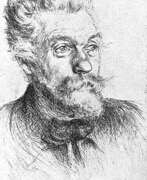

Charles Jouas, born Charles Alfred Auguste Jouas, was a French painter, illustrator and designer, and printmaker.
Charles studied painting in workshops with various artists and worked on theater sets. In 1896 he met the famous bibliophile Henri Beraldi, and this meeting was decisive: the artist had promising orders. Then began a long collaboration with the engraver Henri Paillard (1846-1912).
Charles Jouas specialized in cityscapes of Paris, from 1890s worked as an illustrator for rare books. Then he began engraving his own drawings and experimenting with etching, and became president of the engraving section of the National Society of Fine Arts.
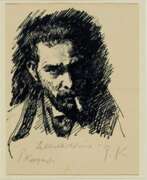

Paul Kayser was a German painter and graphic artist. After training as a painter-decorator, Kayser attended the Schools of Applied Art in Munich and Dresden.
Paul Kayser was a founding member of the Hamburg Artists' Club 1897 and the Hamburg Secession, and a member of the Hamburg Artists' Association and the Altona Artists' Association. His style was decisively influenced by Albert Marquet, whom Kaiser met in 1909.
In 1937, Kaiser's still life was confiscated from the museum in Husum as part of the Nazi "Degenerate Art" campaign.
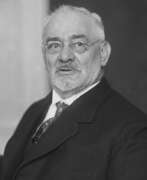

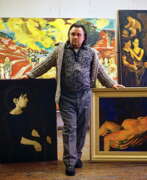

Alexander Mikhailovich Kishchenko (Russian: Александр Михайлович Кищенко) was a Soviet and Belarusian artist of the second half of the twentieth century. He is best known as a muralist painter.
Alexander Kishchenko is considered one of the most famous artists of Belarus of the 20th century, and his works are valuable assets of Belarusian culture. He worked in all genres of easel and monumental decorative painting and created hundreds of works during his career, including philosophical paintings and portraits. The artist was also proficient in mosaics, ceramics and tapestry.
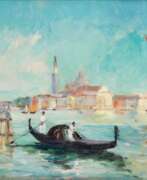

Serge Kislakoff was a French artist and decorator of Russian origin. He is the author of numerous film posters.
Serge Kislakoff painted city views and scenes (Montmartre, Paris boulevards, carnivals in Nice and Cannes), landscapes, harbour views (south of France, Sweden), religious subjects inspired by Old Russian painting. He was also involved in the restoration of church paintings.
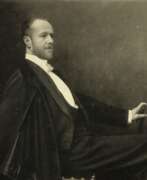

Fernand Khnopff, full name Fernand-Edmond-Jean-Marie Khnopff, was a Belgian Symbolist painter, graphic artist, sculptor and art historian.
Born into a wealthy family, Fernand attended the Royal Academy of Fine Arts in Brussels, where he studied painting with Xavier Mellerie. Throughout his years at the academy, Khnopff spent summers in Paris studying art, and at the 1878 World's Fair he saw the works of Pre-Raphaelite Edward Burne-Jones and Symbolist Gustave Moreau, which had a decisive influence on his work.
In the early 1880s Khnopff began to exhibit his Symbolist works, often inspired by literary works, particularly by Gustave Flaubert. His paintings combined precise realism with an ethereal fairy-tale atmosphere, and he also painted portraits.
In 1883 Khnopff co-founded Les Vingt, a group of Belgian avant-garde artists. From the early 1990s, he collaborated regularly with the Brussels opera house Royal de la Monnaie, designing costumes and sets for many productions. He also designed the interiors of Brussels' landmark buildings: the Maison Stoclet and the Hôtel de Ville in Saint-Gilles.
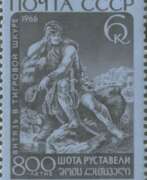


Stepan Fedorovitch Kolesnikoff (Russian: Степан Федорович Колесников) was a Ukrainian realist painter renowned for his exceptional ability to capture the essence of Ukrainian nature and rural life. Born in 1879 in the Russian Empire and passing in 1955 in Belgrade, Yugoslavia, Kolesnikoff's journey began in a humble peasant family. His artistic talent was evident early on, leading him to the Odessa Art School and subsequently, without exams, to the prestigious Imperial Academy of Arts. Here, he was not only a student but also thrived, winning numerous awards for his work.
Kolesnikoff's art is characterized by its focus on the natural awakening of landscapes, melting snows, floods, and the vibrant days of spring. He also had a keen interest in painting domestic scenes filled with people and animals, often using a palette of blues and bright oranges. Despite the rich detail in his paintings, Kolesnikoff rarely highlighted the faces of his subjects, preferring instead to capture the essence of the moment. His work received high praise from Ilya Repin, a leading Russian artist of the time, underscoring Kolesnikoff's significant impact on realism.
After emigrating to the Balkans in 1919 due to the political upheaval in Russia, Kolesnikoff settled in Belgrade where he continued his artistic career. He was warmly welcomed and even participated in state assignments, such as leading restoration works on paintings and frescoes. Kolesnikoff's legacy extends beyond his paintings; he was a respected member of the artistic community, contributing to societies like the "Community of Artists" and "Leonardo da Vinci".
For collectors and experts in art and antiques, Kolesnikoff's work represents a fascinating blend of cultural and historical narratives, imbued with the beauty of Eastern European landscapes and life. His contributions to realism and his unique approach to depicting rural life make his works highly sought after.
To stay updated on exhibitions and auction events featuring Stepan Fedorovitch Kolesnikoff's works, signing up for updates can provide exclusive insights and opportunities to acquire pieces by this remarkable artist.
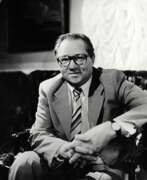

Yuri Konstantinovich Korolyov (Russian: Ю́рий Константи́нович Королёв) was a distinguished Soviet painter, monumental artist, and educator, renowned for his contributions to the art world. Born in 1929 and passing in 1992, Korolyov's career was marked by a profound dedication to the exploration of monumental and decorative compositions, painting, mosaics, and stained glass. His notable achievements include being honored as the People's Artist of the USSR in 1985 and serving as a corresponding member of the Academy of Arts of the USSR since 1983. Korolyov's influence extended beyond his artwork, as he was an esteemed professor at the Higher School of Industrial Art, where he shaped the minds of future artists, and notably held the position of Director at the Tretyakov Gallery from 1980 to 1992.
Korolyov's works are celebrated for their intricate detailing and profound thematic depth, capturing the essence of Soviet ideology through art. His masterpiece, "50 years of the USSR" in Tolyatti, created in 1981, stands as a testament to his skill in creating monumental art that resonates with historical significance and artistic beauty. This piece, among others, showcases Korolyov's mastery in blending artistic innovation with national pride, making his contributions invaluable to the Soviet art scene and beyond.
For art collectors and enthusiasts keen on exploring the works of a visionary who played a pivotal role in Soviet art history, Yuri Konstantinovich Korolyov's legacy offers a rich tapestry of cultural and artistic significance. His dedication to art education and his monumental contributions to the USSR's artistic heritage underscore the profound impact he had on the art world.
To stay updated on exhibitions and sales related to Yuri Konstantinovich Korolyov, signing up for updates is highly recommended. This subscription ensures that collectors and experts are informed about new opportunities to engage with Korolyov's enduring legacy, including upcoming auctions and events.
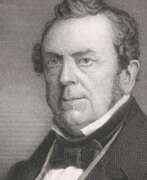

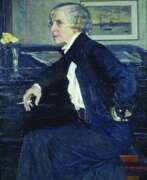

Elizaveta Sergeyevna Kruglikova (Russian: Елизавета Сергеевна Кругликова) was a Russian-Soviet artist, celebrated for her distinctive contributions to etching, silhouette art, and monotyping. Born into a St. Petersburg family with a deep appreciation for art, Kruglikova's talent blossomed early, supported by the artistic atmosphere at home. She honed her skills at the Moscow School of Painting, Sculpture and Architecture before moving to Paris, where she immersed herself in the city's vibrant art scene. From 1902, she experimented with etching, eventually becoming a notable figure in this field.
Kruglikova's Parisian period was marked by her work at the Académie de La Palette, where she both studied and taught, making significant contributions to the art of etching. Her return to Russia at the onset of World War I marked a new phase in her career, as she began exploring the realm of silhouette art, creating evocative portraits and scenes that captured the spirit of her subjects with striking clarity.
Perhaps most renowned for her pioneering work in monotype, a printing technique that allowed her unique expressivity, Kruglikova's art straddles the line between printmaking and painting. Her creations, ranging from the depiction of Parisian life to the vibrancy of the Russian cultural milieu, reflect a deep engagement with both her subjects and her mediums. The artist's ability to revive and innovate within traditional etching and printing techniques garnered her recognition and admiration, culminating in the dedication of the Fourth International Festival of Monotypes to her legacy.
Her works, characterized by a deep exploration of silhouette and monotype techniques, resonate with collectors and art enthusiasts to this day. Notably, Kruglikova was among the first Russian female artists to establish a studio in Paris, contributing significantly to the art scene there and back in Russia. Her late works include insightful portraits of fellow artists and poets, showcasing her mastery of silhouette style and positioning her as a key figure in the transition between printed graphic art and painting.
For collectors and experts in art and antiques, Kruglikova's legacy offers a fascinating glimpse into the innovative spirit of early 20th-century Russian and Soviet art. Her works not only reflect the artistic movements of her time but also stand as testaments to her individual creativity and technical prowess.
Stay informed about new sales, auction events, and exhibitions featuring Elizaveta Sergeyevna Kruglikova by signing up for updates. This subscription is your gateway to the world of a visionary artist whose work continues to inspire and captivate.


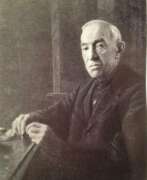

Nikolaу Petrovich Krymov (Russian: Никола́й Петро́вич Кры́мов), born on May 2, 1884, in Moscow, Russia, was a renowned Russian and Soviet painter and art theoretician, celebrated for his contributions to landscape painting and art education. Krymov hailed from an artistic family, and his education in the arts was comprehensive, studying under prominent figures like Abram Arkhipov, Nikolay Kasatkin, Leonid Pasternak, Valentin Serov, and Konstantin Korovin at the Moscow School of Painting, Sculpture and Architecture. His artistic journey began with participation in student exhibitions in 1906, and his works were soon featured in major exhibitions, including those of the Blue Rose, the Golden Fleece, and the Union of Russian Artists, marking his integration into significant artistic circles of his time.
Krymov's early works were significantly influenced by Isaac Levitan's delicate vision of Russian nature, focusing on the subtleties of daily transitions and the beauty of the Russian countryside. This influence is evident in Krymov's ability to convey the ethereal qualities of light and atmosphere in his landscapes, which were appreciated for their emotional depth and technical prowess. Among his notable works are paintings like "Dawn" (1908), "On the Mill" (1915), "First Snow" (1917), and "Hot Day" (1920), all of which demonstrate his masterful handling of light, shadow, and composition to capture the essence of nature.
Krymov's career also included significant contributions to art education and theory. He was an active participant in the "Blue Rose" movement, where he explored symbolism and impressionism, later transitioning towards a more classical approach in his landscapes. This evolution in style reflected his continuous search for an ideal harmony between reality and fantasy in his works. His dedication to art was recognized with several honors, including the title of Honorary Art Worker of the Russian Federation and the prestigious Order of the Red Banner of Labour.
Krymov's legacy extends beyond his paintings to include his influence on future generations of artists through his teaching and theoretical writings. His works are housed in museums and private collections, where they continue to be celebrated for their contribution to the landscape genre and Russian art.
For art collectors and experts interested in the rich tapestry of Russian landscape painting, Krymov's works offer a window into the soul of Russian nature and the artistic movements of the early 20th century. To stay updated on new product sales and auction events related to Nikolay Petrovich Krymov, signing up for updates is highly recommended. This subscription ensures that enthusiasts and collectors alike are informed about opportunities to acquire pieces by this illustrious artist, celebrating his enduring influence on the world of art.


Kurt-Hermann Kühn is a German painter and graphic artist. He trained as a decorator and studied from 1946 to 1952 at the Academy of Graphic Arts and Printing in Leipzig and in Berlin at the Academy of Fine and Applied Arts.
Kurt-Hermann Kühn travelled to Syria and Egypt. These journeys are reflected in many of his paintings. In addition to his extensive painting and graphic work, he created many large-format murals, mainly frescoes. His portraits of women and erotic drawings have also attracted much critical attention.
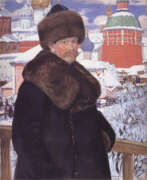

Boris Mikhailovich Kustodiev (Russian: Бори́с Миха́йлович Кусто́диев) was a distinguished Russian artist and painter, celebrated for his vivid portrayal of the Russian culture and way of life. Born in Astrakhan in 1878, Kustodiev's artistic journey began at a young age, leading him to study under the renowned Ilya Repin at the Imperial Academy of Arts. His works, characterized by their rich color palette and intricate detail, capture the essence of Russia's social and cultural fabric during the early 20th century.
Kustodiev's art is notable for its depiction of Russian peasantry, landscapes, and bourgeois celebrations, embodying the spirit and vibrancy of Russian folklore and traditions. His paintings such as "The Merchant's Wife" and "Maslenitsa" are celebrated for their lush visual storytelling and are housed in prestigious museums, including the State Russian Museum in St. Petersburg. These works reflect Kustodiev's fascination with the Russian merchant class and traditional festive gatherings, showcasing his skill in blending realism with a folkloric charm.
Beyond painting, Kustodiev's contributions to theatre and book illustration further demonstrate his versatile talent and deep connection to Russian cultural heritage. Despite facing personal challenges, including a debilitating illness that confined him to a wheelchair, Kustodiev's prolific output continued unabated, leaving behind a legacy that continues to enchant and inspire. His ability to capture the beauty and complexity of Russian life has made his work invaluable to collectors and experts in art and antiques alike.
For those intrigued by the rich tapestry of Russian culture and history as depicted through the lens of one of its most celebrated artists, we invite you to sign up for updates. Stay informed on new product sales and auction events related to the illustrious works of Boris Mikhailovich Kustodiev. This subscription is your gateway to the vibrant world of Russian art, offering exclusive insights and opportunities for collectors and enthusiasts.
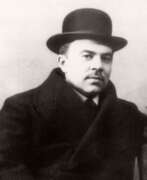

Pavel Kuznetsov (Russian: Павел Варфоломеевич Кузнецов) was a Russian artist, celebrated for his pioneering role in the Symbolist movement and his profound influence on the development of Russian modernist art. Born into the late 19th century, Kuznetsov's work spans painting, sculpture, and illustration, showcasing a unique blend of Eastern and Western artistic traditions.
Kuznetsov's art is renowned for its vibrant use of color, ethereal landscapes, and mystical themes. His distinctive style combines traditional Russian iconography with the innovative techniques of European modernism, making his work highly prized among collectors and art enthusiasts. Kuznetsov was a key member of the Blue Rose artist group, which sought to express the spiritual and emotional through art. This collective's contributions are considered seminal in the evolution of Russian Symbolism.
Among Kuznetsov's notable works are his dreamlike paintings of Central Asia, which brought a new dimension to Russian art by introducing themes and aesthetics from Eastern cultures. These pieces are not only significant for their artistic merit but also for how they reflect the cross-cultural exchanges of the early 20th century. Some of his masterpieces are held in prestigious institutions, including the Tretyakov Gallery and the Russian Museum, making them accessible to the public and subject to scholarly study.
For collectors and experts in the fields of art and antiques, Kuznetsov's works represent a valuable intersection of cultural heritage and artistic innovation. His contributions to the Symbolist movement and Russian modernism continue to inspire and influence contemporary art discourse.
To stay informed about new product sales and auction events related to Pavel Kuznetsov, sign up for our updates. This subscription is an excellent resource for collectors looking to enhance their collections with pieces by this distinguished artist. Join our community today and ensure you never miss an opportunity to acquire works by Pavel Kuznetsov.

John La Farge was an American artist whose career spanned illustration, murals, interior design, painting, and popular books on his Asian travels and other art-related topics.
La Farge is best known for his production of stained glass, mainly for churches on the American east coast, beginning with a large commission for Henry Hobson Richardson's Trinity Church in Boston in 1878, and continuing for thirty years. La Farge designed stained glass as an artist, as a specialist in color, and as a technical innovator, holding a patent granted in 1880 for superimposing panes of glass. That patent would be key in his dispute with contemporary and rival Louis Comfort Tiffany.
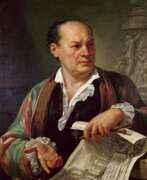


Gerard de Lairesse was a Dutch painter, printmaker, and art theorist. Known for his classical approach, de Lairesse's work marked a departure from the Baroque style prevalent in the Dutch Golden Age, leaning instead towards the neoclassicism that would dominate European art in the 18th century. His art and theories were deeply influenced by the ideals of beauty, grace, and moral edification, advocating for the selection of the most perfect manifestations of natural phenomena rather than their random imitation.
De Lairesse was not only a prolific painter but also an influential art theorist. His treatises, "Grondlegginge ter teekenkonst" (1701) and "Het groot schilderboeck" (1707), were seminal works that laid down principles of art and aesthetics that influenced not just his contemporaries but also generations of artists to come. He emphasized the importance of adhering to theoretical knowledge and the study of nature, albeit through a lens that filtered out its imperfections, to achieve ideal beauty in art.
Despite facing personal challenges, including a congenital condition that led to the loss of his sight in his later years, de Lairesse remained a central figure in the artistic and intellectual circles of Amsterdam. His lectures, delivered from his home, attracted a wide array of students and enthusiasts, eager to learn from his extensive knowledge and experience.
Today, works by Gerard de Lairesse can be found in prestigious institutions worldwide, including the Rijksmuseum and the Amsterdam Museum in the Netherlands, the Louvre in Paris, the Metropolitan Museum of Art in New York, and the National Gallery in London, among others. His legacy as the 'Dutch Poussin' speaks to his enduring influence on the evolution of European art, bridging the gap between the Baroque and the Neoclassical.
For collectors and experts in art and antiques, Gerard de Lairesse represents an intriguing study in the transition of art styles from the Baroque to Neoclassicism. His dedication to the theory and practice of art makes his work a valuable addition to any collection.
To stay informed about exhibitions, sales, and auction events related to Gerard de Lairesse's work, consider signing up for updates. This will ensure you are always up to date with the latest opportunities to engage with the remarkable legacy of this influential Dutch artist.


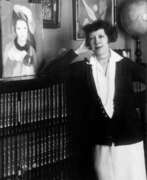

Marie Laurencin was a pivotal figure in the Parisian avant-garde, a French artist renowned for her distinct approach to painting. Unlike her contemporaries who embraced the bold facets of Cubism, Laurencin carved a niche for herself with a palette of soft pastels and a focus on ethereal female forms. Her work, embodying an enchanted, feminine world devoid of masculine presence, was revolutionary for its time, offering a sanctuary of female harmony that was both subtle and profound.
Laurencin's oeuvre extends beyond paintings to include watercolors, drawings, and prints, with notable works such as "Les jeunes filles" and "Portrait de Mademoiselle Chanel" finding homes in prestigious institutions like the Museum of Modern Art in New York and the Musée de l'Orangerie in Paris. Her legacy is further cemented by the Musée Marie Laurencin in Nagano, Japan, the only museum dedicated solely to a female painter, showcasing over 600 of her pieces.
Her approach diverged significantly from the norms of Cubism, incorporating a distinctly feminine aesthetic through the use of pastel colors and curvilinear forms. This unique style set her apart from peers and positioned her as one of the few female Cubist painters, alongside figures like Sonia Delaunay and Marie Vorobieff. Laurencin's artistry was not just an exploration of femininity but a celebration of it, challenging the dominant artistic narratives of her time.
The critique of Laurencin's work for its deliberate embrace of femininity and decorative qualities overlooks the radical essence of her aesthetic. Her paintings, characterized by serene and charming depictions of women, argue for a creative space where the feminine is not just visible but central. Works like "The Fan" and "Spanish Dancers" exemplify her ability to create intimate, self-sufficient worlds that engage the viewer in narratives of absence, longing, and female solidarity.
For collectors and experts in art and antiques, Laurencin's work offers a nuanced understanding of early 20th-century modern art movements through the lens of femininity. Her contributions to art history reflect a bold reimagining of the female form and the spaces women occupy, both in the physical and imaginative realms.
To stay informed about new product sales and auction events related to Marie Laurencin, sign up for updates. This subscription ensures you remain at the forefront of the latest developments and opportunities to acquire works by this groundbreaking artist.
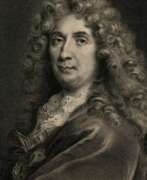

Charles Le Brun was a French painter, draftsman and chief decorator of the Palace of Versailles.
Charles came from an educated and respected family, trained in painting in Italy and very soon his talents were appreciated in the highest circles of France. In 1660 Le Brun painted "The Family of Darius before Alexander", which brought him the reputation of a brilliant French painter, and in 1664 he received the position of the first painter of the king. Thereafter he received more and more commissions and more honors.
From 1662 Le Brun controlled all the artistic projects of the royal court. In the Palace of Versailles, Lebrun created beautiful decorations: the Ambassadors' Staircase, the Hall of Mirrors, the Peace Room and the War Room. In each of his designs, he emphasized the king's achievements. He was also responsible for the decoration of the State Apartments, which was entrusted to the greatest artists of the time, who worked from his drawings. Le Brun also designed most of the statues in the park at Versailles. This enormous work cemented his reputation as a true seventeenth-century genius, as well as one of the founders, ideologues, and chief representatives of the classicist "grand style" of King Louis XIV's era.
In 1648 Le Brun became a founding member of the Royal Academy of Painting and Sculpture, and in 1663 - the manager of the Manufacture of tapestries.
Charles Le Brun was not only the creator of the "grand style", but also contributed to the rebirth of classicism into academism.
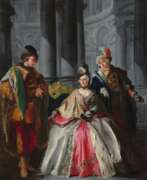

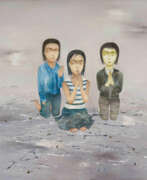

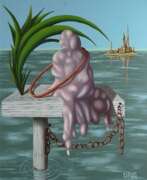

Claude Lepape was a French painter, printmaker, theatre set designer and representative of the Paris School. He was the son of the painter Georges Lepape and studied painting at the Ecole Nationale Superieure des Beaux-Arts in Paris. Claude Lepape's still lifes and portraits convey the artist's intimate understanding of creatures and objects and have a surrealist undertone.