Famous people


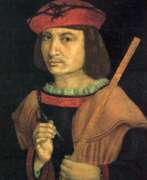


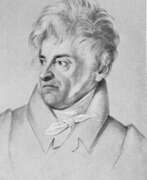

Joseph Wilhelm Eduard d'Alton was a German engraver, naturalist and educator.
He had an initial military education and later studied art and natural history while traveling in Italy and France. Eduard d'Alton is widely known for his anatomical and zoological engravings and etchings. In 1818, d'Alton was appointed professor of natural history at the University of Bonn, where he later began to teach art history as well. Among his students was Karl Marx.
D'Alton's son Johann Samuel Eduard d'Alton (1803-1854), professor of anatomy, continued his father's unfinished Osteologie (Bonn, 1827-1838) and published the first volume of the Handbook of Comparative Human Anatomy.


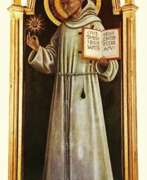


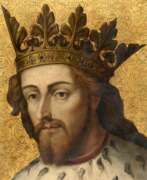
David Pierre-Jean, better known as David d'Angers, was a French sculptor of the first half of the 19th century, a representative of Romanticism and Neoclassicism. David d'Angers was also an outstanding medallist, he created a number of unique coins and medals, which today are of great value to collectors.
Over the course of his career, David d'Angers captured in stone, bronze, and plaster a large number of famous people of his era. In addition to full-length statues, he created hundreds of busts, as well as a number of unique tombstones installed in the famous Parisian cemetery of Père Lachaise. The best examples of the sculptor's work decorate the squares of many French cities.
During his 30 years of teaching at the Académie Nationale des Arts David d'Angers trained dozens of French artists.



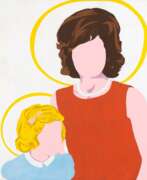

Allan D'Arcangelo was an American artist and printmaker, best known for his paintings of highways and road signs that border on pop art and minimalism, precisionism and hard-edge painting, and also surrealism. His subject matter is distinctly American and evokes, at times, a cautious outlook on the future of this country.
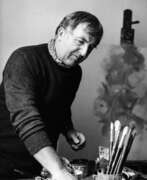

Francesco D'Arena is an Italian painter and sculptor.
He studied at the Academy of Fine Arts in Lecce and lives and works in Cassano delle Murge (Bari).
In his works, D'Arena compares the history of Italy with a biographical perspective, intertwining personal and collective memory.
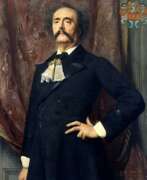

Jules Barbey d'Aurevilly, born Jules Amédée Barbey d'Aurevilly, was a French writer, critic and essayist.
After studying law at the University of Caen, d'Aurevilly gained popularity in 1852 as a literary critic for the Bonapartist newspaper Le Pays, which was influential among the decadents of the late 19th century.
In literature, d'Aurevillys specialized in tales of macabre mysteries that explored ulterior motives and hints of evil, but without the supernatural. He was a decisive influence on writers such as Auguste Villiers de l'Isle-Adam, Henry James, and Marcel Proust.
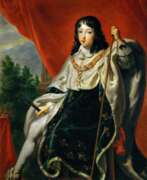

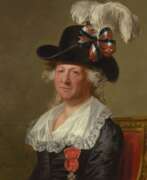

Charles d'Éon de Beaumont, known as Chevalier d'Éon and with many other names, was a French nobleman, diplomat, and secret agent who belonged to the Royal Secret diplomatic network. This amazing and versatile man was forced to live the second half of his life as a woman by virtue of his activities.
D'Eon participated in the Seven Years' War and spied for France while in Russia and England. In France and England he was known for his adventurous life and his many talents: he was an ambassador and secret agent in the service of Louis XV, a captain of dragoons during the Seven Years' War, a skilled swordsman, and a man of letters. After several missions to Russia, more often under the guise of a woman, he was sent to London in 1762 to assist the ambassador in the peace negotiations with England. For his contribution to the Treaty of Paris, signed the following year, he became a Knight of the Order of Saint Louis.
Needing money, and in order to receive a pension, he increasingly entered the role of a woman. In 1777 he received an order: "By order of the King: Charles-Geneviève-Louise-Auguste-Andrée-Timotheus d'Eon de Beaumont is ordered to remove the dragoon uniform she wears and to dress in accordance with her sex. Henceforth he always wore women's dress. Returning to London in 1785, d'Eon died there 25 years later. An autopsy conducted two days after his death found him to be male.



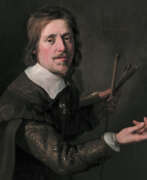

Gijsbert d'Hondecoeter was a Dutch landscape and animalier painter.
Hondecoeter belonged to a family of painters. His father was Gillis d'Hondecoeter and his son was Melchior d'Hondecoeter. Hondecoeter primarily painted works of barnyard fowl. Some of his works can be found at the Rijksmuseum Amsterdam. He became a member of the Guild of St. Luke in Utrecht in 1629. After he died in 1653, his brother-in-law and artist Jan Baptist Weenix continued the training of his son Melchior.
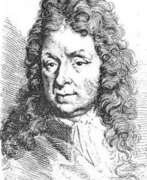

Melchior d'Hondecoeter was Dutch animalier painter, was born in Utrecht and died in Amsterdam. After the start of his career, he painted virtually exclusively bird subjects, usually exotic or game, in park-like landscapes. Hondecoeter's paintings featured geese (brent goose, Egyptian goose and red-breasted goose), fieldfares, partridges, pigeons, ducks, northern cardinal, magpies and peacocks, but also African grey crowned cranes, Asian sarus cranes, Indonesian yellow-crested cockatoos, an Indonesian purple-naped lory and grey-headed lovebirds from Madagascar.
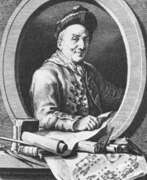

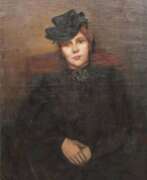

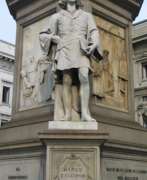

Marco d'Oggiono was an Italian Renaissance painter and a chief pupil of Leonardo da Vinci, many of whose works he copied.
He was a hard-working artist, but his work has since been criticized by some for paintings are wanting in vivacity of feeling and purity of drawing, while, in his composition, it has been well said that "intensity of color does duty for intensity of sentiment". He copied Leonardo's Last Supper repeatedly, and one of his best copies is in the possession of the Royal Academy of Arts.


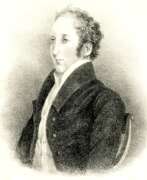

Charles D'Oyly was a British public official and painter from Dacca (now Dhaka). He was a member of the Bengal Civil Service based in Calcutta, Dacca and Patna from 1797 to 1838. Although he held senior positions with the East India Company's civil service, he is best known as an amateur artist who published many books featuring engravings and lithographs featuring Indian subject matter.

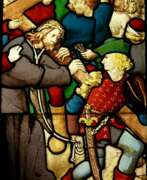

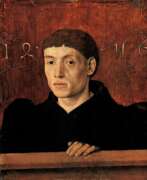



Zhū Dā (Chinese: 朱耷) was a Chinese painter, poet and calligrapher of the late Ming and early Qing dynasties. Known by the pseudonym Bada Shanzhen (Chinese: 八大山人), the man from Mount Bada.
Bada Shanren belonged to the imperial family of the Ming Dynasty, but chose to become a Buddhist monk and led a reclusive lifestyle. His artistic style was characterised by a unique combination of traditional Chinese ink painting techniques and bold, expressive brushstrokes. Bada Shanren's works often depicted landscapes, birds, flowers and animals, demonstrating an exceptional ability to convey the essence of the natural world. His paintings reflected a sense of spiritual introspection and a deep connection to nature. Despite the turbulent times in which he lived, Bada Shanren's artistic legacy remains highly regarded and his works are still considered masterpieces of Chinese ink painting.
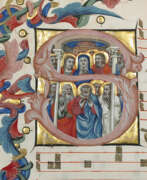

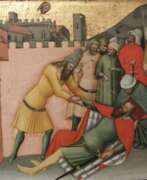

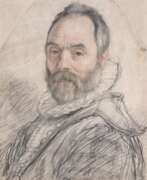

Giovanni da Bologna, also known as Jean de Boulogne (French), Giambologna (Italian), Fiammingo (Italian) and Jehan Boulongne (Flemish), was the last significant Italian Renaissance sculptor, with a large workshop producing large and small works in bronze and marble in a late Mannerist style.
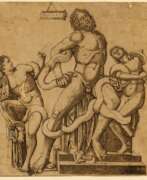

Giovanni Antonio da Brescia was an Italian Renaissance engraver who produced around 150 engravings, including those previously attributed to Zoan Andrea. He began his career under Andrea Mantegna in Mantua before settling in Rome and had an influence on Marcantonio Raimondi. His engravings mainly feature figures and use the burin and drypoint techniques. Giovanni Antonio's last known works were translations of painted works around 1519-1520, and some estimate his last production to be in 1525.
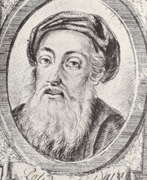

Polidoro Caldara, usually known as Polidoro da Caravaggio was an Italian painter of the Mannerist period, "arguably the most gifted and certainly the least conventional of Raphael's pupils", who was best known for his now-vanished paintings on the facades of Roman houses.


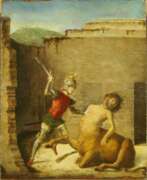

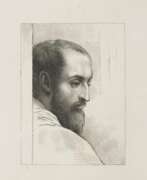

Antonio da Correggio was a seminal figure in the Italian Renaissance, particularly renowned for his mastery in illusionistic fresco decoration. His works bridged the gap between the High Renaissance and the Baroque movement, influencing many subsequent artists in the Baroque and Rococo styles. Antonio da Correggio is celebrated for his dynamic compositions, innovative use of perspective, and the sensual nature of his paintings, which often depicted religious and mythological themes.
Antonio da Correggio's notable contributions include the frescoes in the dome of San Giovanni Evangelista and the Cathedral of Parma. His work, characterized by dramatic foreshortening and emotional intensity, represents a pioneering approach to dome decoration, creating an immersive experience for the viewer. The "Assumption of the Virgin" in Parma's Cathedral is particularly renowned for its dynamic composition and innovative perspective, offering a celestial vision filled with angels and figures in motion, heralding the artistic transitions towards the Baroque era.
Additionally, Antonio da Correggio's mythological series, such as "Jupiter and Io" and "Leda and the Swan," demonstrate his ability to blend sensuality with divine themes, presenting these narratives with a tender and intimate touch that was groundbreaking for his time.
For collectors and experts in art and antiques, Correggio's works epitomize the transition in art styles from the Renaissance to the Baroque, showcasing his unique ability to convey emotion and movement through his innovative techniques and compositions.
To delve deeper into the life and works of Antonio da Correggio, consider subscribing to updates from art institutions or platforms that specialize in Renaissance art, ensuring you stay informed about exhibitions, sales, and scholarly research related to this influential artist.
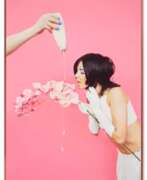

Alex Da Corte is an American conceptual artist who works in painting, sculpture, installation, and video. Da Corte often uses surreal imagery and everyday objects in his practice and explores ideas of consumerism, pop culture, mythology, and literature. He has shown internationally at Bodega, Gió Marconi, Josh Lilley Gallery, Maccarone, Herning Museum of Contemporary Art, Massachusetts Museum of Contemporary Art, and Institute of Contemporary Art. Da Corte has worked on a number of collaborative projects with other visual artists, writers, and musicians including Jayson Musson, Dev Hynes, Sam Mckinniss, and Annie Clark. In February 2021, his works were selected for inclusion in the Metropolitan Museum of Art's roof garden collection.
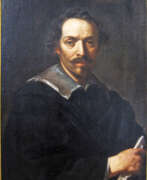

Pietro da Cortona, born as Pietro Berrettini, was an eminent figure in the Italian Baroque movement. His multi-faceted genius encompassed painting, architecture, and design, earning him a reputation second only to Bernini in the Roman Baroque style. Cortona's journey in art commenced in Rome around 1612, where his talents flourished under the patronage of influential families like the Barberini.
Pietro da Cortona's masterful frescoes in the church of S. Bibiana, commissioned by Urban VIII, set the tone for his illustrious career. His most iconic work, the colossal fresco "Allegory of Divine Providence and Barberini Power" in the Gran Salone of the Palazzo Barberini, epitomizes his skill in creating grandiose, illusionistic art. This piece, commenced in 1633 and completed in 1639, is a testament to his belief in the epic scale of history painting, a view he defended in a notable debate with Andrea Sacchi.
In 1637, Pietro da Cortona's artistic journey took him to Florence at the behest of Ferdinand II de' Medici, Grand Duke of Tuscany. Here, in the Palazzo Pitti, he created frescoes for the Planetary Rooms, combining allegorical themes with lush stucco work, significantly influencing the Italian and French decorative arts.
Pietro da Cortona's contributions to architecture were equally significant. His architectural masterpiece, the church of SS. Martina e Luca in Rome, exemplifies his ability to create grand structures with a unified Baroque vision. His architectural prowess, though less correlated with his painting style, made a lasting impact through its emphasis on form rather than ornament.
For art collectors and enthusiasts, Pietro da Cortona's works offer a rich tapestry of Baroque artistry, blending grandeur, realism, and allegory. His frescoes, paintings, and architectural designs continue to captivate audiences, symbolizing the opulence and dynamism of the Baroque era.
To stay updated on the latest insights and collections related to Pietro da Cortona, consider subscribing to our updates. Stay informed about new sales, exhibitions, and auction events related to this master of the Baroque style.
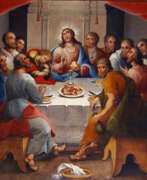

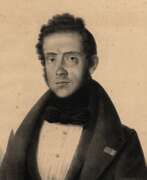

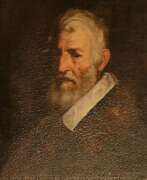

Jacopo da Empoli, real name Jacopo Chimenti, was a prominent Italian painter, a representative of Counter-Mannerism in Italian art. This movement borrowed some features of Mannerism, but resolutely returned to the realism, harmony and poise of the High Renaissance.
Jacopo da Empoli received his artistic training in the workshop of Maso da San Friano and was inspired by the works of Pontormo and Santi di Tito. He created in Florence, small towns in Tuscany and even visited Genoa.
Jacopo da Empoli created religious paintings and portraits, but an interesting feature of his work was his unique still life paintings, completely different from those of the Dutch masters of the time.
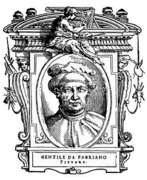

Gentile da Fabriano was an Italian painter known for his participation in the International Gothic painter style. He worked in various places in central Italy, mostly in Tuscany. His best-known works are his Adoration of the Magi from the Strozzi Altarpiece (1423), and the Flight into Egypt. Following a visit to Florence in the 1419, he came in contact with humanism, which influenced his work throughout the rest of his career. He became highly influential for other painters in Florence, especially because of his use of detail based on the observations he made of the natural world.
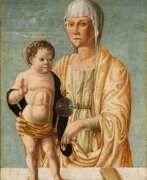


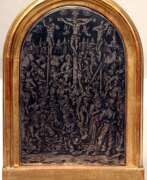

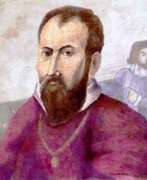

Melozzo da Forlì, an influential Italian Early Renaissance painter and architect, is celebrated for his pioneering work in the realm of fresco painting and his remarkable use of foreshortening, a technique that gives the illusion of depth in a two-dimensional space. Born on June 8, 1438, in Forlì, Italy, Melozzo was a leading figure in the art world of his time, leaving an indelible mark on the Renaissance culture and art landscape.
His tenure in Rome, from around 1472-74, was particularly fruitful, marking a period where he created some of his most notable works. The fresco "Sixtus IV Appointing Platina as Librarian of the Vatican Library," completed in 1477 and now housed in the Pinacoteca Vaticana, stands as a testament to his mastery of perspective and architectural representation. Melozzo's work in the Basilica dei Santi Apostoli in Rome, particularly the fresco depicting the Ascension of Christ, is another significant contribution, showcasing his ability to portray figures with dynamic realism and depth.
Throughout his career, Melozzo also engaged in architectural design and was involved in the construction of Palazzo Altemps for Girolamo Riario in Rome, demonstrating his versatile talent beyond painting. His influence extended to his pupils, notably Marco Palmezzano, and his style and techniques continued to inspire future generations, including Raphael and Michelangelo.
Melozzo's legacy is characterized by his contributions to the development of pictorial art, especially his innovative use of perspective and foreshortening. Although many of his works have been lost or damaged over time, those that survive continue to be studied and admired for their artistic and technical prowess. His final years were spent in his hometown of Forlì, where he died on November 8, 1494, leaving behind a body of work that continues to be celebrated for its influence on the Renaissance art movement.
For collectors and experts in art and antiques, Melozzo da Forlì's work represents a pivotal moment in the history of Renaissance art, embodying the transition towards more dynamic and realistic representations. If you're keen on exploring the contributions of this remarkable artist further, consider signing up for updates related to Melozzo da Forlì. This subscription will keep you informed about new product sales and auction events, offering a unique opportunity to connect with the rich heritage of Renaissance art and culture.
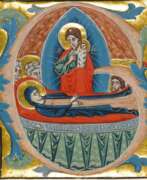

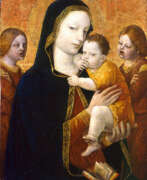

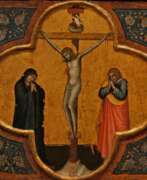


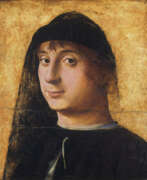

Antonello da Messina, a preeminent Italian painter born around 1430 in Messina, Sicily, left an indelible mark on the art world with his pioneering techniques and emotive works. He is primarily recognized for his profound influence on Venetian painting during the Renaissance, although his reach extended far beyond Venice.
Antonello da Messina's early work, thriving with eclectic influences from Flemish, Catalan, and Provençal elements, reflects the diverse artistic culture of southern Italy. His journey took a significant turn with his move to Venice around 1475, where he not only embraced but also enhanced the art of portraiture. He brought a new depth to this genre, showcasing his subjects in three-quarter views against dark backgrounds, a striking departure from the prevalent profile portraits of the time.
In Venice, Antonello da Messina's work began to exhibit a greater focus on the human figure in terms of anatomy and expressivity. This shift is notably seen in his masterpiece, the St. Sebastian, which skillfully blends the human form with a backdrop of Venetian life. His time in Venice was also crucial for his development in religious art, as seen in his works like the Virgin Annunciate and the San Cassiano Altarpiece. These pieces were pivotal in evolving the sacra conversazione format, which later inspired artists like Giovanni Bellini.
Antonello da Messina's legacy is particularly prominent in his approach to religious themes. His depiction of Christ and the Virgin Mary are characterized by a palpable realism, with figures extending into the viewer's space, blurring the lines between the sacred and the secular. This innovative style had a profound impact on the development of European painting, setting the stage for the emotive and realistic portrayal of religious figures.
Antonello da Messina's artistic journey was marked by his ability to blend Italian simplicity with a Flemish focus on detail. His works, particularly his portraits, showcased a psychological depth that was ahead of his time. The legacy of his techniques, particularly in oil painting and the psychological dimension he lent to his works, continued through his family, notably his son Jacobello.
For collectors and experts in art and antiques, the works of Antonello da Messina offer a unique insight into the evolution of Renaissance art, especially in the realms of portraiture and religious painting. His contributions have cemented his place as a master of the Renaissance era.
If you are keen on staying informed about new sales and auction events related to Antonello da Messina, consider signing up for updates. This service is dedicated to providing alerts on new product sales and auction events related to his works, ensuring that enthusiasts and collectors don't miss out on acquiring a piece of Renaissance art history.
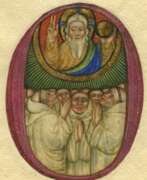

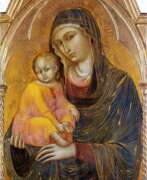

Barnaba da Modena, born Barnaba Agocchiari, was an influential Italian painter from Modena who played a pivotal role in the art scene of mid-14th-century Italy. His work is renowned for embodying the Byzantine art style, making him the first notable Lombard painter. Throughout his career, Barnaba was predominantly active in Lombardy, Piedmont, and even ventured into Pisa in Tuscany, showcasing his diverse geographical influence.
Barnaba's painting style was deeply rooted in Byzantine traditions, characterized by the use of gold highlights and golden backgrounds. He was adept at creating compositions that adhered to the older, more traditional styles of painting, which remained exceedingly popular in Genoa. This adherence to Byzantine painting techniques contributed significantly to his success in Genoa, as it resonated with the stylistic preferences of the time. His work often featured religious themes, executed with a depth of feeling and a refined technique that distinguished him from his contemporaries.
His extensive body of work includes about 50 known pieces, many of which are held in high regard for their technical and artistic quality. Notable works by Barnaba da Modena are preserved in prestigious institutions, including the National Gallery in London and The Courtauld, London. These works, such as "Virgin and Child" and "Pentecost," reflect his profound influence on the Genoese and possibly Pisan art scenes of the late 14th century. His follower, Nicolò da Voltri, continued Barnaba's stylistic legacy well into the 15th century, particularly in Liguria.
For collectors and experts in art and antiques, Barnaba da Modena's paintings offer a unique window into the transition between Medieval and Renaissance art, marked by his exceptional blending of Byzantine and Italian Gothic elements. His ability to convey religious narratives through meticulous detail and vibrant gold accents make his works a valuable addition to any collection.
To stay informed about new discoveries, sales, and auction events related to Barnaba da Modena's works, signing up for updates is advisable. This subscription will provide exclusive access to the latest information on this masterful painter, enriching your collection with significant pieces from the mid-14th century Italian art scene.
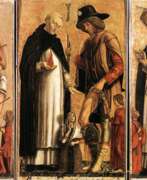

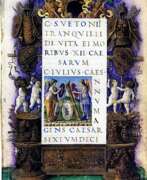

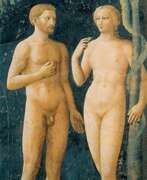

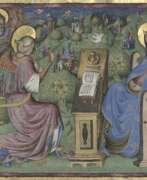

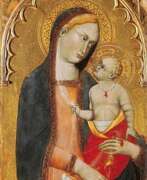

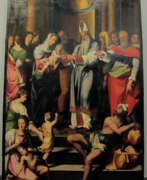

Leonardo da Pistoia, also known as Leonardo Grazia, was an Italian painter born in 1502 in Pistoia, Tuscany, and active during the Mannerism period. His career spanned until approximately 1548, during which he made significant contributions to the Italian Renaissance.
Leonardo da Pistoia's work was notably influenced by two renowned artists of the time, Fra Bartolomeo and Raphael. He is often credited for his ability to emulate Raphael's style, evident in works like his "Madonna and Child" (1516), housed in the Staatliche Museen, Berlin, which is a free copy of Raphael's "Madonna del Baldacchino." Another of his works, housed in Brussels, is derived from Raphael's "Bridgewater Madonna." These pieces reflect da Pistoia's admiration and skilled interpretation of Raphael's first and second-decade creations.
Leonardo da Pistoia's life and career were spent primarily in Italy, working in notable cities such as Rome and Naples. In Rome, he worked under Gianfrancesco Penni, known as "il Fattore," and was a copyist of Raphael's paintings. His transition to Naples marked a significant period in his career where he contributed to churches like Santa Maria del Parto a Mergellina, San Domenico Maggiore, and Monte Oliveto. His pupils in Naples included notable artists like Girolamo Siciolante da Sermoneta and Francesco Curia.
Leonardo da Pistoia's work "Cleopatra," which portrays the Egyptian queen with an asp around her neck, is a testament to his mastery in blending realism with allegorical elements. This painting, initially attributed to various artists including Bronzino and Giulio Romano, has been credited to Leonardo da Pistoia, reflecting his influence from Roman, Neapolitan, and Tuscan artistic styles.
For art collectors and experts in art history, Leonardo da Pistoia's work offers a glimpse into the evolving styles of the Italian Renaissance, particularly in how he skillfully adopted and adapted the techniques of his more famous contemporaries. His paintings, rich in historical and artistic value, are a testament to the vibrant and dynamic art scene of Renaissance Italy.
To learn more about Leonardo da Pistoia and stay informed about events and opportunities related to his work, sign up for updates on sales and auction events.
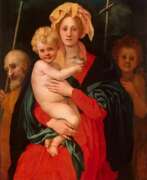

Jacopo da Pontormo, an Italian painter born in 1494, was a pivotal figure in the Mannerist movement, diverging from the High Renaissance's balanced compositions to explore more expressive and emotionally charged art. His work is celebrated for its unusual color palettes, elongated forms, and a unique approach to perspective, all of which contribute to the intensely emotional effect of his paintings.
Operating in Florence, Pontormo's art is distinguished by its vivid expressiveness and dramatic tension, characteristics that set him apart from his contemporaries. His ability to convey deep psychological complexity through his subjects has left a lasting impact on the history of art, making his works highly prized among collectors and scholars alike.
One of his most acclaimed works, the "Deposition from the Cross" in the Capponi Chapel in Florence, exemplifies his innovative approach to composition and color, marking a significant departure from traditional depictions of this biblical scene. This masterpiece, along with others like his portraits and religious paintings, can be found in some of the world's most prestigious museums and galleries.
For art collectors and enthusiasts, Jacopo da Pontormo represents the intriguing complexity of the Mannerist period, offering a window into the evolving artistic landscape of 16th-century Italy. His works not only challenge the viewer's expectations but also invite a deeper exploration of the emotional and spiritual dimensions of painting.
To stay abreast of the latest discoveries, exhibitions, and auctions related to Jacopo da Pontormo's art, we encourage you to sign up for updates. This subscription is your gateway to the refined world of Renaissance and Mannerist art, ensuring you're informed about opportunities to enrich your collection with works by this exceptional artist.


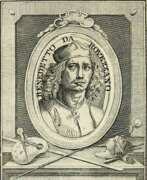

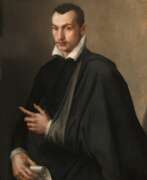

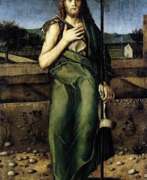

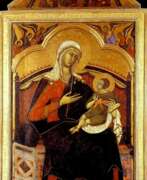

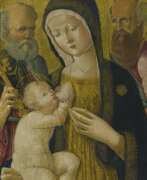

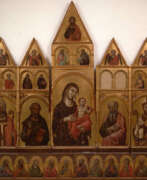

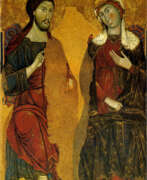

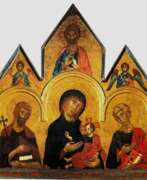

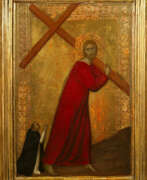




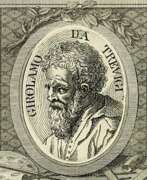

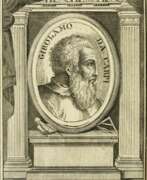
Girolamo da Treviso the Younger was an Italian painter whose versatile talent shone brightly during the Renaissance. Born in Treviso, his artistic journey was marked by a profound ability to blend the innovative techniques of the High Renaissance with the rich traditions of Italian painting.
Renowned for his expertise in a variety of subjects, Girolamo's works ranged from religious narratives to mythological scenes, each imbued with a depth of emotion and meticulous attention to detail. His style was characterized by dynamic compositions, a masterful use of perspective, and a vibrant palette that brought his figures and landscapes to life.
Among his notable contributions to the art world, Girolamo da Treviso's altarpieces and frescoes stand out for their artistic and historical significance. These works, preserved in some of the most prestigious museums and churches across Italy, continue to attract art lovers and scholars, captivated by their beauty and the story of their creator.
For collectors and experts in art and antiques, Girolamo da Treviso II represents an intriguing figure whose oeuvre offers a window into the transformative period of the Renaissance. His paintings are not only valued for their aesthetic appeal but also for the insights they provide into the cultural and artistic developments of the 16th century.
To explore the rich legacy of Girolamo da Treviso II and stay informed about the latest discoveries and auction events related to his work, signing up for updates is a must. This subscription will keep you at the forefront of new opportunities to appreciate and acquire pieces by this Renaissance master, ensuring you never miss a chance to add to your collection.
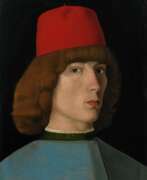

Jacopo da Valenza was an Italian Renaissance painter.
He worked between 1485 and 1509 in many churches in the Belluno and Vittoria districts of Veneto, creating altarpieces and altarpieces. Two of his most important works are now preserved in Vittorio Veneto, in their original locations: the Madonna and Child on the Throne in the cathedral of Ceneda, 1484, and the Madonna and Child in the church of San Giovanni Battista di Serravalle, 1502. Some works are in museums in Italy.
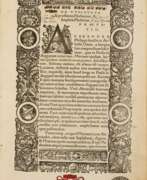

Joao de Souza Freire de Araujo Borges Da Veiga was a Portuguese astronomer and climatologist.
This scientist is one of the authors of the manuscript Dialogo epistolar astronomico sobre o cometa apparecido em Lamego as da Abril e observado aze o dia 9. dao anno de 1766. The second author who signed this manuscript is Joze de Araujo Souza Freire Borges Da Veiga.
It is a Portuguese treatise on the 1766 comet (D/1766 G1 Helfenzrieder), which appeared in April of that year and was discovered on April 1 by Helfenzrieder, and independently by Messier, Cassini de Turi, and others. The treatise gives a detailed account of the observations made by the authors from an observatory located on Mount Queimada near Lamego, Portugal. The authors also provide a chronological catalog of previous observations of comets since 1500 and cite their numerous authors.
The authors of this treatise were the first known climatologists, as well as experienced astronomers in continental Portugal who made meteorological observations.
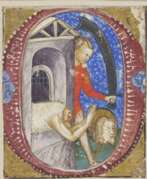

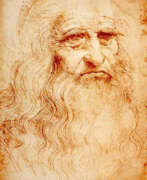

Leonardo da Vinci was an Italian polymath of the High Renaissance, celebrated as a painter, draughtsman, engineer, scientist, theorist, sculptor, and architect. His remarkable abilities and innovative thinking made him an epitome of the Renaissance humanist ideal. Born in Vinci, near Florence, in 1452, Leonardo was educated in Florence by Andrea del Verrocchio, a renowned painter and sculptor. He began his career in Florence, later working in Milan, Rome, and France, where he died in 1519.
Da Vinci is revered for his artistic mastery, technological innovation, and scientific inquiry. Despite having fewer than 25 major works attributed to him, including several unfinished ones, his influence on Western art is profound. His magnum opus, the "Mona Lisa," housed in the Louvre Museum, Paris, is considered the world's most famous painting. "The Last Supper," his most reproduced religious painting, showcases his mastery of dramatic narrative and pictorial illusionism. Both paintings exhibit Leonardo's unique ability to convey complex human emotions and his innovative use of techniques like sfumato and chiaroscuro.
Leonardo's interests extended far beyond fine art. He was a visionary in multiple fields, including anatomy, physics, architecture, and mechanics. His notebooks reveal designs for machines like bicycles, helicopters, and military tanks, centuries ahead of their time. However, due to his diverse interests, he left many projects and paintings incomplete. Leonardo's final years were spent in France, where he continued his artistic and scientific pursuits until his death.
For collectors and experts in art and antiques, Leonardo da Vinci remains a figure of endless fascination. His works not only embody the pinnacle of Renaissance art but also provide insights into the era's scientific and philosophical inquiry. To stay updated on new sales and auction events related to Leonardo da Vinci, sign up for our newsletter. This subscription is a gateway to exploring the rich legacy of this unparalleled artist and inventor.
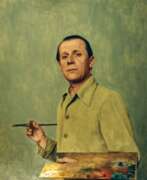

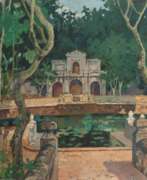

Henri Célestin Louis Dabadie was a French landscape and Orientalist painter.
He was a student of Jules-Élie Delaunay and Henri Michel-Lévy. After completing his studies, he devoted himself to Impressionistic landscape painting; primarily in Brittany. He alo painted harbor scenes in Rotterdam and Hamburg.
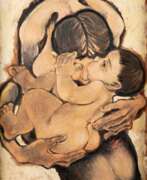

Hanna Dąbkowska-Skriabin is a Polish artist.
She graduated from the Academy of Fine Arts in Warsaw in the Department of Painting.
Hanna was very concerned about the fate of the human race, which is ruining itself with greed and short-sightedness. This is reflected in the works of the artist: many of her paintings are a timeless vision of a harsh world dominated by suffering and injustice. As if to protest against all this evil, Hanna Dąbkowska-Skriabin painted both paintings about love and beautiful landscapes. She is best known for her oil paintings. She has also mastered the techniques of ceramics and tapestry.


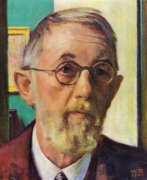


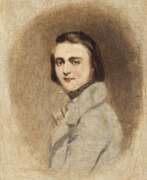

Richard Dadd was an English painter of the Victorian era, noted for his depictions of fairies and other supernatural subjects, Orientalist scenes, and enigmatic genre scenes, rendered with obsessively minuscule detail. Most of the works for which he is best known were created while he was a patient in Bethlem and Broadmoor hospitals.
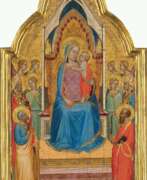

Bernardo Daddi, an Italian painter born in the late 13th century, emerged as a pivotal figure in the early Renaissance, particularly within the Florentine school of painting. Operating in Florence between 1280 and 1348, Daddi's oeuvre is renowned for its devout spiritual essence and the delicate finesse of its execution, marking a significant departure from the Byzantine traditions that dominated the era.
Daddi's art is distinguished by its intimate scale, refined attention to detail, and vibrant narrative compositions, which were primarily religious in nature. His works are celebrated for their clarity, color, and emotional depth, contributing to the evolution of painting during a period rich in cultural and artistic exploration. Among his notable contributions, the "Madonna and Child" triptychs and frescoes in Florence stand as testaments to his skill and spiritual devotion.
Bernardo Daddi's influence extended beyond his lifetime, setting the stage for the blossoming of Renaissance art. His paintings, housed in prestigious museums and churches, offer a window into the soul of 14th-century Italy, reflecting the period's complex interplay between faith, art, and society.
For collectors and art history aficionados, Daddi's works represent not just aesthetic achievements but also historical artifacts that capture the essence of an era on the cusp of the Renaissance. His legacy, embedded in the fabric of Italian art history, continues to inspire and captivate those who seek to unravel the origins of Renaissance painting.
Intrigued by Bernardo Daddi's mastery and his contribution to the dawn of the Renaissance? Sign up for updates to stay informed about the latest sales, exhibitions, and auction events featuring his work. This subscription is your gateway to the world of art collecting, offering exclusive insights into opportunities to own a piece of history.
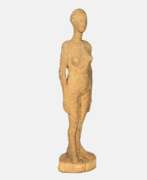

Alfred Dade is an Albanian painter and sculptor working in Germany.
Dade studied at the Art Academy in Rome with Prof. Marchese and at the Art Academy in Düsseldorf with Prof. Markus Lüpertz. Since 1999 he has been working as a freelance artist in Mülheim/Ruhr, creating sculptures in wood.
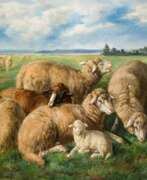

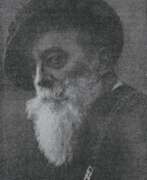

Eduard Adolf Daelen is a German artist, writer, and journalist.
He studied at the Düsseldorf Academy of Art and the Munich Academy of Fine Arts. Daelen was a member of the Malkasten Society of Artists (Malkasten) and was chairman of the local association Allgemeine Deutsche Kunstgenossenschaft. During World War I he took up drawing patriotic posters and war postcards.
Daelen also became known for the first biography of Wilhelm Busch, which he wrote in 1886. He also wrote art history articles that were published under pseudonyms in various newspapers.
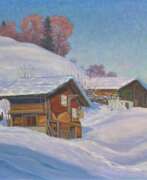

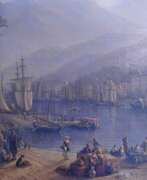


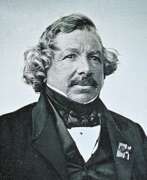

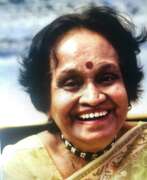


Hans Dahl was a celebrated Norwegian painter. He is best known for his vivid and romantic depictions of Norwegian fjords and the vibrant life around them, capturing the essence of rural western Norway during the late 19th and early 20th centuries. Hans Dahl's art is characterized by its romantic realism, often showcasing young women in traditional costumes against the backdrop of Norway's breathtaking landscapes.
Hans Dahl's technique and color palette were exceptional, employing rubies, aquamarines, sapphires, pearls, and jade to bring to life the red vests of bunads, the blue waters and skies, ivory clouds, and the myriad shades of green in the grassy meadows. His works such as "Arriving for a Celebration" are particularly notable for depicting a lively scene with numerous figures in a composition, a rare approach for Dahl who typically focused on individual or small groups of young women.
His son, Hans Andreas Dahl, also followed in his footsteps but tragically died at a young age. Hans Dahl was honored as a knight of the Royal Norwegian Order of St. Olav, 1st class, in 1902, recognizing his contributions to Norwegian art and culture.
Dahl's paintings, such as "Summerday by Balestrand," "A Young Woman in the Meadow," and "Milkmaid with goats," among others, offer a romantic, nostalgic window into Norwegian culture and landscape, resonating with both Norwegians and international audiences alike. His works have been celebrated for their detailed depictions of village life, the natural beauty of the Norwegian fjords, and the traditional Norwegian way of life, making him a favorite among collectors and enthusiasts of Norwegian art.
For collectors and experts in art and antiques interested in the unique blend of romanticism and realism that defines Hans Dahl's work, staying informed about new sales and auction events is essential. Signing up for updates can provide exclusive access to the latest offerings related to Dahl's paintings, ensuring enthusiasts are always in the know about opportunities to add to their collections.


Isa Dahl is a contemporary German artist. She lives and works in Stuttgart.
Isa Dahl studied painting at the Dusseldorf Academy of Art. Her works have a characteristic colouring. In a special technique of glaze painting the artist creates imaginary pictorial spaces of great luminosity and depth. With clear structures, lines, overlaps, the artist creates a dense network of overlays and underlays, conveying incredible dynamism and spatiality in her paintings.
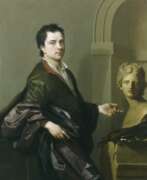

Michael Dahl was a Swedish portrait painter.
After several years of traveling in France and Italy, he finally settled in London in 1689, where he worked in the studio of Sir Godfrey Kneller. Dahl painted portraits of many aristocrats and some members of royal families. Michael Dahl soon became his teacher's chief rival and gained the patronage of Prince George of Denmark and his wife Princess Anne, whose portraits he also created. His studio practice flourished and he was the most popular portrait painter in London at the time.





Helen Dahm was a Swiss artist and a follower of the expressionist movement.
Helen Dahm only received recognition late in life. In 1967, at the age of 89, she had her first major retrospective exhibition in Switzerland.
Else Strantz was her life partner for twenty years, and it was through Strantz that Dahm met the Blue Rider group of artists, who were very influential to Dahm.


Peter Jürgen Dahm was an outstanding German painter of the Impressionist style whose work spanned the first half of the 20th century. His paintings depicting European cityscapes are characterised by a remarkable aesthetic. With impressive precision and masterful technique, Dahm captured on canvas the painterly beauty of both northern Italy and the Netherlands.
Dahm's distinctive signature is reflected in the art he created, and his works continue to enjoy great recognition and admiration today. His attention to detail and ability to capture the essence of the landscape have made his paintings timeless masterpieces. As an artist, Peter Jürgen Dahm was inspired by nature and his passion for painting is evident in every brushstroke. His artworks take the viewer on a captivating journey through picturesque settings that touch the soul and capture the beauty of our world in its purest form.
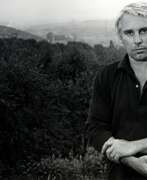

Karl Fred Dahmen is a German artist, one of the most important representatives of German post-war art and the Informel movement. In 1967 he took up the post of Professor of Fine Arts at the Munich Academy.
He painted expressive abstract pictures with a tectonic structure, and since the mid-1950s, relief paintings and collages on the damage to the local landscape caused by open-pit mining. Later in Dahmen's oeuvre, glazed object boxes appear, recounting the impressions of his daily working life.


Paul Wilhelm Dams was a German animal painter who specialized in hunting motifs. He painted game - wild boars, foxes, deer, roe deer, hares - in a winter or autumn forest landscape, he especially loved birds - capercaillie, black grouse and pheasants. The artist lived in Ridsend in Bavaria, and during the Second World War also in Braunschweig, where he painted numerous motifs of the Harz mountains.


Walter Dahn is a German Neue Wilde artist who lives and works in Cologne.
Walter Dahn's work includes works of various media: photographs, drawings, logos, paintings, collages, stencil printing, installations and videos.
In addition to visual art, Dahn also works in music.
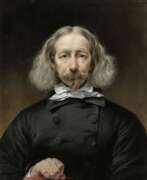

Jean Augustin Daiwaille was a Dutch portrait painter and lithographer. He studied under Adriaan de Lelie. He was director of the Rijksakademie from 1820 to 1826. After that time, he resided at Rotterdam, where he was very successful in painting portraits. He was an early exponent of lithography during the 1820s, overseeing the installation of a lithographic press at the new Koninklijke Academie, and instructing the students on the use of the technique. He established his own lithographic business in 1826, producing reproductions of his own paintings, and collaborating with other artists such as Barend Cornelis Koekkoek to make copies of their work.
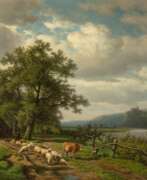

Alexander Joseph Daiwaille was a Dutch portrait painter. He specialized in painting portraits, like his father, although he later in life painted landscapes. He traveled and worked all around the Netherlands and Germany. Daiwaille then moved and settled in Brussels where he lived until his death in 1888.
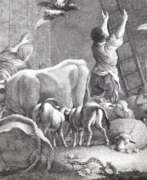


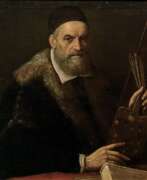

Jacopo Bassano, known also as Jacopo dal Ponte, was an Italian painter who was born and died in Bassano del Grappa near Venice, and took the village as his surname. Trained in the workshop of his father, Francesco the Elder, and studying under Bonifazio Veronese in Venice, he painted mostly religious paintings including landscape and genre scenes. He often treated biblical themes in the manner of rural genre scenes, portraying people who look like local peasants and depicting animals with real interest. Bassano's pictures were very popular in Venice because of their depiction of animals and nocturnal scenes. His four sons: Francesco Bassano the Younger, Giovanni Battista da Ponte, Leandro Bassano, and Girolamo da Ponte, also became artists and followed him closely in style and subject matter.


Marc'Antonio Dal Re was an Italian painter, engraver and publisher.
Dal Re is the author of a work entitled Ville di delizia, consisting of six volumes and published in 1743. It is an illustrated description of numerous noblemen's luxurious villas in the neighborhood of Milan. Dozens of engravings are accompanied by accurate descriptions of the palaces, written personally by Dal Re.