

Famous people




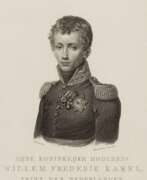

Evert Maaskamp was a Dutch artist and engraver, publisher and print dealer.
In addition to publishing geographical publications, topographical maps and engravings, Maaskamp produced very high quality illustrated works on sheet metal. Throughout his career he collaborated with the English artist Charles Howard Hodges, whose influence is evident in many of Maaskamp's engravings.


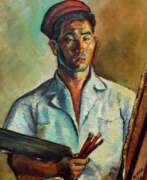

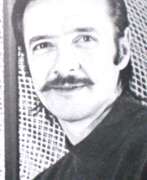

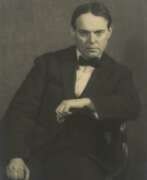

Pierre Mac Orlan, real name Pierre Dumarchey, is a French writer, poet, screenwriter, playwright, artist and journalist.
Pierre Dumarchey spent his youth leading a bohemian lifestyle, but by the age of 20 he had already published several collections of short stories with his own illustrations. He socialized with many contemporary writers and artists, played the accordion, and many of his songs were quite popular in cabarets. In World War
I in 1916, Pierre Dumarchey was wounded, after which he worked as a war correspondent. In the late 1920s, he became an influential critic of film and photography. And later became a famous writer under the pseudonym Pierre Mac-Orlan. Based on his most famous novel Quai des Brumes ("Port of Shadows"), French director Marcel Carné made a movie of the same name in 1938.
In addition to his numerous novels, Mac-Orlan published under various pseudonyms in erotic magazines. Pierre Mac-Orlan was a very prolific writer: in 1969-1971, a collection of his works in 24 volumes was published, which, however, did not include his many erotic works.

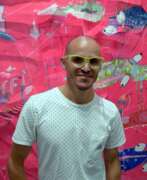


Forbes Macbean was a British officer and artist.
Captain Macbean served in the 92nd Highland Regiment of Foot, known as the Gordon Highlanders, which was stationed in the Ionian Islands in 1851. In his spare time, the officer painted local priests, villagers, musicians, and merchants. Macbean carefully recorded the clothing and hobbies of the locals. After serving in Greece in 1853, Macbean traveled to Gibraltar, passing through Ottoman Constantinople, where he also made watercolor sketches.
Captain Macbean's drawings were used to make a set of engravings that were included in Sketches of Characters and Costumes in Constantinople, the Ionian Islands, etc., published in London in 1854.


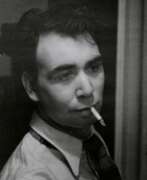


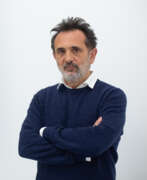

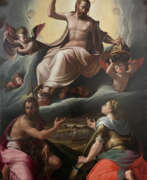


Georg Macco was a German painter of the late 19th and the first third of the 20th centuries. He is known as a landscape painter and illustrator, a representative of the Düsseldorf school of expressionism.
Georg Macco was educated at the Düsseldorf Academy of Arts, then continued his studies in Munich. His work was inspired by his educational travels, including trips to the Alps, Norway, Svalbard and Italy. His works created during his travels to the East (Constantinople, Athens, Palestine, Lebanon, Egypt and Arabia) became his most popular. The artist used oil paints, gouache and sometimes watercolor, distinguished by his mastery of the play of light, color and detail. He painted mainly landscapes, interiors of buildings, and views of large cities.

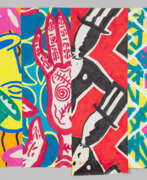

Kim MacConnel is an American artist who works with painting, sculpture, and mixed media-collage/fabric. MacConnel is a seminal figure in the Pattern and Decoration movement of the seventies, but overall MacConnel's oeuvre has surpassed being categorized.
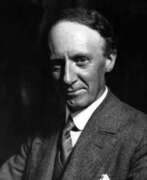


James Williamson Galloway Macdonald, commonly known in his professional life as Jock Macdonald, was a Canadian artist and art educator, a member of Painters Eleven, an organisation whose purpose was to promote abstract art in Canada.
Jock Macdonald was instrumental in the development of the contemporary art movement in the country.


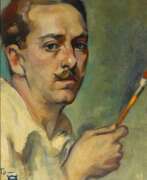

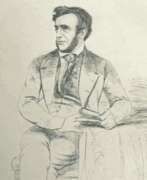

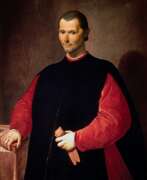

Niccolò di Bernardo Machiavelli was an Italian philosopher, politician and diplomat, historian and Renaissance writer.
As a young man, Niccolò Machiavelli faced financial difficulties due to his father's debts, but had access to a rich library. Machiavelli's early life and career began during a period of political upheaval in Italy. After the expulsion of the Medici family in 1494, for 14 years Niccolo Machiavelli served as a diplomat to the Florentine Republic. During this service, he gained a reputation as a cunning and unconventional thinker. However, when the Medici returned to power in 1512, Machiavelli was dismissed, imprisoned, and temporarily removed from political life.
During this period Machiavelli wrote his famous work The Sovereign, which has become one of the key works in the history of political philosophy. This book epitomizes the Machiavellian approach to politics, where the means justify the end, and where a leader should use any method to consolidate his power. The treatise drew criticism from the Pope, who condemned it for supporting rule through deceit and fear. Nevertheless, The Sovereign is still an important work of political literature, and Machiavelli has come to be called "the father of modern political theory."
Machiavelli lived the rest of his life in a small village near Florence, where he continued his creative endeavors, writing On the Art of War, as well as poems and plays. His literary legacy has become an integral part of the history of political philosophy.
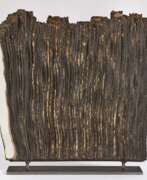


Marcin Maciejowski – is a contemporary Polish artist renowned for his humorous and candid observations of the everyday life. Painting from commercials, television series, newspapers, the internet, art history and his own experiences, Maciejowski is a keeper of our contemporary conditions.
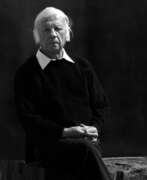

Heinz Mack is a German artist. Together with Otto Piene he founded the ZERO movement in 1957. He exhibited works at documenta in 1964 and 1977 and he represented Germany at the 1970 Venice Biennale. He is best known for his contributions to op art, light art and kinetic art.
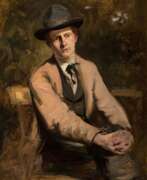

William Darling McKay is a Scottish artist, known for his landscapes. He came to Edinburgh at the age of 16 and was first noticed ten years later for a series of pastorals, in which figures played an important part. He was awarded an honorary LLD by the University of Edinburgh in 1919 and thereafter known as Dr McKay. In 1872, when on a painting excursion to Cadzow Forest, he became increasingly interested in watercolour painting. Best remembered as the author of The Scottish School of Painting (1906) which, although a pioneer work, encompassed the 18th century in a mere eight pages.


Helmuth Macke was a German painter of the first half of the twentieth century. He is known as a painter and graphic artist, landscape painter, genre painter and portraitist.
Helmuth Macke is considered a representative of Rhenish Expressionism. His work merged influences of constructivism, abstractionism and other artistic movements. At the end of his career he created the "Blue Room" for the industrialist Karl Gröppel in Krefeld; it was discovered after decades of neglect in 2012 and now adorns the Krefeld Villa Goecke after restoration.
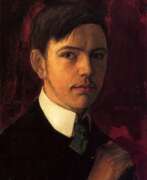

August Robert Ludwig Macke was a German Expressionist painter, celebrated for his vibrant use of color and innovative artistic techniques. Born in 1887 in Meschede, Germany, Macke played a pivotal role in the German Expressionist movement and was a founding member of Der Blaue Reiter (The Blue Rider) group. His work is characterized by a blend of Impressionism, Post-impressionism, and Fauvism, marked by an expressive use of color and form to convey emotions and moods rather than realistic depictions.
Macke's artistic journey was significantly influenced by his travels and encounters with other artists. His first trip to Paris in 1907 introduced him to Impressionism, and his subsequent time in Berlin and interactions with artists like Lovis Corinth further shaped his style. A key turning point in his career was his meeting with Robert Delaunay in Paris in 1912, which introduced him to chromatic Cubism, or Orphism, influencing his work thereafter, such as in "Shops Windows," which reflects Delaunay's impact combined with elements of Italian Futurism. Macke's travels to Tunisia in 1914 with Paul Klee and Louis Moilliet were instrumental in developing the luminist approach of his final period, producing masterpieces like "Türkisches Café."
Macke's contributions to art extend beyond his paintings; he was actively involved in the art community, establishing networks with other modernist artists across Europe. His collaboration with artists like Franz Marc and his role in organizing avant-garde art exhibitions helped promote modernist movements in Germany and beyond. Unfortunately, Macke's promising career was cut short when he was killed in action in 1914 during the First World War.
Macke's works are housed in prestigious museums and galleries worldwide, including the Sprengel Museum in Hanover, Museum Ludwig in Cologne, Städel Museum, and Museum Kunstpalast. His paintings, such as "Lady in a Green Jacket" and "Promenade," continue to be celebrated for their innovative approach to color and composition, leaving a lasting impact on the art world.
For art collectors and experts, Macke's oeuvre offers a fascinating insight into the evolution of early 20th-century European art, showcasing the intersections of cultural influences and artistic innovation. His works not only reflect the artistic movements of his time but also his personal explorations and responses to the world around him.
To stay informed about new product sales and auction events related to August Robert Ludwig Macke, consider signing up for updates. This subscription will provide exclusive access to the latest offerings and insights into the work of this influential Expressionist artist, ensuring enthusiasts and collectors don't miss out on valuable acquisitions.


August Robert Ludwig Macke was an eminent German expressionist painter, founder and member of the Blue Rider association. His very colorful and individual style is today referred to as the Macke style, characterized by a harmonious combination of colors and the play of light effects. His favorite subjects of his works were sketches from the life of the city, as well as nature and man. The paintings of August Macke give an impression of joy and lightness.
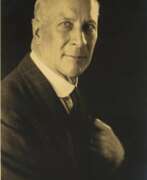

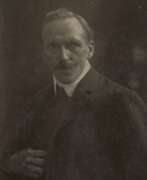

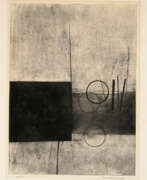

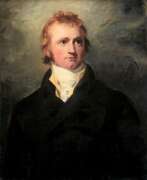


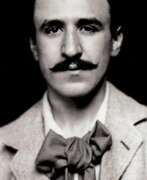

Charles Rennie Mackintosh was a prominent Scottish artist, architect and designer who had a major influence on the development of modernism and global art in the early twentieth century. He was the founder and head of the Glasgow School of Art.
Charles Rennie Mackintosh's style was unique and recognisable. He created elegant and harmonious works reflecting influences from Japanese art, the Gothic style and abstract forms. His works included architectural designs, furniture, paintings, graphics and even decorative objects.
Mackintosh became known for his innovative approach to architecture and design. His buildings were characterised by their refined lines, geometric shapes and use of light and space. His work was an important contribution to the development of modernism and functionalism in architecture.
He was also famous for his ability to combine different materials and textures to create unique and aesthetically pleasing designs. Mackintosh was a master of minimalism and elegance, giving his works a unique style and character.


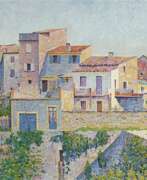

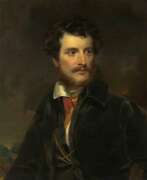

Kenneth Macleay was a Scottish and British portrait and miniature painter and one of the founders of the Royal Scottish Academy.
Kenneth Macleay made his reputation painting portraits in watercolor in sizes ranging from ivory miniatures to full-length images. After painting portraits of Queen Victoria's three youngest sons in the early 1860s, Kenneth Macleay was commissioned to create several more portraits of the Queen's favorite cronies, as well as miniature and watercolor portraits.
This was followed by a larger commission, which became the most important of the artist's career: a series of portraits of the most important Highland clansmen for publication. The first group of portraits were executed in the second half of the 1860s and exhibited by John Mitchell in Old Bond Street in 1869. They were then reproduced in chromolithography by the leading London lithographer Vincent Brooks (1814-1885) as illustrations for the two-volume The Highlanders of Scotland.
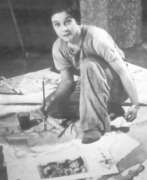

Pegi Nicol MacLeod is a Canadian and American watercolour artist.
She studied painting at the Montreal School of Fine Arts and was a member of the Canadian Watercolour Society and the Canadian Group of Artists. The influence of the Group of Seven is evident in MacLeod's early landscapes, and she later began painting in a more expressive style.
Pegi Nicol MacLeod's watercolours and oil paintings are sinuous lines and dynamic color. The artist took subjects from the world around her - children, portraits, gardens, crowded city streets. After the end of World War II, MacLeod achieved her success. Her "Manhattan Cycle" quickly gained a wide audience in Canada, moving from the National Gallery to a nationwide tour.
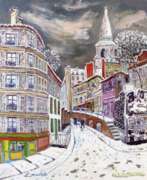

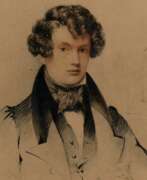


Frederick William MacMonnies was the best known expatriate American sculptor of the Beaux-Arts school, as successful and lauded in France as he was in the United States. He was also a highly accomplished painter and portraitist. He was born in Brooklyn Heights, Brooklyn, New York and died in New York City.
Three of MacMonnies' best-known sculptures are Nathan Hale, Bacchante and Infant Faun, and Diana.
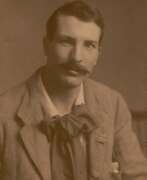

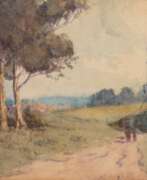

Matthew James MacNally was a well known Australian watercolourist during the first half of the twentieth century. Since his death there have been two major exhibitions of his work, one at John Martin's Art Gallery in Adelaide (1946) and a retrospective at the Benalla Art Gallery (1974).
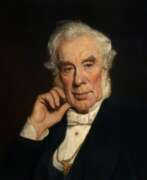




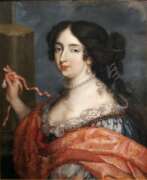

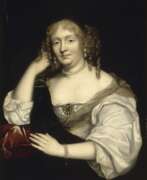

Marie de Rabutin-Chantal, marquise de Sévigné was a 17th-century French writer of epistolary genre.
Marie came from a noble family, but was orphaned at the age of six and raised by her uncle Philippe II de Coulanges. She received a good education and married Henri de Sévigné in 1644. In 1651 he was killed in a duel, and Madame de Sevigne was left a widow with two children. She led an ordinary social life, and only the marriage of her daughter, painful separation from her and loneliness suddenly revealed in the Marquise literary gift.
Since 1671 for thirty years, Madame de Sévigné wrote to her daughter about 1700 letters, and this correspondence has both historical and literary significance. In her letters, the woman relates current news and events of secular society, describes prominent people, comments on all of these, and reports on the details of her own life. Her letters reflect the intellectual sophistication of the salon culture of the period. Madame de Sévigné also touches on serious philosophical and religious topics, nature, art, morality, and psychology.
Her letters were read out in the salons, passed from hand to hand. Gradually they turned into a collection, the first edition of which was published in 1726, gradually expanding and supplementing. The popularity of the Letters of Madame de Sévigné grew over the years, becoming a source of historical study of the era and language. Francophone educational institutions in many countries around the world have included Sevigné's works in their curricula. The crater Sevigné on Venus is named in her honor.
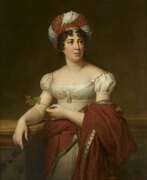

Anne-Louise-Germaine Necker, Baroness of Staël-Holstein, known as Madame de Staël, was a French writer, literary theorist, and publicist.
She was born into a Swiss family where her father was a banker and then finance minister to King Louis XVI, and her mother ran a brilliant literary and political salon in Paris where Voltaire, Diderot, and Hume frequented. Young Necker received a brilliant education, she absorbed the intellectual environment with great curiosity, becoming a witty and well-read conversationalist.
In 1786, she married the Swedish ambassador to Paris, Baron Eric de Staël-Holstein. It was a marriage of convenience, which ended in 1797 formal divorce.
Madame de Staël became known not only for her stunning and versatile works, but also for her enormous influence on the intellectual climate of that 19th century. During her lifetime she was known as a novelist, but she became much more famous as a political philosopher, literary critic, and theorist of Romanticism. Madame de Staël was an implacable opponent of Napoleon I and traveled around Europe for a decade during his reign from 1803. In 1810, the writer published one of her most famous and influential works, On Germany. She returned to Paris in 1814, after the fall of Napoleon, and wrote "Reflections on the Principal Events of the French Revolution."
In her travels, Madame de Staël met many politicians, artists and writers and was known for her cosmopolitanism and feminism. Madame de Staël epitomized the European culture of her time, combining ideas from neoclassicism to romanticism in her glittering salon for leading intellectuals.


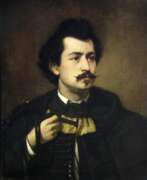



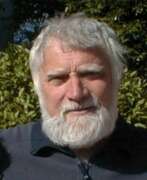

Arthur Karl Maderson is an Irish impressionist painter.
Arthur Maderson studied at Camberwell School of Art (London) and regularly exhibits at the Royal Academy and the Royal Hibernian Academy. In painting, Maderson uses the same principles as Claude Monet and other French Impressionists. He paints beach scenes, landscapes and figurative compositions.
The artist has also written numerous articles for magazines, as well as for the Encyclopedia of Oil Painting Techniques and other art history publications.

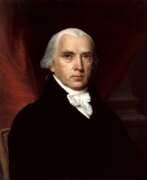

James Madison was an American politician and statesman, the fourth President of the United States (1809-1817).
Madison attended Princeton and studied history, government, and law. He participated in the drafting of the Virginia Constitution in 1776, and in 1780 was chosen to represent Virginia in the Continental Congress (1780-83 and 1786-88). James Madison contributed greatly to the ratification of the Constitution, writing, with Alexander Hamilton and John Jay, The Federalist (1788). He was later called the "father of the Constitution."
In 1792, Madison and Thomas Jefferson (1743-1826) founded the Democratic-Republican Party, which has been called America's first opposition political party. When Jefferson became the third president of the United States, Madison served as his secretary of state. In Congress, he was involved in drafting the Bill of Rights and passing the first revenue legislation. As Secretary of State to President Jefferson (1801-1809), Madison protested to warring France and Great Britain that their seizure of American ships was contrary to international law.
Madison was elected president in 1808, succeeding Jefferson. Continued British interference in shipping, as well as other grievances, led to the War of 1812. During Madison's second term as president, the war was still ongoing, and he and his wife were even forced to flee in the face of advancing British troops who set Washington, D.C. on fire. Despite this, in 1815, the United States declared its victory in the war.
After the end of his second term, Madison remained active in public affairs. He edited his Journal of the Constitutional Convention, was co-chairman of the Virginia Constitutional Convention from 1829-1830, and chancellor of the University of Virginia from 1826-36. He was also Monroe's foreign policy advisor. Although Madison was a slave owner all his life, in the last years of his life he was active in the American Colonization Society, whose mission was to resettle slaves in Africa. James Madison died at the age of 85 in 1836.
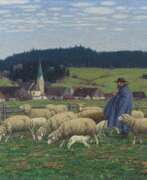

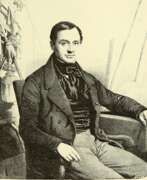


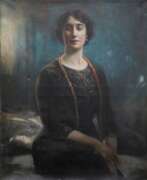




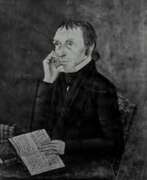

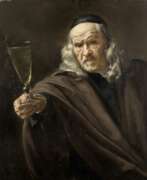

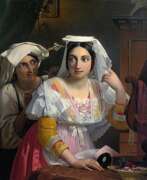

Jan Baptist Lodewyck Maes was a Belgian genre painter active in Italy. Maes studied at the Academy of Ghent. He exhibited for the first time at that city's fair in 1810. He won prizes in all the competitions he entered and in 1820 received a grant from the city of Ghent. Thanks to the Belgian Rome Prize received in 1821, he first visited Paris and then went on to Italy. In 1822 he copied works by old masters in the Uffizi Museum. In 1824 he settled in Rome. Maes kept in touch with his hometown and regularly sent works to Belgian salons. He was a corresponding member of the Royal Netherlands Academy of Sciences.
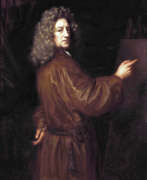

Nicolaes Maes was a Dutch painter known for his genre scenes, portraits, religious compositions and the occasional still life. A pupil of Rembrandt in Amsterdam, he returned to work in his native city of Dordrecht for 20 years. In the latter part of his career he returned to Amsterdam where he became the leading portrait painter of his time. Maes contributed to the development of genre painting in the Netherlands and was the most prominent portrait painter working in Amsterdam in the final three decades of the 17th century.
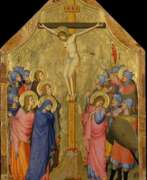


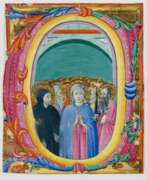


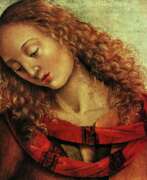

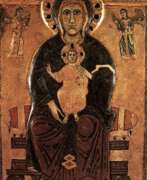

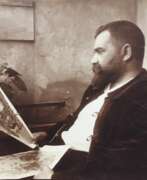

Emil Maetzel was a German architect, painter, graphic artist and sculptor.
In 1919, Maetzel was a co-founder of the Hamburg Secession, an organisation promoting modern art in northern Germany. He was also a member of the November Group, an association of expressionist artists in Berlin.
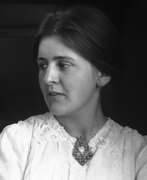

Dorothea Maetzel-Johannsen was a German modernist painter. She was a co-founder of the Hamburg Secession. Since 1919 she based her major expressionist works on the work of the dissolved Brücke (group of artists), early cubism and African sculpture.
Dorothea Maetzel-Johannsen has developed an individual mode of expression in Expressionism. Although her works feature the typical angular contours, two-dimensional concept of space and dynamic oblique compositions, unlike her peers, the artist refrained from any form of aggressiveness in her compositions. In her still life and figurative paintings, a contemplative mood resonates, contrary to the dynamic composition of the painting.
In 1937, Dorothea Maetzel-Johannsen's works were confiscated from the Kunsthalle Hamburg as part of the Nazi action "Degenerate Art" and then destroyed.



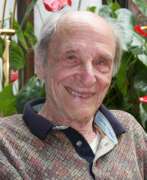


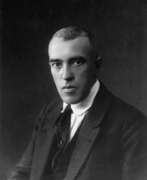

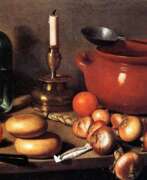

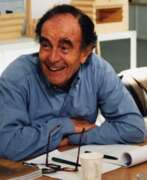

Vico Magistretti was an Italian industrial designer, known as a furniture designer and architect. A collaborator of humanist architect Ernesto Nathan Rogers, one of Magistretti's first projects was the "poetic" round church in the experimental Milan neighborhood of QT8. He later designed mass-produced appliances and furniture for companies such as Cassina S.p.A., and won several awards, including the Gold Medal of the Chartered Society of Industrial Artists & Designers in 1986.


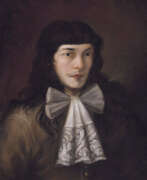

Alessandro Magnasco was an Italian painter, one of the most prominent representatives of Genoese Mannerism. In his time he was better known under the nickname Lissandrino (il Lissandrino).
Magnasco painted pictures of nature: grandiose ancient ruins, romantic waterfalls, gorges, forest huts - landscapes populated by small figures of vagabonds in rags, soldiers, travelling monks and beggars with characteristic elongated proportions, walking woodcutters, porters, laundresses. Magnasco's style was close to the searches of Venetian painters of the 18th century.
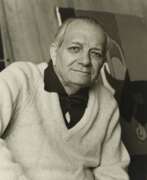

Alberto Magnelli was an Italian painter who played a significant role in the development of 20th century abstract art. He was born in Florence, Italy, and began his artistic training at the Academy of Fine Arts in Florence.
Magnelli's early work was heavily influenced by the Italian Futurist movement, but he later became interested in abstract art and began to experiment with different forms of abstraction. His paintings often featured geometric shapes, bold colors, and strong contrasts between light and dark.
During World War II, Magnelli fled to Switzerland and later moved to Paris, where he became involved with the Surrealist movement and formed close friendships with artists such as Piet Mondrian and Max Ernst. In the 1950s and 60s, he began to incorporate organic forms and more fluid, gestural marks into his work.
His work continues to be exhibited and studied around the world, and his legacy has had a significant impact on the development of modern and contemporary art in Italy and beyond.


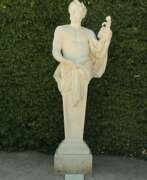

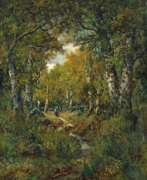

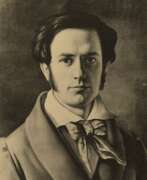


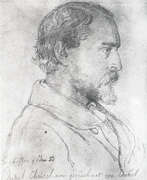


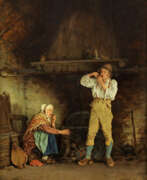

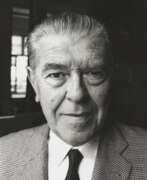

René Magritte, a Belgian artist, was renowned for his significant contributions to the Surrealist movement. His art, known for merging ordinary objects with bizarre, dream-like contexts, captivated the art world. Born on November 21, 1898, in Lessines, Belgium, Magritte's early artistic pursuits were impressionistic, transitioning through Cubism and Futurism influenced by artists like Jean Metzinger. However, his encounter with Giorgio de Chirico's work in 1922 steered him towards Surrealism.
Magritte's career was marked by various phases, each showcasing his evolving style and thematic focus. His initial foray into Surrealism began in 1926 with "The Lost Jockey" and was further solidified during his time in Paris, where he mingled with other prominent Surrealists like André Breton. Despite facing initial criticism and financial challenges, Magritte's unique blend of familiar imagery in unfamiliar contexts, like in "The Empire of Light" and "Time Transfixed," earned him acclaim.
Magritte's distinct visual language, characterized by recurring motifs like bowler hats and apples, and his exploration of reality and illusion, remain influential. His works are displayed in major galleries worldwide, continuing to inspire and intrigue art collectors and enthusiasts.
For collectors and experts in art and antiques, staying informed about Magritte's works and related auction events is crucial. Signing up for updates ensures you're alerted to new sales and events focusing on René Magritte's art, offering unique opportunities to acquire or learn more about his remarkable creations. This subscription will exclusively cover new product sales and auction events related to Magritte, keeping you updated on the most relevant information in the art world.


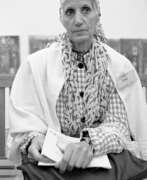

Baya Mahieddine (Arabic: باية محي الدين) or Fatima Haddad (Arabic: فاطمة حداد) was an Algerian artist who is best known for her vibrant and colorful paintings that often featured bold shapes and figures. At the age of sixteen Baya had her first exhibition, in Paris, where she gained notice from renowned artists such as Pablo Picasso and André Breton.
Baya's work is often associated with Surrealism, as she was heavily influenced by Breton and other Surrealist artists. However, she also drew inspiration from traditional Algerian art and culture, incorporating elements such as calligraphy and geometric patterns into her work.
Throughout her career, Baya's work was exhibited in Algeria and France, and she received widespread critical acclaim for her unique style and approach to painting. In addition to her paintings, she also created tapestries, ceramics, and other works of art.
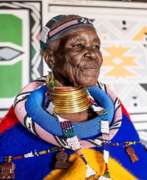

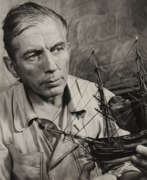

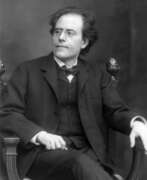


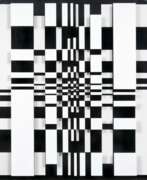

Max Herrmann Mahlmann was a German Constructivist painter. Mahlmann studied from 1934 to 1938 as a student of Richard Müller at the Academy of Fine Arts in Dresden and initially also worked as a stage painter and commercial artist. Mahlmann turned to non-representational painting after 1945, heavily influenced by Wassili Kandinsky and Josef Albers, and concentrated on geometric-constructivist compositions.
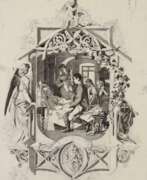

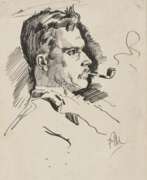

Francis Prout Mahony, also known as Frank Mahony was an Australian painter, watercolorist and illustrator. Mahony became known for his excellent drawings of horses. He worked for The Antipodean, The Sydney Mail and the Australian Town and Country Journal. In addition to his periodical work, he illustrated numerous books, including Where the Dead Men Lie, and Other Poems by Barcroft Boake, While the Billy Boils by Henry Lawson and Dot and the Kangaroo, a children's book by Ethel Pedley. His oils were moderately successful. He is best remembered as a capable painter of animals and is represented in the Sydney, Hobart and Wanganui, New Zealand galleries.