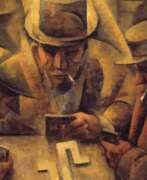
Famous people
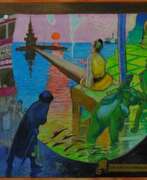

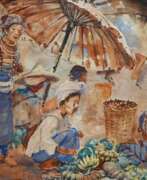

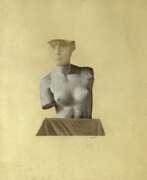

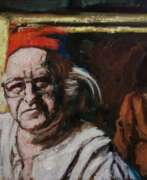

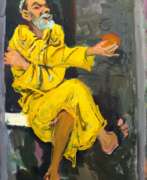

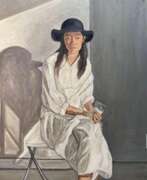


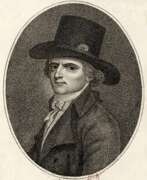

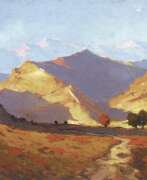

Gennady Fyodorovich Babikov (Russian: Геннадий Фёдорович Бабиков) was a Soviet and Turkmen artist of the twentieth century. He is known as a painter, graphic artist, watercolorist, master of landscape and still life and is considered the founder of the genre of Turkmen industrial landscape, representative of the Russian academic school of painting in Central Asia.
Gennady Babikov participated in the Great Patriotic War, at the front he created more than 100 graphic portraits of fellow soldiers. The artist was famous for his linocuts, and also developed a still life style, which was called "Babikov's" in Turkmenistan.
His works are in many private collections around the world.
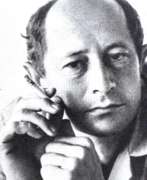

Stanislav Gennadievich Babikov (Russian: Станислав Геннадьевич Бабиков) was a Soviet and Turkmen artist of the mid-twentieth century. He is known as a painter, graphic artist, publicist, scenographer, as well as the son and pupil of Gennady Babikov, the founder of the Turkmen industrial landscape genre.
Stanislav Babikov is considered a continuator of the ideas of Russian Cezannism. He was a member of the informal Turkmen group "Seven", which sought to synthesize national elements and Western modernism in art. The master was also an author of articles on fine arts. His style reflects the influence of nature and climate of Turkmenistan and is characterized by bright color and expressiveness of color.
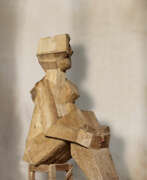

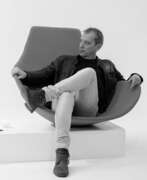


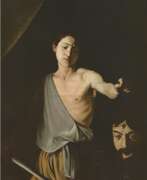

Matteo Baccelli was an Italian painter born in Lucca, Italy. He was a pupil of Pompeo Batoni and studied at the Accademia di Belle Arti di Firenze. He specialized in portrait painting and was a well-known artist in his time, receiving many commissions from members of the aristocracy and the church.
Baccelli's portraits are characterized by their realism and attention to detail, as well as their sensitive and subtle use of color. He was particularly skilled at capturing the character and personality of his subjects, and his paintings often convey a sense of psychological depth and complexity.
Baccelli's works can be found in various museums and private collections around the world, including the Uffizi Gallery in Florence, the Pinacoteca di Brera in Milan, and the Metropolitan Museum of Art in New York. He is considered an important figure in the history of Italian painting and a representative of the neoclassical style that dominated European art in the late 18th and early 19th centuries.
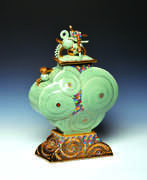

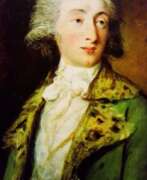

Carl Daniel David Friedrich Bach was a German artist of the late eighteenth and early nineteenth centuries, the Baroque period. He is known as a painter, graphic artist and printmaker.
Bach worked in the historical genre, was a portraitist, animalist, created canvases on allegorical subjects in the spirit of his era. In his works he combined elements of baroque and classicism. The artist often worked in the etching needle technique.
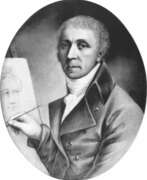




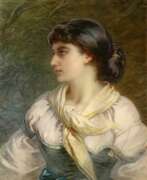

Guido Bach was a German portrait painter who focused mainly on watercolor painting. Bach traveled to Italy, Bohemia, and also visited Egypt. He created portraits and depictions of Italian village life, battle scenes, and images of North African Arab life.
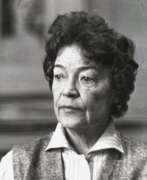

Aino Bach (Russian: Айно Густавовна Бах) was an Estonian and Soviet artist of the twentieth century. She is known as a painter, graphic artist and printmaker.
Aino Bach was one of the first Estonian printmakers to demonstrate mastery of the intaglio technique, which expanded the possibilities of engraving. Her work includes portraits, genre compositions and illustrations. She employed a variety of techniques including gravure printing, metal engraving, and color monotype. Her works often combined different techniques, giving them a distinctive flavor.
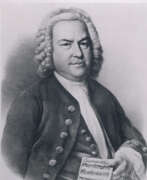

Johann Sebastian Bach was a German Baroque composer, Kapellmeister, organist and teacher.
Johann Sebastian Bach was the youngest child in the family of musician Johann Ambrosius Bach (1645-1695) and belonged to a large family of North German musicians whose dynasty he himself traced back to his great-great-grandfather Veit Bach, a Lutheran baker in the late 16th century. Johann was orphaned at an early age and was taken into care by his older brother, the organist Johann Christoph Bach. In August 1703 he was appointed official organist of the church in Arnstadt, then from 1714 he worked as Kapellmeister and concertmaster at the Weimar court, to which time his first compositions date. In 1736 he was appointed court composer to the King of Saxony, thus recognizing his merits as a composer and organist. While working as a concertmaster, Bach also mastered almost all the instruments in the orchestra.
In the last years of his life, Bach was nearly blind and living poorly, and his Baroque music was considered outdated as tastes changed. But in the 19th century, interest in Bach's works increased dramatically, and he became the favorite composer of many subsequent musicians. Johann Sebastian's sons Wilhelm Friedemann, Carl Philipp Emanuel and Johann Christian continued the family dynasty and also became musicians. And Johann Sebastian Bach himself was surrounded by students throughout his life.
Although his contemporaries admired Bach's playing on the harpsichord and organ, today it is his compositions that are considered some of the finest works of mature Baroque music. His most widely known works today include the Brandenburg Concertos, the Well-Tempered Clavier, the Masses in B minor, and many other masterpieces of church and instrumental music. Bach's rich legacy includes sacred and secular compositions, especially cantatas, organ pieces and concertos (Bach composed more than 1,000 musical works in all significant genres of his time, except opera), which influenced many later composers. Johann Sebastian Bach was able to encompass and unite the major styles, forms and national traditions developed in previous generations. Today he is considered one of the greatest composers of all time.


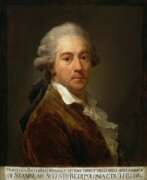

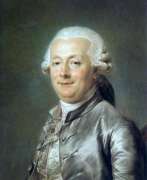

Jean-Jacques Bachelier was a French painter and innovator of porcelain and a member of the Royal Academy of Painting and Sculpture.
Originally a still-life painter, he later became world-renowned for his significant contributions to applied art. In 1765, Bachelier founded an art and crafts school in Paris with his own funds. He was in charge of the painters at the porcelain manufactory in Vincennes, where figures were produced from unglazed porcelain - biscuit. For many years Bachelier was the Director of Sevres porcelain manufactory and in fact became the creator of the Sevres style.
Bachelier also conducted research on encaustic painting (a painting technique in which the binding substance of paints is wax) and published works on art education.
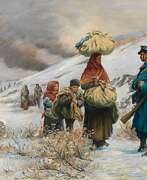

Rodolphe Auguste Bachelin was a Swiss landscape, history and portrait painter as well as a writer, historian and art critic.
He was interested in the Lombardy War of 1859 and in particular in the Franco-Prussian War of 1870 to 1871, which provided him with several subjects with its troop surge at Les Verrières. The Neuchâtel painter was greatly influenced by the writings of Rodolphe Töpffer and aspired to become a Swiss national painter.
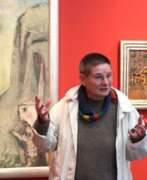

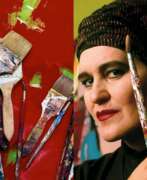
Dorothee Bachem is a German-born, distinctive artist and writer who runs a studio in Flensburg.
Bachem studied art at the Berlin University of the Arts and works in various techniques - multi-layered painting, collage, printmaking.
With her unique poetics, Bachem creates surreal, dreamlike, timeless picture stories in which the influence of Picasso and Cubism can be read.
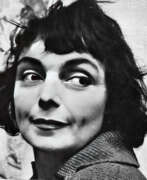

Bele Bachem (real name Renate Gabriele Bachem) was a German painter, graphic designer, book illustrator, interior designer and writer. In 1997 Bachem was awarded the Order of Merit of the Federal Republic of Germany.
Bachem is considered one of the most important post-war German artists and one of the few surrealists in the illustration of German literature.
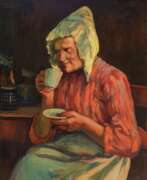

Gottfried Albert Maria Bachem was a German painter and illustrator of the Düsseldorf School. Bachem, who belonged to the Malkasten artists' association from 1921 to 1932, painted portraits, genre scenes and landscapes, and he also illustrated children's books. From 1900 he took part in numerous art exhibitions, including in Berlin.
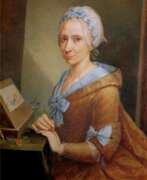

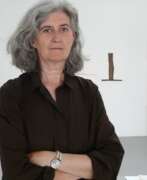


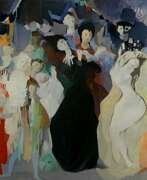

Karl Otto Bachmann, a Swiss painter, graphic artist, and illustrator, began his artistic career in Luzern before moving to Zurich and pursuing freelance work. He achieved a breakthrough in 1943 with the publication of his "Faust" portfolio. Bachmann drew inspiration from his travels across Europe, often joining circus troupes for income and creative ideas. His paintings were characterized by imaginative and virtual settings, with themes revolving around the stage, carnival, and circus. Bachmann's elegant lines, delicate colors, and harmonious compositions made him a respected book illustrator. He actively participated in numerous exhibitions throughout his life, both domestically and internationally.
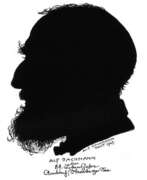

Alfred August Felix Bachmann, a distinguished German Orientalist painter, carved a niche for himself in the realm of art with his exceptional talent. His journey in art began post-high school, under the tutelage of Max Schmidt at the Königsberg Academy of Art, eventually leading him to explore and derive inspiration from various European locales. Bachmann's dedication to his craft saw him making Munich his home from 1891 onwards, immersing himself in the city's vibrant art scene.
Bachmann's oeuvre primarily showcases his profound connection with coastal landscapes, though his versatility also shines through in his depictions of prairies and hilly terrains. His participation in the prestigious exhibitions at the Glaspalast in Munich since 1887 underscores his prominence in the art world. Notably, his artistic excellence was recognized with a gold medal at the Glaspalast exhibition in Berlin in 1913, an Austrian Grand Gold Medal Service Award in 1917, and the German Service Cross in 1952, attesting to his significant contributions to art.
His artistic journey included an intriguing role appointed by Otto Erich Hartleben to the "Halkonian Academy for Unexplored Sciences," where Bachmann created a poignant last portrait of Hartleben, titled "Last Greetings." This work, among others, demonstrates Bachmann's deep intellectual and emotional engagement with his subjects.
Bachmann's legacy is celebrated in many esteemed collections, evidencing the lasting impact of his works on the art community and collectors alike. His contributions to Orientalist painting and his unique ability to capture the essence of his subjects have solidified his place in art history.
For art collectors and enthusiasts keen on exploring the works of Alfred August Felix Bachmann, signing up for updates can enrich your collection with pieces that not only exemplify exquisite craftsmanship but also carry historical significance. Stay informed about new sales and auction events dedicated to Bachmann's art by subscribing for updates today.
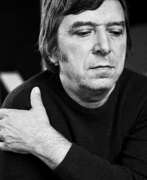

Hermann Bachmann is a German artist, graphic designer and teacher.
Hermann studied at the School of Applied Arts Offenbach am Main and served in the army during World War II. In 1945, Bachmann returned to his hometown and joined the artists of the Halle School. And in 1953 he fled to West Berlin, whose creative atmosphere was closer to him.
In 1957 Hermann Bachmann became a teacher and later a professor at the University of Fine Arts in Berlin, among his students many famous artists. He was a member of the Association of German Artists.

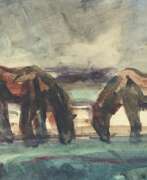

Unica Bachmann-Calcoen (Dutch: Unica Bachmann-Calcoen) was a German-Dutch artist who worked with portraits and depictions of animals, especially horses. She was a pupil of Marie de Jonge (1872-1951) and Martin Monnickendam (1874-1943).
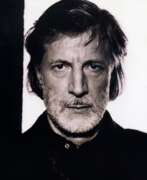

Hans Matthäus Bachmayer was a German expressionist painter and sculptor.
Bachmayer created large-format expressive paintings. His sculptures consist of individual pieces of wood glued together to form bizarrely shaped structures. The expressive colouring of the rough materials created an interesting tension between colour and form.
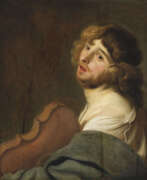

Jacob Adriaensz Backer was a prolific artist of the Dutch Golden Age, known for his dynamic portraits, religious subjects, and mythological scenes. Over a span of twenty years, Backer produced approximately 140 paintings, standing out for his quick execution and attention to detail. His ability to capture intricate details like cuffs, fur, and collars within a short period was renowned, exemplifying the Dutch wet-on-wet painting technique's success during his era.
Influenced by notable figures such as Wybrand de Geest, Peter Paul Rubens, and Abraham Bloemaert, Backer was also celebrated for his drawings of nudes, showcasing his versatile skill set. His works were a testament to the baroque movement, characterized by vivid expression and intricate detail. Notable among his works are portraits that convey the subject's essence with exceptional clarity and depth, earning him a distinguished place among his contemporaries in Amsterdam.
Despite his significant contributions to Dutch art, Backer led a life focused solely on his art, never marrying or purchasing a home, possibly sharing his living quarters with relatives. He was deeply embedded in the artistic milieu of Amsterdam, having been one of the most independent pupils of Rembrandt between 1632 and 1634, absorbing and reflecting the master's style in his works.
For collectors and experts in art and antiques, Jacob Adriaensz Backer's work offers an insight into the Dutch Golden Age's rich cultural and artistic landscape. His legacy continues to be celebrated in major museums and collections worldwide, including the Rijksmuseum in Amsterdam and the National Museum in Warsaw, where his influence on portrait and genre painting remains undisputed.
To stay updated on exhibitions, sales, and auctions related to Jacob Adriaensz Backer, subscribing to newsletters from reputable art galleries and auction houses is advisable. This ensures you receive timely information on opportunities to engage with the works of this masterful Dutch Golden Age painter.





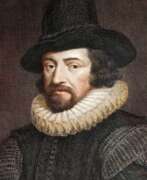

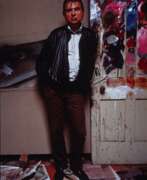

Francis Bacon was an Irish-born British figurative painter known for his raw, unsettling imagery. Focusing on the human form, his subjects included crucifixions, portraits of popes, self-portraits, and portraits of close friends, with abstracted figures sometimes isolated in geometrical structures. Rejecting various classifications of his work, Bacon said he strove to render "the brutality of fact." He built up a reputation as one of the giants of contemporary art with his unique style.
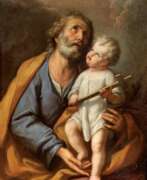

Giuseppe Badaracco also called “Il Sordo” (the Deaf), was an Italian painter of the Baroque period, active mainly in Genoa, in Liguria and in the island of Corsica. He worked for some years in Florence, where he copied many of the works of Andrea del Sarto. Returning to Genoa, he painted mainly for private customers. He worked also in Corsica (at that time part of the Republic of Genoa), where he painted locally influential paintings for some churches around Bastia.
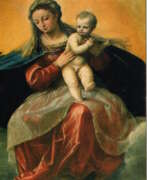



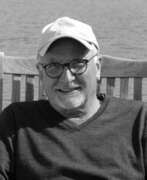

Frank Badur is a German color field painting artist living and working in Berlin and Poikko, Finland.
Badur studied painting in Berlin, in 1973 he opened a studio in Finland and has lived in two countries ever since. He co-founded the group Sistema in 1975 and was professor of painting at the Berlin University of the Arts from 1985 to 2009.
Frank Badur's paintings are characterized by visual clarity, his palette is minimalist - often he uses only two colors in a painting, composed in balanced color fields. Typically, the artist does not use pure colors, but rather mixtures, which he applies up to 30 layers on the canvas. The selection and combination of these colors, which the artist believes are based on both intuition and experience, create spectacular, complex color spaces. However, despite the seemingly strictly formal structure, the composition never follows a mathematical principle.
Frank Badur has been a member of the Berlin Academy of Arts since 1992 and a member of the Association of German Artists.


Donald Baechler was an American painter and sculptor associated with 1980s Neo-expressionism.
Baechler's artwork is in various permanent museum collections including at the Whitney Museum of American Art, the Museum of Modern Art, Solomon R. Guggenheim Museum, the Museum of Fine Arts Boston, the Stedelijk, and the Centre Pompidou.

Elias Baeck called "Heldenmuth", was a German painter and engraver from Augsburg. Baeck worked for some time in Rome, then in Laybach, but finally returned to Augsburg, where he died in 1747. His chief works — both in painting and engraving — were portraits and landscapes. His engravings are sometimes signed "E.B.a.H.", standing for "Elias Baeck, alias Heldenmuth".
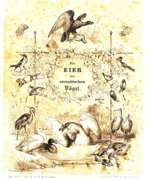

Friedrich Baedeker, full name Friedrich Wilhelm Justus Baedeker or F. W. J. Baedeker, was a German pharmacist, bird egg collector and bird illustrator.
In addition to his work as a pharmacist, Baedeker had a passion for ornithology and was a good artist. His 774 watercolors are known, depicting some 386 European birds. In time, Baedeker became widely known as an ornithologist and zoologist, and his huge collection included about 4,000 eggs of various European and exotic birds.
Baedeker joined the Deutsche Ornithologen-Gesellschaft (German Society of Ornithologists) in 1851, shortly after its founding, and published several books on birds. One of these was Die Eier der europaeischen Voegel nach der Natur gemalt ("The Eggs of European Birds Drawn from Nature").
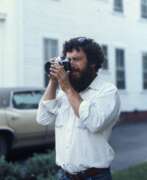

John Baeder is an American painter closely associated with the photorealist movement. He is best known for his detailed paintings of American roadside diners and eateries. His interest in small towns across America began when he was young by photographing old cars and other relics. He started working as an art director in Atlanta for a branch of a New York advertising agency in 1960, and subsequently moved to New York City in 1964. He went on to have a successful career in advertising through the early 1970s, while continuing to paint, draw and photograph on his own time. Baeder left the advertising field in 1972 to pursue his artistic career full-time. The same year, OK Harris Gallery in New York began exhibiting his artworks. Since then, he has had more than thirty solo exhibitions at art galleries. His work includes oil paintings, watercolors and photographs. Baeder’s work aims to chronicle the disappearing aspects of American culture. Baeder is the recipient of the Tennessee Governor's Distinguished Artist Award in 2009.
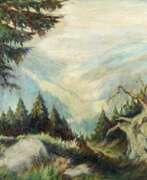

Friedrich August Baer was a German painter who initially pursued law but turned to painting after being inspired by Eduard Schleich's work. He was a self-taught artist who received guidance from Adolf Lier and Hermann Baisch. Baer was a member of the Munich Art Association and exhibited his works in various exhibitions across Germany and Austria. He became interested in painting high mountain landscapes and was occasionally misunderstood for his unique style. Baer was also a writer and book illustrator and received several medals and awards for his artistic achievements.
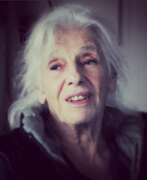

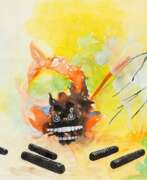

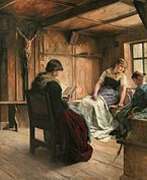


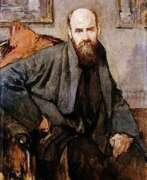

Albert Baertsoen was a Belgian painter, pastellist and graphic artist. His debut as a painter came in 1887, when he participated in an exhibition in Brussels held by the secessionist group l'Essor. He continued his studies in Paris, at the art school of Alfred Philippe Roll, and exhibited at the Salon in 1889. In 1894, he helped found the "Cercle des Beaux-Arts d'Ostende". From 1896 to 1901, he continued to exhibit throughout Europe, winning several Gold Medals. In 1913, he served as a member of the art jury for the Ghent World's Fair. During World War I, he lived in London, returning to Ghent in 1919. That same year, he was appointed a member of the Royal Academy of Belgium.
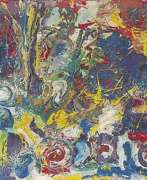

Ernst Rudolf Baerwind was a German painter. Baerwind studied at the art academies in Munich, Berlin and Paris. Baerwind's work was initially based on early German Expressionism. After a surrealist phase, he was influenced in Paris by the painting of the École de Paris and by Informel and then found his way to the International Style.

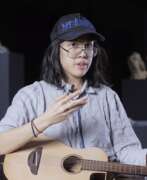

Trisha Baga is an American artist working in various media, including video installations, sculpture, painting and audio installations. She is known for her experiments with technology and often uses voice and body in her work.
Her work is often interactive and a combination of different elements such as projections, sounds, objects and movement. She is also known for her use of private elements such as mobile phones to create unique and personal works of art.
Trisha Baga draws on the heritage of sculpture, painting, music, photography and literature in her practice. Among the subjects and themes she explores are contemporary events, the worship of heroes and celebrities, and collective history. Baga's installations often include film, consisting of montages and collages of found footage and photographs, stacked in such a way that some images obscure others; the films are projected directly onto the wall, over personal items and rubbish from her studio so that they cast shadows on the projection.
Her work has been exhibited in many museums and galleries around the world, including the Museum of Modern Art in Los Angeles, the Museum of Modern Art in New York and the Venice Biennale.
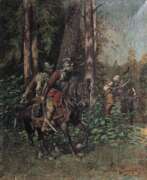



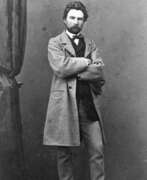

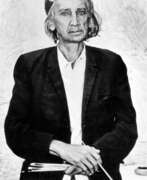

Sattar Bahlulzade (Russian: Саттар Бахлул оглы Бахлулзаде) was a 20th-century Azerbaijani Soviet landscape painter. He is known as a painter, graphic artist, landscape painter and caricaturist.
Bahlulzade created lyrical landscapes praising Azerbaijani nature, which were characterized by realism and detail. As a classical landscape painter he was especially famous for his second period of creativity (1940-1960). The artist's paintings were closely intertwined with the traditions of Azerbaijani art, and in the last years of his life the influence of Neo-Impressionism was manifested. Bahlulzade also created graphic works, including still lifes.
World museums preserve about 150 paintings and 30 graphic works by this artist.


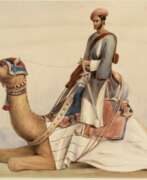

Robert Baikie was a Scottish-born physician, writer and artist.
Baikie spent more than 17 years as a doctor in India with the East India Company's Madras Army, as Chief Medical Officer of the Nilgiris, and has written extensively about the region. It is a fascinating account of the Nilgiri Mountains with maps of the hills and approaches to them, sketches of the scenery, drawings of the principal buildings and tables of routes. This work by Robert Baikie was later published as Observations on the Nilgiri, including an account of their topography, climate, soil and produce.
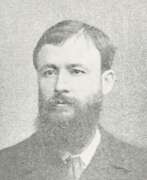

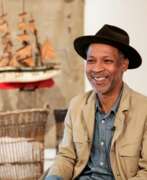

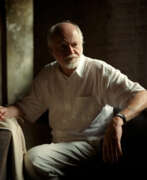

William H. Bailey was an American figurative painter and university professor at the Yale School of Art. Bailey is best known for his nudes and still lifes with eggs, vases, bottles and bowls in a breathy, deceptively quiet atmosphere laden with mystery.

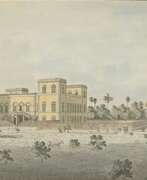

William Baillie was a British artist who lived and worked in India in the late 18th century.
He went to India in 1777 as a cadet in the Bengal Infantry and remained there for the rest of his life. After retiring, he published a newspaper in Calcutta, painted landscapes with views of the city and surrounding countryside, made engravings, and made topographical maps. In 1794, William Baillie published a set of hand-colored aquatints entitled Twelve Views of Calcutta.



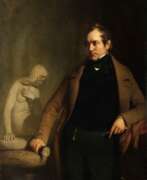

Edward Hodges Baily was a prolific English sculptor responsible for numerous public monuments, portrait busts, statues and exhibition pieces as well as works in silver. He carved friezes for both the Marble Arch and Buckingham Palace in London. His numerous statues of public figures include that of Horatio Nelson on top of Nelson's Column and Charles Grey, 2nd Earl Grey on Grey's Monument in Newcastle upon Tyne. Throughout his career Baily was responsible for creating a number of monuments and memorials for British churches and cathedrals, including several in St Paul's Cathedral.
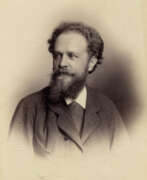

Hermann Baisch was a German painter of the second half of the 19th century. He is known as a landscape painter.
Baisch found inspiration for his landscapes in the neighborhoods around Munich. He often depicted livestock in his paintings, which created a cozy and warm atmosphere. The artist preferred to work en plein air, and his works showed the influence of French Impressionism. His most successful works, in particular, are considered to be "Cows in the pasture", "Morning", "Near Dortrecht at low tide", "On the Dutch Canal".
Baisch was a member of the academies of fine arts in Berlin, Munich and Vienna, as well as a professor at the Art School in Karlsruhe.
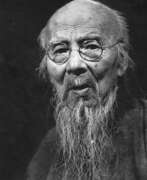

Qi Baishi was a Chinese painter, noted for the whimsical, often playful style of his works. Born to a peasant family from Xiangtan, Hunan, Qi taught himself to paint, sparked by the Manual of the Mustard Seed Garden. After he turned 40, he traveled, visiting various scenic spots in China. After 1917 he settled in Beijing. Some of Qi's major influences include the early Qing dynasty painter Bada Shanren (八大山人) and the Ming dynasty artist Xu Wei (徐渭).
The subjects of his paintings include almost everything, commonly animals, scenery, figures, toys, vegetables, and so on. He theorized that "paintings must be something between likeness and unlikeness, much like today's vulgarians, but not like to cheat popular people". In his later years, many of his works depict mice, shrimp or birds. He was also good at seal carving and called himself "the rich man of three hundred stone seals" (三百石印富翁). In 1953, he was elected president of the China Artists Association (中國美術家協會).
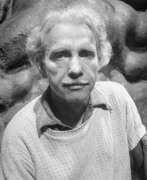


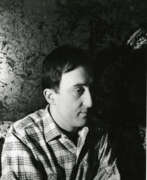

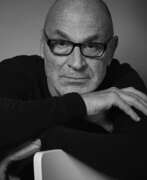

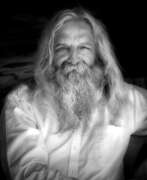

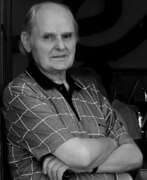

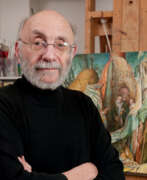


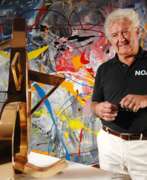

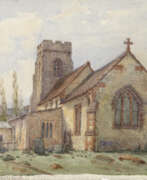

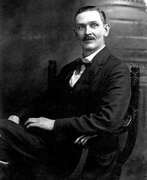

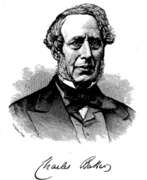

Charles Baker was a British educator, pioneer in deaf education, naturalist and artist.
He became known and honored in Great Britain for having developed the first school textbooks for deaf-blind children, including those based on drawing.
As a young man he became a teacher at the Edgbaston Institute for the Deaf and Dumb in Edgbaston, near Birmingham, and was faced with a complete lack of textbooks for such children. Baker had a passion for entomology, and began directing the attention of his older pupils to the various objects of natural history around them. As a result, in 1828, he authored a small volume of illustrations entitled British Butterflies: their differences, genera and species, with lithographic illustrations of each genus, comprising 33 species, drawn by the children of the Edgbaston School for the Deaf and Dumb."
Charles Baker worked as a teacher of the deaf and headmaster at Doncaster School for forty-five years. During this time he produced many specialized teaching guides and textbooks under the general title "Circle of Knowledge", which were used in Europe and Russia, as well as in China and Japan.




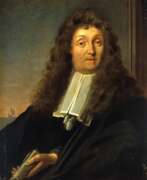

Ludolf Bakhuizen was a Dutch painter of the 17th and early 18th centuries. He is known as an outstanding master of seascapes. Bakhuizen also painted biblical themes and portraits of his contemporaries as well as engravings and miniature models of ships.
Ludolf Bakhuizen is considered one of the best marine painters of the Golden Age of Dutch painting. Among the admirers of his work were many influential European rulers, including the Russian Tsar Peter the Great. The master met Peter I, who visited Amsterdam in the mid-1690s and, according to contemporaries, even managed to give some painting lessons to the Russian tsar. In addition, Вakhuizen made models of all kinds of ship designs on commission from Peter the Great.
Toward the end of his life, the Amsterdam authorities honored Bakhuizen by opening his own gallery on the top floor of the City Hall for his achievements in the fine arts. The best masterpieces of his work are now preserved in museums in the Netherlands, Germany, England, France, and Italy.
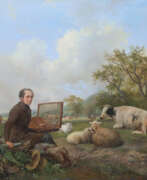

Hendrikus van de Sande Bakhuyzen was a Dutch landscape painter and teacher.
Bakhuyzen studied at The Hague Academy of Art. He is known for his romantic pastoral scenes, especially paintings of livestock, with detailed landscapes.
In 1822 he became a member of the Royal Academy of Arts in Amsterdam and a member of the board of the Academy of Arts in The Hague. He was later elected director of the Hague Academy. Hendrikus Bakhuyzen made a significant contribution to the Romantic period in Dutch art through his work and activities, raising many talented students and followers who founded the artistic movement known as the Hague School.
His children were also very talented: son Julius van de Sande Bakhuyzen (1835-1925) became a renowned landscape painter; daughter Gerardine Jacob van de Sande Bakhuyzen (1826-1895) became a still life painter; son Henrik Gerard van de Sande Bakhuyzen (1838-1923) became a prominent astronomer, member of the Royal Netherlands Academy of Arts and Sciences and director of the Leiden Observatory; son Ernest-Fredrich van de Sande Bakhuyzen was also an astronomer at the Leiden Observatory.
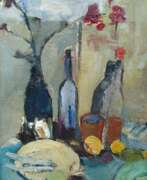

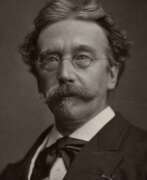

Alexander Hugo Bakker Korff was a 19th-century Dutch genre painter. He was a pupil of the painters Cornelis Kruseman and Huib van Hove. He was trained in the 1840s at the Koninklijke Academie van Beeldende Kunsten in the Hague and the Koninklijke Academie. He became known for his "Bakker Korffjes" – genre pieces of ladies in caps in interiors, that he started painting in 1856 while he was living in Oegstgeest with his sisters as models. In 1870 he was awarded the title ridder in de Leopoldsorde after his works were presented at an exhibition in Brussels in 1869.
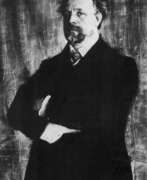

Vasily Nikolayevich Baksheyev (Russian: Василий Николаевич Бакшеев) was a distinguished Russian painter, celebrated for his contributions to landscape, interior, still life, and genre painting. His works are emblematic of the Union of Russian Artists' spirit, a movement he was closely aligned with throughout his career. Born in Moscow in 1862, Baksheyev was a prodigious talent who honed his craft at the esteemed Moscow School of Painting, Sculpture, and Architecture from 1877 to 1888, under the tutelage of luminaries such as Vladimir Makovsky, A. K. Savrasov, and V. D. Polenov. His artistic journey was marked by a significant award early on—a large silver medal for "The Return of Pilgrimage" in 1889—and travels to cultural hubs like Paris and Munich in 1895, which broadened his artistic horizons.
Baksheyev's artistry evolved over the years, from initial genre pictures to a profound exploration of landscape painting, for which he is most renowned. His works, especially from the Soviet era, continue the rich tradition of Russian lyrical landscape, imbued with a poetic quality that captures the essence of nature's transient beauty. His teaching career and efforts in organizing regional museums further underscore his commitment to art and community. Baksheyev's legacy is preserved in his poignant and luminous paintings, such as "Twilight," "Birches," and "Sunny Day," which offer a glimpse into the serene and vibrant landscapes of the Tarusa region. His work remains an invaluable part of Russia's cultural heritage, housed in numerous museums across the country and celebrated for its artistic integrity and emotional depth.
For art collectors and enthusiasts, Baksheyev's oeuvre represents a pivotal chapter in the evolution of Russian painting, characterized by its lyrical beauty and emotive power. His ability to blend impressionistic brushwork with symbolic imagery creates a unique visual language that speaks to the heart of the Russian landscape tradition.
To stay updated on new insights and opportunities related to Vasily Nikolayevich Baksheyev, including sales and auction events, signing up for updates is highly recommended. This subscription ensures that enthusiasts and collectors alike are always informed about the latest developments and available works related to this exceptional artist.
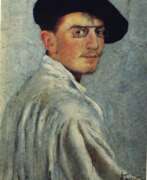

Leon Bakst (Russian: Лев Самойлович Бакст) was a prominent Russian painter and stage designer, celebrated for his innovative contributions to the world of art and theater. Born in the late 19th century, Bakst became a central figure in the cultural renaissance that swept through Russia and Europe, leaving an indelible mark on the visual and performing arts.
Bakst's work is distinguished by its rich use of color, intricate patterns, and imaginative compositions, which brought to life the exotic and often fantastical themes of the ballets and operas for which he designed. His association with the Ballets Russes, a groundbreaking ballet company that performed across Europe and America, solidified his reputation as a visionary artist. The costumes and sets he created for productions like "The Firebird" and "Scheherazade" were celebrated for their creativity and exoticism, influencing not only the world of theater but also fashion and interior design.
His art extends beyond the stage, with paintings and illustrations that capture the same vibrancy and innovation found in his theatrical work. Museums and galleries around the world, including the State Russian Museum in St. Petersburg and the Metropolitan Museum of Art in New York, house his works, allowing art lovers to experience the magic of Bakst's creations.
For collectors and experts in art and antiques, Leon Bakst's work offers a unique glimpse into a transformative period of cultural history, where the boundaries of art and performance were reimagined. His legacy continues to inspire and captivate, making his pieces highly sought after in the art world.
We invite enthusiasts and collectors to sign up for updates on new product sales and auction events related to Leon Bakst. This subscription ensures you remain informed about opportunities to acquire pieces connected to this extraordinary artist's legacy, without any overbearing commitments. Join us in celebrating the enduring impact of Leon Bakst's art and design.



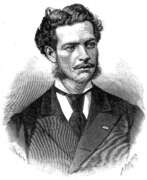

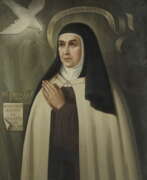


Leonid Fyodorovich Balaklav (Russian: Леонид Фёдорович Балаклав) is a Soviet and contemporary Israeli artist. He is known as a painter, graphic artist and cartoonist.
Leonid Balaklav began his career in Kishinev, then moved to Kiev, where he worked on scientific films. In 1987 at the Tokyo Film Festival he was awarded a gold medal for his animated works. In 1989 he moved to Israel, where he became known for his portraits, lyrical landscapes and works on religious themes. His work is often associated with Jewish identity, and his paintings are known for their intimacy and detail. He uses oil paints on wood to create his works.
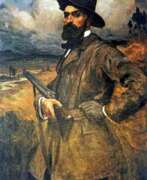


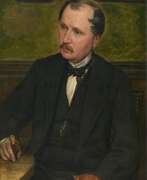

Alphonse Balat, full name Alphonse Hubert François Balat, was a Belgian architect.
He studied at the Academy of Namur and earned an architect's degree from the Academy of Antwerp in 1838. Balat's neo-Renaissance work soon came to the attention of the high nobility of Brussels, and he began to receive prestigious commissions.
In 1856, he built the city palace (Hotel) of the Marquis of Asch. After Leopold II ascended to the throne in 1865, Balat became his chief architect. He designed a number of projects for the luxurious reception areas of the Royal Palace of Belgium, such as the Throne Room, the Grand Staircase and the Grand Gallery. Alphonse Balat's most successful architectural project is considered to be the Lacuna Royal Greenhouses, where he pioneered the use of floral motifs, which later became the basis of the Art Nouveau style.
Alphonse Balat also built a large number of private residences during his career.
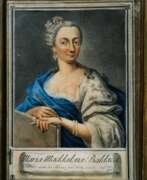



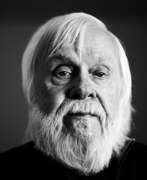

John Baldessari was an American conceptual artist known for his work featuring found photography and appropriated images. He lived and worked in Santa Monica and Venice, California.
Initially a painter, Baldessari began to incorporate texts and photography into his canvases in the mid-1960s. In 1970 he began working in printmaking, film, video, installation, sculpture and photography. He created thousands of works which demonstrate — and, in many cases, combine — the narrative potential of images and the associative power of language within the boundaries of the work of art. His art has been featured in more than 200 solo exhibitions in the U.S. and Europe. His work influenced that of Cindy Sherman, David Salle, Annette Lemieux, and Barbara Kruger among others.