Famous people

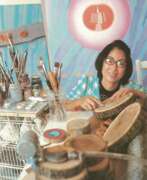




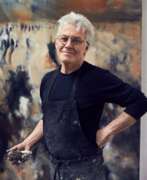

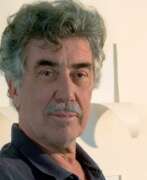


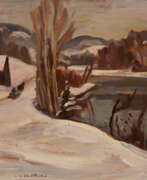


Philip Henry Christopher Jackson is a Scottish sculptor, noted for his modern style and emphasis on form. Acting as Royal Sculptor to Queen Elizabeth II, his sculptures appear in numerous UK cities, as well as Argentina and Switzerland.
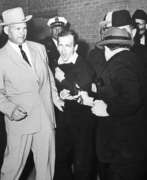

Robert Hill Jackson or Bob Jackson is a Pulitzer Prize-winning American photographer.
Robert attended Southern Methodist University while pursuing a passion for photography. While serving in the National Guard, Jackson became a photographer for an Army general. In 1960, he began working as a photo reporter for the Dallas Times Herald newspaper.
On November 22, 1963, Jackson was assigned to cover President John F. Kennedy's arrival at Love Field and his motorcade through the city. He witnessed Kennedy's assassination, but did not have time to film it. Two days later, however, he was able to photograph the shooting of Lee Harvey Oswald, the accused assassin of President Lee Harvey Oswald, by Jack Ruby in the garage of the Dallas police station. Robert Jackson was awarded the 1964 Pulitzer Prize in Photography for these photographs.
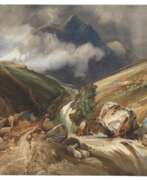

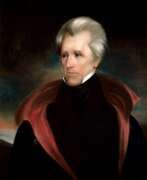

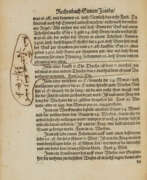


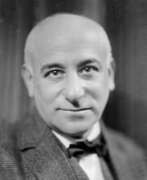

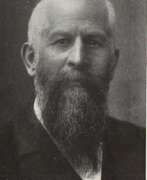

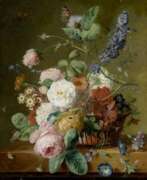

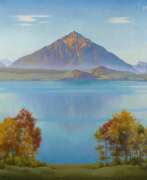

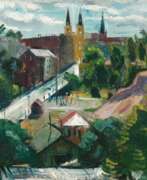

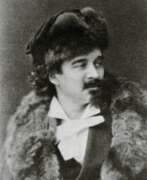

Valery Ivanovich Jacobi (Russian: Валерий Иванович Якоби), a distinguished Russian painter, is celebrated for his significant contributions to the art world, particularly in the realms of culture, painting, and sculpture. Born in the mid-19th century, Jacobi's artworks encapsulate the essence of Russian life, history, and landscapes, showcasing his profound understanding and appreciation of his homeland's spirit.
Jacobi's talent was not confined to a single genre; instead, he excelled in portraying historical scenes, everyday life, and landscapes with equal finesse. His paintings are renowned for their vivid storytelling, attention to detail, and the ability to evoke emotion. Jacobi's work offers a window into the Russian soul, reflecting the nation's culture and traditions through the lens of art. His mastery over color and form allowed him to create pieces that are not only visually stunning but also rich in narrative and depth.
Several of Jacobi's masterpieces have found homes in prestigious museums and galleries, marking him as a pivotal figure in Russian art history. His contributions have left an indelible mark on the art world, influencing generations of artists and art aficionados alike. For collectors and experts in art and antiques, Jacobi's works represent a valuable intersection of historical significance and aesthetic beauty, making them highly sought after in the art market.
For those intrigued by the legacy of Valery Ivanovich Jacobi and wish to delve deeper into the world of Russian art and culture, signing up for updates can be a rewarding endeavor. Subscribing will not only keep you informed about new product sales and auction events related to Jacobi's work but also offer insights into the broader realm of art and antiques. This opportunity allows enthusiasts to stay connected with the vibrant history and ongoing appreciation of Jacobi's contributions to the art world.
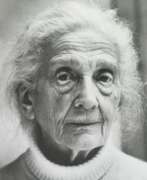

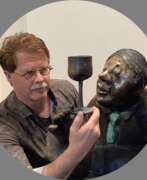

Sjer Jacobs is a Dutch painter and sculptor.
Jacobs creates sculptures in ceramics, bronze, iron, Corten steel, copper, glass and stone, paintings on canvas and stainless steel plates, wire figures, steel and iron panels and screen prints.... All his works are about people in ordinary life: his men and women, like everyone else, waiting in the reception area of an office building, sitting on a park bench or walking down a shopping street, meeting for drinks, music and conversation. These people are close to everyone.
Sjer Jacobs' larger ceramic and bronze works are always one-of-a-kind, while smaller ones are often produced in editions, but even so, each sculpture is unique.
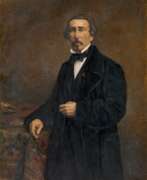

Jacobus Albertus Michael Jacobs, known as Jacob Jacobs was a Belgian landscape and seascape painter in the Romantic style, with a preference for northern and "oriental" scenes. His first exhibitions came in 1833. He took a trip to the North Sea in 1834, and a final study trip through the Netherlands in 1837 produced much material. In 1838, he left on a long sea voyage that would take him to Gibraltar, the North African coast, Egypt, the Dardanelles, Istanbul (where he remained for several months), Asiatic Turkey and Rhodes.[1] While in Ankara, he met and befriended his fellow Belgian painter, Florent Mols, and they continued travelling together; sailing down the Nile as far as Nubia. During these travels, he compiled two huge albums of drawings and notes that he would use for inspiration the rest of his life.
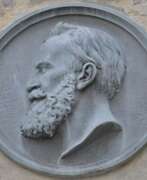

Paul Emil Jacobs was a German Orientalist painter and member of the Imperial Academy of Arts.
Jacobs was known for numerous paintings on Orientalist themes: harem beauties, picturesque Turks, and the slave market. He also painted scenes with religious and historical motifs.
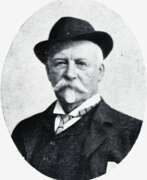

Sophus Jacobsen was a Norwegian landscape painter.
At first he painted mostly landscapes and sea views of Norway by day or moonlight, but later he mostly painted autumn and winter views of the German countryside. In some of his moonlit views of Venice he resembles Oswald Achenbach.
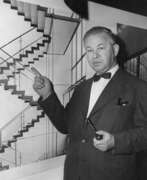

Arne Emil Jacobsen is a Danish architect and designer, the founder of the Danish Functionalism style.
He studied at the School of Architecture at the Royal Danish Academy of Fine Arts, and began working as an architect in the 1930s. Inspired by Art Nouveau, he designed several public buildings, including the Aarhus City Hall. In collaboration with Flemming Lassen, he first created a comprehensive overall interior design, including furniture, fixtures, plumbing and other details. After World War II, Arne Jacobsen made a name for himself both in Denmark and around the world.
For six decades, Arne Jacobsen was at the forefront of Danish architecture, creating visionary works of architecture that still look contemporary today. His projects often included both the building itself and the overall interior design as well as the design of the surrounding landscape. The combination of architecture and design is one of the constant characteristics of Arne Jacobsen's work. In projects such as the SAS Royal Hotel (1960) and St. Catherine's College in Oxford (1964), he not only created the architecture, but also designed every detail of the interiors, turning them into a true work of art.
In addition to architectural structures, Arne Jacobsen created a number of highly original chairs and other furniture. From his studio came avant-garde and innovative furniture, lamps, patterns, clocks, cutlery and glassware that are still in demand today.
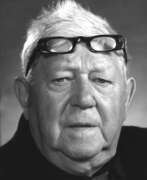

Robert Jacobsen, full name Robert Julius Tommy Jacobsen is a Danish painter and abstract sculptor. Jacobsen is a self-taught sculptor.
He became acquainted with modernist artists and created massive structures in granite and sandstone under the titles "Mythical Creatures", "Dolls". During his stay in France, his work included sculptures in cast iron.
Jacobsen was also a professor at the Munich Academy of Fine Arts and the Royal Danish Academy of Arts.


Antonio Nicolo Gasparo Jacobsen was a Danish-born American maritime artist known as the "Audubon of Steam Vessels".
The public rooms of The Griswold Inn in Essex, Connecticut, the oldest continuously run tavern in the United States, features the largest privately held collection of Jacobsen's paintings.
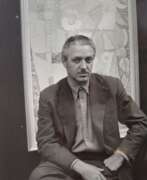

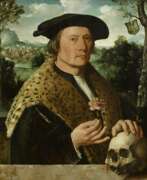

Dirck Jacobsz was a distinguished Dutch Renaissance painter, known for his contributions to the Dutch Golden Age of painting. Born into a lineage of artists, Jacobsz honed his skills under the guidance of his father, Jacob Cornelisz van Oostsanen, before establishing his own reputation in the art world. The influence of Jan van Scorel, a fellow Amsterdam painter, is evident in Jacobsz's Mannerist style, contributing to his unique artistic expression.
Jacobsz's legacy includes notable works that have been celebrated for their historical significance and craftsmanship. Among these, "The Crossbowmen" (1529) stands out as his most important piece, marking a pioneering moment in Dutch history as the first militia portrait. This work, along with his other group portraits of civic guards, showcases Jacobsz's exceptional talent in capturing the essence of his subjects, contributing to the rich tapestry of Dutch Renaissance art.
His artistic journey was deeply rooted in his family's legacy, with both his brother Cornelis and his son Jacob Dircksz continuing the tradition of painting. This continuation of the artistic profession within the family underscores the significance of the Jacobsz lineage in the Dutch art scene. Dirck's work, deeply influenced by his surroundings and the prevailing styles of his time, encapsulates the transition of artistic identity through generations, reflecting both personal and societal narratives.
Dirck Jacobsz's contributions to the world of art are commemorated through his works housed in various museums, including the Amsterdam Museum, which showcases his militia paintings and the portrait of Pompejus Occo. These pieces not only highlight Jacobsz's skill and versatility as a painter but also offer insights into the social and cultural contexts of the Dutch Renaissance.
For collectors and experts in art and antiques, Dirck Jacobsz remains a figure of interest for his historical significance and the quality of his work. To stay informed about new discoveries, sales, and auction events related to Dirck Jacobsz, consider signing up for updates from art galleries and auction houses. This will ensure you have access to the latest information and opportunities to acquire works by this renowned Dutch Renaissance painter.


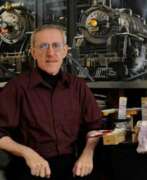

Don Jacot is an American photorealist artist.
Don Jacot is known for his paintings depicting toys living on accurately depicted city streets of the last century. Using archival photographs of cities, scale models of cars, and photographs of vintage signage as source material, Jacot created his own historically accurate compositions of mid-twentieth-century landscapes.


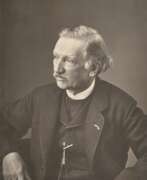

Charles-Emile Jacques was a French painter of Pastoralism and engraver who was, with Jean-François Millet, part of the Barbizon School. He first learned to engrave maps when he spent seven years in the French Army.


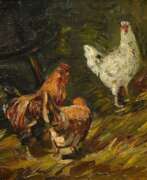


Alain Jacquet is a French self-taught artist, a representative of the American Pop Art movement. In his series of works "Camouflages" the artist often contrasts masterpieces of art history, famous paintings of the past to advertising idols of his time. "Botticelli's Camouflage" (Birth of Venus) is one of his famous works.
Among other things, Jacquet used the techniques of silkscreen printing, photomechanical transfer and screen printing.
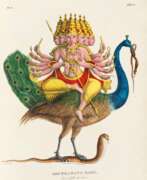

Eugene Jacquet, full name Eugene Vincent Stanislas Jacquet, was a Belgian orientalist and linguist.
From a young age, Eugene Jacquet tried to learn as many Oriental languages as possible, including Chinese, Sanskrit, Arabic, Persian and Turkish, as well as Malay and Indian. At first he was interested in sinology, but in the end he was mainly concerned with Indology. Eugène Jacquet was very talented and was also interested in epigraphy, numismatics and paleography.
Jacquet corresponded extensively with Orientalist scholars in Europe and India (e.g., Prinsep) and had grand plans for his future, but unfortunately he died at the age of only 27 from tuberculosis. Perhaps his most significant achievement was his participation in the decipherment of the ancient Persian cuneiform script.
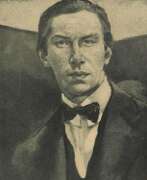

Willi Jaeckel, full name Willi Gustav Erich Jaeckel, was a German painter and graphic artist, a major representative of Expressionism in painting.
Jaeckel studied in Breslau, then at the Dresden Academy of Arts, in 1915 became a member of the Berlin Secession, then a member of the Prussian Academy of Arts. From 1925 he taught at the Higher School of Art Education and at the Berlin University of Art. Jaeckel was one of the first to create works on religious subjects in the Expressionist style, he also painted landscapes, portraits, still lifes and nudes. His works are expressive and decorative in execution. The artist considered his main work to be a series of etchings "Menschgott-Gottmensch".
Willy Jaeckel died in January 1944 during the bombing of Berlin. His works are kept both in German museums and in private collections.


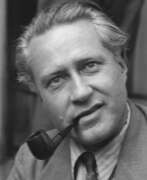

Hans Jaenisch is a German abstractionist painter, graphic artist and university lecturer.
Hans Jaenisch's artistic legacy is kept in the Fritz-Winter-Haus archive, Alain, Westphalia, and is presented to the public in regular exhibitions.


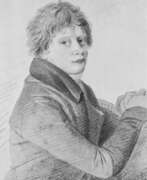

Ferdinand Jagemann was a German painter of the first quarter of the 19th century. He is known as a painter and graphic artist, especially famous in portraiture.
Ferdinand Jagemann created many portraits of famous personalities of his time, including several portraits of Johann Wolfgang Goethe painted in 1805, 1806, 1817 and 1819, as well as Friedrich Schiller, whom he portrayed on his deathbed.


Bernhard Jäger, born on June 17, 1935, in Munich, Germany, is a multifaceted artist known for his work as a painter, printmaker, and sculptor. Initially pursuing biology between 1956 and 1957, Jäger later shifted to art studies at the Werkkunstschule Offenbach, graduating in 1961. His background in biology notably influenced his artistic career, adding a unique depth and perspective to his creations.
Jäger co-founded the Gulliver-Presse with fellow lithographer Thomas Bayrle, and during this time, he also embarked on a secondary career as a publisher until 1966. His contributions to the world of book art are significant, with some of his illustrated books being awarded the prize "Die schönsten Bücher des Jahres" by the Stiftung Buchkunst in 1970, 1984, and 1994. He is also known for designing thirty book covers for Jorge Luis Borges' "The Library of Babel" published by the Gutenberg Book Guild in 2007.
Besides his contributions to book art, Jäger has held positions as a guest lecturer and head of the evening school at Städelschule in Frankfurt am Main. He also served as a visiting professor at the Hamburg University of Applied Sciences. His work has been featured in numerous solo and group exhibitions, including the Stedelijk Museum, Amsterdam, and the San Francisco Museum of Modern Art.
Bernhard Jäger is a member of the Darmstadt Secession and a recipient of the Prize of the Heitland Foundation in 1998. His works are included in public collections such as the Museum of Fine Arts, Boston, and the Klingspor Museum, Offenbach.
For collectors, auctioneers, and experts in art and antiques, Bernhard Jäger's work offers a rich blend of artistic styles influenced by his diverse background. His works, especially his lithographs known as "X-ray graphics," are sought after in the art market.
To stay informed about sales and auctions related to Bernhard Jäger's art, signing up for updates is recommended. This subscription will provide timely information about new product sales and auction events related to his art.
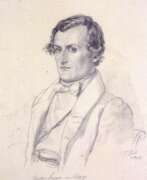

Gustav Jäger was a German artist, master of historical painting. He studied at the academies of Leipzig, Dresden and Munich.
Gustav Jäger took part in decorating the galleries adjacent to the royal court with fresco paintings; he executed frescoes in the Weimar Grand Ducal Palace, in the Nibelung Hall, in Munich.
His talent and diligence were recognised and in 1847 he was appointed director of the Leipzig Academy of Arts.


Karl Jäger was a German painter of the mid-nineteenth century. He is known as a painter, graphic artist, etcher and teacher, specializing in historical painting and portraiture.
Jäger created extensively on themes of Bavarian history. His works include illustrations for Schiller's Song of the Bell and Bruckmann's Schiller Gallery. He also created portraits of prominent personalities, including 12 composers such as Beethoven and Haydn. The master played a significant role as a professor at the Nuremberg Art School.
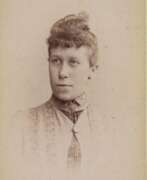

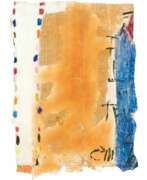


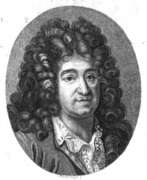

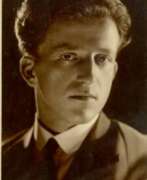

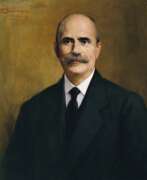

Georgios Jakobides was a Greek painter, representative of the Munich School of Greek painting.
He studied at the Athens School of Art (later the Academy of Fine Arts), then at the Academy of Fine Arts in Munich. Jakobides painted mythological scenes, genre paintings and portraits influenced by German academic realism.
His many characteristic paintings of children established Jakobides' reputation as a children's artist. As a perceptive psychologist and keen observer of human nature, he was a consummate draftsman. His painting The Reading Girl (1882), first exhibited in Munich, was admired by critics and the public.
In 1990 Georgios Jakobides returned to his homeland and became the first director of the National Gallery of Greece. In 1904 he was appointed director of the Athens School of Fine Arts, where he taught for 25 years. In addition to these activities, the artist continued to paint portraits, including of prominent Greeks.


Roman Osipovich Jakobson was a Russian-American linguist and literary theorist.
A pioneer of structural linguistics, Jakobson was one of the most celebrated and influential linguists of the twentieth century. With Nikolai Trubetzkoy, he developed revolutionary new techniques for the analysis of linguistic sound systems, in effect founding the modern discipline of phonology. Jakobson went on to extend similar principles and techniques to the study of other aspects of language such as syntax, morphology and semantics. He made numerous contributions to Slavic linguistics, most notably two studies of Russian case and an analysis of the categories of the Russian verb. Drawing on insights from C. S. Peirce's semiotics, as well as from communication theory and cybernetics, he proposed methods for the investigation of poetry, music, the visual arts, and cinema.
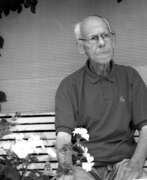



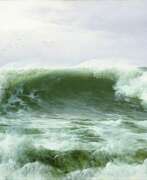

David James, real name Joseph Donahue, was a British and Irish marine painter.
James was captivated by seascapes and the elements of the ocean throughout his life. His entire oeuvre is devoted to the forces and movement of water as a symbol of the power and impermanence of the natural world, which is in a state of perpetual changeability. James depicted the waves so realistically that they seem like a modern photograph. Waves crashing on the shore and foamy surf became the artist's trademark.


Henry James was an American-British author celebrated for his role as a key transitional figure between literary realism and modernism. Born on April 15, 1843, in New York City, James was known for his nuanced approach to the novel as a literary form. His works, including the famous "The Portrait of a Lady" and "The Turn of the Screw," delve into themes of consciousness and perception, and are revered for their insightful exploration of character and society.
James's mastery in prose is evident in his voluminous output of 22 novels, over a hundred short stories, and numerous volumes of non-fiction, including biographies, travel writing, and literary criticism. His storytelling, characterized by a subtle analysis of personal relationships, has earned him recognition as one of the great prose writers in American literature. This recognition has only grown since his lifetime, with his audience expanding significantly posthumously.
For collectors and experts in literature, James’s works are not just books but artifacts that capture the transformative period of early modernist writing. While physical exhibitions of his manuscripts and early editions are rare, they are highly sought after by collectors and museums. To stay informed about such rare opportunities and updates on Henry James, signing up for specialized updates is invaluable. Don’t miss the chance to explore and perhaps own a piece of literary history.




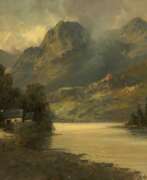


Diederik Franciscus Jamin was a Dutch genre and history painter and daguerreotypist. Jamin was a student of Petrus Franciscus Greive and David Joseph Bles. Jamin devoted himself to genre and history painting. In 1854 he worked in The Hague as a daguerreotypist. Jamin was a member of "Arti et Amicitiae" in Amsterdam. Jamin took part in exhibitions in Amsterdam from 1858 to 1865. Groningen, The Hague and Leeuwarden.


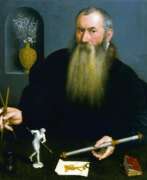

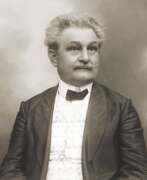

Leoš Janáček, birth name Leo Eugen Janáček, was a Czech composer and musicologist, folklorist, publicist and teacher.
Janáček was a singer in Brno, and studied at the Prague, Leipzig and Vienna Conservatories. In 1881 he founded the Collegium of Organists in Brno, which he directed until 1920. From 1881 to 1888 he directed the Czech Philharmonic Orchestra, and in 1919 he became professor of composition at the Prague Conservatory.
Janáček was deeply in love with national music, collecting folklore and publishing the journal Musical Pages. He was inspired by Moravian and other Slavic music, including Eastern European folk music, to create an original modern musical style.
In his early period of creativity, Janáček was strongly influenced by the musical style and aesthetics of his friend Dvořák. His first opera, Šarka (1887-88), was a romantic work in the spirit of Wagner and Smetana. In his later operas he developed his own distinctly Czech style, built on the intonations of his native speech and folk melodies. Janáček's most important operas are Jenůfa (1904) and Her Foster Daughter, which established the composer's international reputation; The Case of Macro Pulos (1926), From the Dead House (1930), and others. Most of Janáček's operas have been staged in Czech.
Janáček visited Russia three times, and his interest in Russian language and literature resulted in the opera Katya Kabanova (1921) and the orchestral rhapsody Taras Bulba (1918). Janáček also wrote a number of instrumental chamber works. The world-famous composer spent most of his life in Brno, where the vast majority of his works were performed for the first time. Today, Janáček is the most frequently performed Czech opera composer in the world.


Marcel Janco was a Romanian-born Israeli artist and architect. He was one of the founding members of the Dada movement and a prominent figure in the European avant-garde.
Janco studied at the Academy of Fine Arts in Bucharest and later moved to Paris in 1919, where he became involved with the Dada movement. He co-founded the Dadaist journal "Contimporanul" and was a member of the Dada group in Zurich. In 1922, Janco moved to Israel and settled in Tel Aviv, where he became a leading figure in the city's avant-garde art scene.
Janco's work often combined abstract and figurative elements, and he experimented with a variety of media, including painting, sculpture, and collage. He was also a prolific architect and helped to design several important buildings in Israel, including the Habima Theater in Tel Aviv.
In addition to his work as an artist and architect, Janco was also a writer and educator. He founded the Ein Hod Artists' Village in Israel in 1953, and was a professor of art at the Bezalel Academy of Art and Design in Jerusalem from 1962 to 1974.
Janco's work has been exhibited in museums and galleries around the world, and he is widely considered one of the most important figures in the development of modern art in Israel.
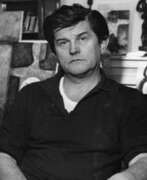

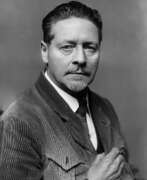

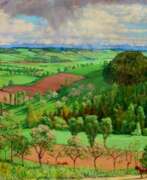



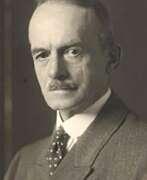

Angelo Jank was a German animal painter, illustrator and member of the Munich Secession. He was the son of the German painter Christian Jank and specialized in scenes with horses and riders. For many years, he was also employed as an illustrator for the magazines Jugend and Simplicissimus, And he was also an instructor at the Academy of Fine Arts. In addition to his canvases, he painted murals at the Justizpalast and scenes from history at the Reichstag building in Berlin. His work was also part of the painting event in the art competition at the 1936 Summer Olympics.
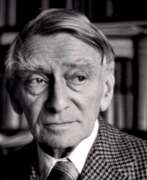

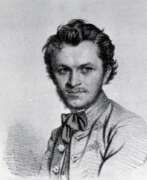


Malgosia Jankowska is a contemporary Polish and German artist. She studied painting in Berlin and Warsaw. Her works are distinguished by fine strokes, great depth and a high level of detail. Her classical compositions are effective and expressive. Malgosha has been living and working in Berlin since 2001. Since 2006, he has regularly exhibited his work, mainly in Germany.


Martinas Jankus is a Lithuanian landscape painter, member of the Lithuanian Union of Artists.
He began exhibiting in 1991 and since then has held 16 solo exhibitions. Jankus paints abstract, emotional landscapes, where the main thing is not the peculiarities of relief, but the skill to capture the unique color relationships depending on the seasons.


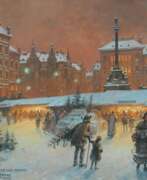

Georg Janny was an Austrian landscape painter and set designer.
He worked as a scene painter in the studios of Carlo Brioschi and Johann Kautsky, alongside Alfons Mucha, and was a member of the Dürerbund.
He also painted landscapes and figures, including scenes from fairy-tales or imaginary worlds that are reminiscent of the works of Arnold Böcklin or Gustave Doré.
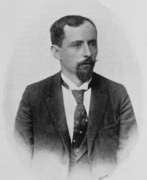


Jean Jansem (Armenian: Ժանսեմ; French: Jean Jansem), real surname Hovhannes Semerdjian (Armenian: Հովհաննես Սեմերջյան; French: Hovhannes Semerdjian) was a French artist of Armenian origin. He studied at the Paris Academy of Decorative Arts.
From the very beginning, Jean Jansem has chosen the outcasts, the unfortunate, and the victims of the Armenian genocide as his inspiration. Zhansem is a consistent bearer of national historical memory, which he brought to the visual ranks throughout his life.


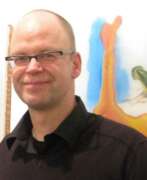

Jürgen Jansen is a German abstract painter who lives and works in Düsseldorf.
Jansen is an experimental, color-intensive painter. He applies multiple layers of transparent colored veils, sprays paint and paints over these layers with a broad brush, forming streams through which flower-like patches of color float like abstract flowers. Looking at Janzen's works inevitably conjures up associations with summer.
Jansen has exhibited his work in numerous solo and group exhibitions in Germany and Belgium.
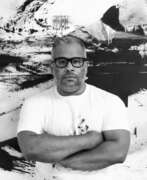

Marcus Antonius Jansen is an American painter.
Jansen's solo museum exhibitions include the Triennale di Milano, Milan, Italy, the Museum Zitadelle, Berlin, Germany, the Baker Museum in Naples, Florida, and the Rollins Museum of Art in Winter Park, Florida.
He is represented by Almine Rech in Paris, London, Shanghai, Brussels and New York as well as by Richard Beavers Gallery in Brooklyn and Soho in Manhattan.
Jansen is the author of the book Modern Urban-Expressionism, the art of Marcus Antonius Jansen published in 2006.
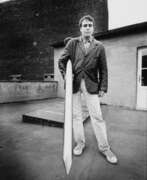

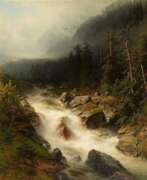

Joseph Jansen was a German landscape painter of the Düsseldorf School.
Joseph Jansen was a student at the Düsseldorf Academy of Painting, known for his landscapes of the majestic Swiss Alps and views of cities along the Rhine and Moselle. From 1850, Jansen began exhibiting in various German galleries and abroad. Because of his skill, Jansen is considered an outstanding landscape painter of the 19th century. His daughter Emilie, born in 1871, became a still life painter.
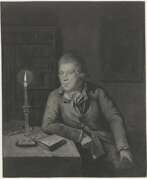

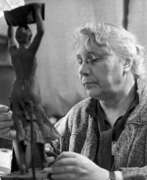


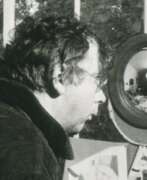

Horst Janssen was a German graphic artist, printmaker, poster and illustrator. He created many drawings, etchings, woodcuts, lithographs, and woodcuts.
There is a museum dedicated to his legacy in Horst Janssen's hometown of Oldenburg. His works are represented internationally in major museums.
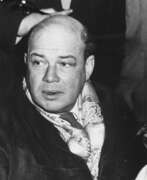

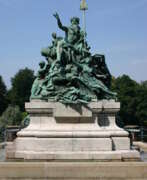


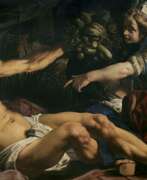

Abraham Janssens was a Flemish painter, who is known principally for his large religious and mythological works, which show the influence of Caravaggio. He was the leading history painter in Flanders prior to the return of Rubens from Italy.
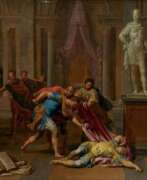

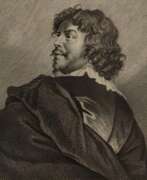

Cornelis Jansens van Keulen or Cornelius Johnson was an English painter of portraits of Dutch or Flemish parentage. He was active in England, from at least 1618 to 1643, when he moved to Middelburg in the Netherlands to escape the English Civil War. Between 1646 and 1652 he lived in Amsterdam, before settling in Utrecht, where he died.
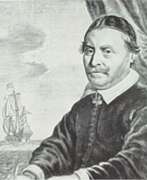

Johannes Janssonius was a Dutch cartographer, printer and publisher.
In 1616 Janssonius created his first maps of France and Italy, and every year he expanded and improved their publishing. The so-called "Great Atlas" already numbered eleven volumes. The editions were printed in Dutch, Latin, French and German.


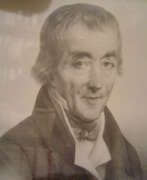

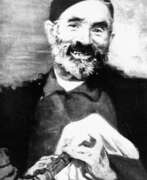

Ucha Malakievich Japaridze (Russian: Уча Малакиевич Джапаридзе) was a prominent Soviet and Georgian painter, born on August 17, 1906, in the village of Gari, Georgia. His life and work significantly contributed to the development of 20th-century Georgian visual arts, making him a key figure in this field. Japaridze's artistic journey was marked by his dedication to capturing the essence of Georgian heritage and the people's historical past through his paintings, including detailed portraits, monumental wall paintings, and book illustrations.
Throughout his career, Japaridze was recognized with numerous awards, reflecting his importance and contribution to the arts in Georgia. He held prestigious titles such as Public Artist of the Georgian SSR and Honored Artist of Georgia. His role as an academician at the Georgian Academy of Arts and his tenure as chancellor at the Tbilisi State Academy of Arts were testament to his influence and leadership in the artistic community.
Japaridze's works are celebrated for their variety and technical mastery, covering diverse fields and themes that resonated with the significant events of his time. His legacy continues to be preserved in several museums and private collections both in Georgia and internationally, including the Georgian National Museum of Fine Arts and the National Gallery of Georgia. Notably, his former home in Tbilisi has been transformed into a museum, housing his paintings, graphics, and documentary materials, offering insight into his life and artistic achievements.
For collectors and art experts interested in Soviet and Georgian visual arts, Japaridze's oeuvre represents a critical link to the cultural and historical narrative of Georgia. His ability to intertwine the personal with the collective experience of his homeland offers a profound perspective on the artistic movements of his time.
To stay informed on updates and opportunities related to Ucha Malakievich Japaridze's works, including sales and auction events, sign up for updates. This subscription ensures you're always in the loop regarding new discoveries and collections featuring Japaridze's art.

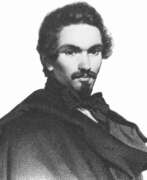

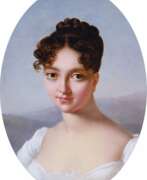


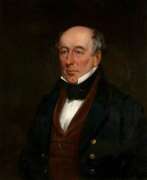

William Jardine was a Scottish naturalist, ornithologist, ichthyologist, artist and publisher of works on zoology.
Jardine studied medicine at the University of Edinburgh and was an excellent sportsman. Although his main passion was ornithology, he also studied ichthyology, botany and geology. Sir William Jardine was a prominent Scottish Victorian naturalist, author and publisher of 40 volumes of the popular Naturalist's Library (1833-43). Of these, 14 volumes were devoted to ornithology, 13 volumes to mammals, 7 volumes to entomology, and 6 volumes to ichthyology.
A series in four volumes, Illustrations on Ornithology, co-written with Prideaux John Selby, was published between 1825 and 1843. His book on burrows and fossil tracks, The Ichnology of Annandale, includes fossils from his ancestral estate. Jardine was a leading expert on salmon and trout in the British Isles. His outstanding knowledge of the species was profound that in 1860 he was appointed a member of the Royal Commission on the Salmon Fisheries of England and Wales. His research culminated in the best and most comprehensive monograph on these fish, "British Salmonids," with the remarkable illustrations by Jardine himself. William Jardine's private natural history museum and library are considered the finest in Britain.