Famous people


Johann Leonhard Raab was a German printmaker and painter. After receiving his basic education in the Nuremberg public schools, he attended the Academy of Fine Arts there. Although he began as a painter, he was soon attracted to engraving and began formal studies with Samuel Amsler. At first, he concentrated on small plates for book publishers but, even then, his mature pictorial style became apparent. Eventually, in 1866, on recommendation by Julius Thaeter he was appointed to succeed the latter as Professor of Engraving at the Academy of Fine Arts, Munich. He retired in 1895 and, with three of his friends, opened a painting studio. Raab's works can be found in several museums, including the Alte Pinakothek in Munich.



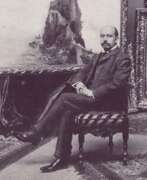

Max Friedrich Ferdinand Rabes was a German Impressionist painter. Although he is best remembered as an Orientalist painter, he rejected that label during his lifetime and wanted all of his works to be equally recognized. He was initially self taught, through making nature studies and sketches. Later, he took lessons from the landscape painter, Paul Graeb (1842–1892). He made numerous trips to North Africa and the Middle East. In 1898 he was invited to accompany Kaiser Wilhelm II on a trip to Istanbul and Palestine. He was appointed an honorary doctor and became a Professor at the Berlin University of the Arts. In 1899, he was awarded the Order of the Zähringer Lion. In 1914, he undertook a trip to the front lines in East Prussia. The following year, he was at the western front in Belgium and, in 1917, visited Verdun. In addition to his canvases, he did decorative work; including landscape murals at a castle in Lausitz (1901) and a villa in Iserlohn (1905), as well as ceiling paintings and allegorical murals at the Schauspielhaus in what is now Wrocław (1906-1908).
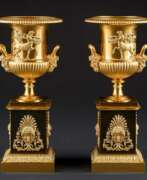

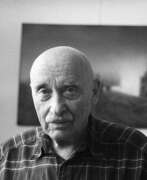

Oscar Yakovlevich Rabin (Russian: Оскар Яковлевич Рабин) was a Soviet and French artist of the second half of the twentieth and early twenty-first centuries. He is known as a nonconformist painter, one of the founders of the unofficial art group "Lianozovo", the organizer of the famous "Bulldozer Exhibition".
Oscar Rabin created works using the surrounding life as a material, turning ordinary objects into symbols and reflecting in his work the influence of European Expressionism of the 1920s. His preferred genres were landscape, still life and interiors. The artist used perspective distortion and warping in his work, which created unique and impressive compositions.
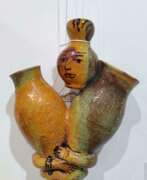

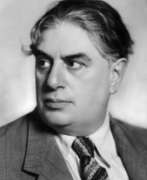


Leopold Rabus is a Swiss surrealist painter whose favorite medium is oil painting. He depicts the surrounding reality, inhabiting it with surrealistic birds, snails and yard animals, or ordinary objects. The people in Rabus's paintings, on the other hand, are often insane and horrible, but they live ordinary human lives.


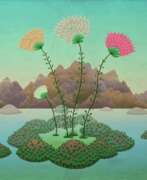


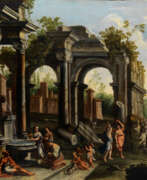

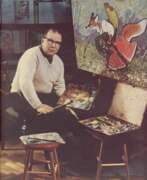

Yevgeny Mikhailovich Rachev (Russian: Евгений Михайлович Рачёв) was a Soviet artist of the twentieth century. He is known as a painter, graphic artist, animalist, and illustrator.
Yevgeny Rachev specialized in illustrations for folk tales and fables from different cultures, as well as for works of classical literature. He favored stories in which the main characters were animals, embodying their natural characters and habits. Thanks to a subtle psychological analysis, the artist gave his illustrations expressiveness and social sounding. His works are valued for their accurate rendering of animal habits and detailed settings.


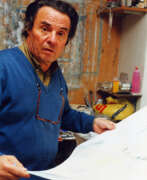


Arthur Rackham was an English book illustrator. He is recognised as one of the leading figures during the Golden Age of British book illustration. His work is noted for its robust pen and ink drawings, which were combined with the use of watercolour, a technique he developed due to his background as a journalistic illustrator.
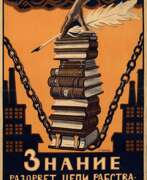

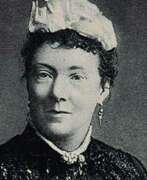



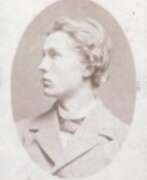

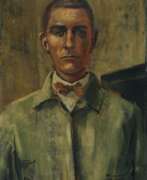

Anton Räderscheidt was a German painter who was a leading figure of the New Objectivity. Räderscheidt was born in Cologne. His father was a schoolmaster who also wrote poetry. From 1910 to 1914, Räderscheidt studied at the Academy of Düsseldorf. He was severely wounded in the First World War, during which he fought at Verdun. After the war he returned to Cologne, where in 1919 he cofounded the artists' group Stupid with other members of the local constructivist and Dada scene. The group was short-lived, as Räderscheidt was by 1920 abandoning constructivism for a magic realist style. In 1925 he participated in the Neue Sachlichkeit ("New Objectivity") exhibition at the Mannheim Kunsthalle.


Caesar W. Radetzky-Radetz is a German painter and author. In addition to his work as a freelance artist, he worked as an art teacher with children and young people and as a lecturer in painting at the Reichenhall Art Academy. His works are known and valued through lively international exhibitions and are represented in numerous public and private collections. Radetzky works with oil, watercolor or mixed media, with large image formats being preferred.
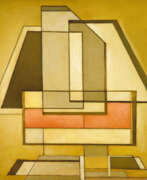


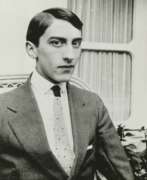


Václav Jan Emanuel Radimský was a Czech landscape painter. He is considered one of the most important representatives of Czech impressionism in the late 19th and early 20th centuries. He studied painting at the academies of fine arts in Munich and Vienna.
Václav Radimský came to France in the early 1890s to study at the Barbizon School. In Giverny he joined a group of painters that also included Claude Monet and Camille Pissarro, who had an indelible influence on his painting style.
Václav Radimský is considered to be one of the first Czech painters to achieve artistic and commercial success in France and to gain great recognition in French society.
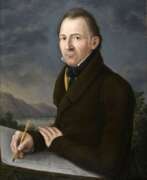

Anton Radl was a German painter and engraver of Austrian origin.
In addition to landscapes from his travels in the Middle Rhine and the Taunus, he created many paintings based on Frankfurt am Main; he also painted on urban and domestic themes.
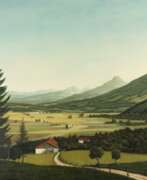


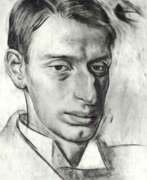

Nikolai Radlov (Russian: Николай Эрнестович Радлов) was a multifaceted Russian artist, born in St. Petersburg in 1889 and passing away in 1942, whose work spanned a wide range of artistic endeavors including graphic art, painting, theatrical design, illustration, caricature, teaching, and art criticism. A student of D.N. Kardovsky, Radlov was known for his involvement with the "World of Art" group, and his teaching career was significant, influencing many with his innovative approaches to art and design .
Radlov's creativity was evident in his diverse contributions to art, characterized by his work in satirical magazines and book illustrations, as well as his theoretical writings on art and graphics. His pre-revolutionary contributions were notable for his art criticism published in prestigious magazines, setting the stage for his later works that explored a range of aesthetic preferences from classicism to futurism, indicating a versatile and evolving artistic philosophy .
His works, such as the multicolored brush-stencil on paper "TASS 60, The Miracle of Fascist Photography," created in 1941, are celebrated for their innovative use of medium and technique. This particular piece is part of the collection at the Museum of Modern Art (MoMA), showcasing Radlov's significant impact on the fields of graphic design and illustration.
For collectors and experts in art and antiques, Radlov's legacy offers a rich tapestry of Russian art history, encapsulating the tumultuous transitions from pre-revolutionary aesthetics to the avant-garde movements that followed. His contributions to graphic art and illustration, along with his theoretical writings, provide insightful perspectives into the evolution of Russian visual culture in the early 20th century.
Sign up for updates on Nikolai Radlov to stay informed about new product sales and auction events related to this remarkable artist.
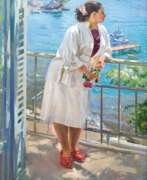


Magdalena Rădulescu was a Romanian modernist painter. Radulescu studied art in Munich and at the Académie de la Grande Chaumière in Paris. She had her first exhibitions at the Salon des Indépendants in Paris in 1929 and 1933. In the artists' quarter Montparnasse she met important modern artists, inspired by Marc Chagall. Apart from circus scenes, Radulescu painted with exuberance, energy, vitality and poetry real and imaginative pictorial worlds from Romanian folk life and culture, carnival and dance motifs.
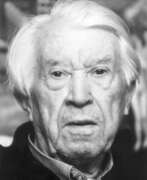

Franz Radziwill was a German artist of the twentieth century. He is known as a landscape painter, graphic artist and printmaker associated with the artistic movement of "new materiality".
Franz Radziwill created paintings that are characterized by careful elaboration and the use of glaze techniques borrowed from the Old Masters. He used elements of industrial buildings and modern technology, including ships and airplanes, in his landscapes. The results of his work can be categorized as magical realism.
In 1933 Radziwill became professor of painting at the Düsseldorf Academy of Art, but in 1935 the Nazis stripped him of this position, declaring his work degenerate art.
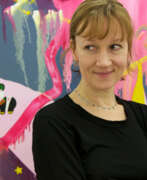

Fiona Rae is a Hong Kong-born British artist. She is one of the Young British Artists (YBAs) who rose to prominence in the 1990s. Throughout her career, she has been known for having a portfolio of work that includes elements of energy, and complexity. Her work is known for aiming at expanding the modern traditions of painting.


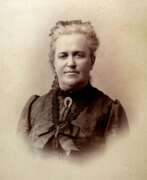

Maria Dmitreyevna Raevskaia-Ivanova (Russian: Мария Дмитриевна Раевская-Иванова) was a Russian artist of the last third of the 19th and early 20th centuries. She is known as a painter and teacher and as the first woman in the Russian Empire to be awarded the title of artist by the St. Petersburg Academy of Arts.
Maria Raevskaia-Ivanova worked in oil and watercolor in various genres, created portraits, including group portraits, landscapes, and still lifes. She is considered a representative of academism. The artist was the author of the textbook "The ABCs of Drawing for Family and School", as well as a number of articles and brochures on artistic and pedagogical issues.








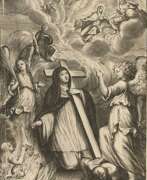


Nicolas-Jean-Baptiste Raguenet was a French painter born in Gentilly.
A master painter trained at the Académie de Saint-Luc, he was responsible for many "View of Paris" paintings, notably of the Seine, with an almost photographic precision, which adds a historical interest to his works in addition to their artistic value. Many of his works were acquired by the Carnavalet Museum in 1882.
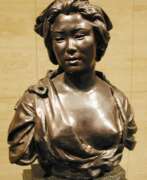

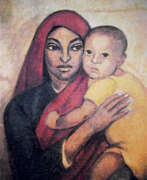


Karl Rahl was an Austrian painter renowned for his contributions to art and culture. Rahl was a prodigious talent, evident from his early achievements at the Academy of Fine Arts Vienna. His travels across Europe, especially his time in Italy, profoundly influenced his artistic style, particularly his views on color and perspective.
Karl Rahl's work is celebrated for its depth and diversity, encompassing everything from portraits to monumental frescoes. His commissions for the Fleischmarkt Greek Church in Vienna and his decorations for the Heinrichshof and Palais Todesco are testaments to his versatility and skill. Karl Rahl's influence extended beyond his creations; his private art school in Vienna nurtured a generation of artists who continued his legacy.
Notably, Karl Rahl's artistic contributions also reached the academic realm, with his paintings adorning the Athens Academy and the National and Kapodistrian University of Athens, adding a cultural richness to these institutions. His dedication to his craft persisted until his last years, leaving a lasting impact on the Vienna Opera with his scenic backdrops.
For art collectors and experts, understanding Karl Rahl's work offers insights into a pivotal period in art history, where the interplay of culture, history, and individual genius shaped the visual narrative of the time. To stay updated on new product sales and auction events related to Karl Rahl, consider signing up for updates to deepen your appreciation and knowledge of this influential artist.
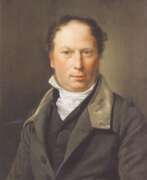


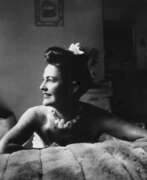

Alice Phillipot (Alice Rahon) was a French/Mexican poet and artist whose work contributed to the beginning of abstract expression in Mexico. She began as a surrealist poet in Europe but began painting in Mexico. She was a prolific artist from the late 1940s to the 1960s, exhibiting frequently in Mexico and the United States, with a wide circle of friends in these two countries. Her work remained tied to surrealism but was also innovative, including abstract elements and the use of techniques such as sgraffito and the use of sand for texture. She became isolated in her later life due to health issues, and except for retrospectives at the Palacio de Bellas Artes in 1986 and at the Museo de Arte Moderno in 2009 and 2014, she has been largely forgotten, despite her influence on Mexican modern art.
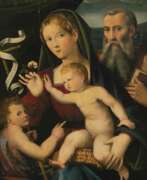

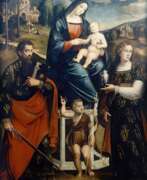

Giulio di Francesco Raibolini, known as Giulio Francia, was an Italian Renaissance painter and the son of the renowned Francesco Francia. He received his training in his father's workshop.
After Francesco's death in 1517, Giulio and his brother Giacomo took over the family business. Together, they created numerous altarpieces for churches in Bologna and the surrounding area. The artistic skills of both brothers were inferior to their father's, as they merely replicated his models with less proficiency. Over time, they were influenced by the art of Raphael and later by the prevailing Mannerist style, while still maintaining the foundation learned in their father's workshop, which eventually became outdated within the mid-16th-century Bolognese painting scene.
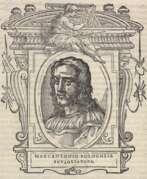

Marcantonio Raimondi, also Marcantonio Francia, was an Italian draftsman and copper engraver. He authored more than 300 engravings of Renaissance artworks, including paintings by Raphael and ancient monuments such as architecture, vases and ornaments.
Marcantonio spent his childhood years in Bologna, but little is known of his mother and father's family. The artist was called "Marco Antonio Bolognese". According to Giorgio Vasari, Marcantonio spent some time in France, as his monogram "MAF": Marcantonio Francia confirms. Later he travelled between Venice, Florence and Rome. Influences of the French style can be seen in his works.
His work on the works of Raphael led Marcantonio to collaborate with Giulio Romano, who first commissioned from him a series of images taken from The Histories of Venus, Apollo and Hyacinth and The Histories of Magdalene and the Four Evangelists. Sixteen engravings, based on drawings by Giulio Romano, of Pietro Aretino's love sonnets and containing an erotic subject, were called "Poses of Aretino".
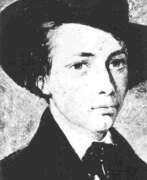

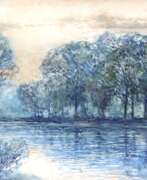

Victor Noble Rainbird was a British painter, stained glass artist and illustrator.
Victor Noble Rainbird studied at King's College, Newcastle-upon-Tyne, where he distinguished himself and won several prizes. His paintings were included in a government exhibition which travelled to Australia, New Zealand and Canada.
Reinberd's work often depicts views and the waterfront and sea around North Shields and other Tyne harbours. He made several trips to France, Belgium and the Netherlands, and the bulk of his work focuses on his travel experiences. Rarer subjects include stained glass windows, portraits and still lifes (flowers).


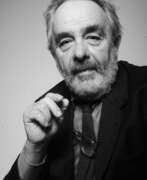

Arnulf Rainer is an Austrian artist who painted in the genre of informal abstract art.
From his early works the artist was inspired by the ideas of Surrealism. He also created works of art where he applied paint over photographs and works of other artists.
In the 1950s, Rainer painted a series of blindfold paintings in the technique of Surrealist automatism. In 1978 he received the Austrian Grand National Prize. Rainer has exhibited in New York, London, Vienna, Paris, Berlin and Munich. His works are in the collections of the Albertina, the Pompidou Center, the Stedelijk Museum, the Metropolitan Museum of Art and the Museum of Modern Art.
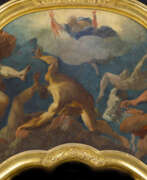





Carol Rama, actually Olga Carolina Rama, was an Italian self-taught artist. Her paintings embrace erotic and sexual identity with particular references to female sensuality. Mussolini's fascist regime deemed her work obscene and they were stigmatised as pornography.
By the early 1950s, Karol Rama was painting irregular geometric compositions of rhythmic rhombuses and squares, often connected by long spider-like lines or forming a directed field of implied movement.
Gradually she began to abolish the geometric conventions of concrete art. And after more than thirty years of inventing poisonous abstractions, Rama returned to figuration.



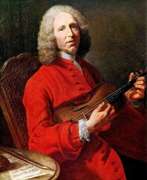

Jean-Philippe Rameau was a French late Baroque composer and music theorist.
Jean-Philippe's father worked as an organist all his life, so his son learned notes before he learned to read. He continued his musical education in Milan, playing the organ, violin and harpsichord. Rameau wrote works for the Paris theaters, composed sacred and secular music, and in 1745 became a court composer.
Rameau wrote many pieces for harpsichord, works for chorus and cantatas. Today he is recognized as the greatest French composer and the most prominent figure in the music of the 18th century.


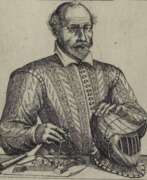

Agostino Ramelli was an Italian military engineer and mechanic who worked in the fields of fortification and practical mechanics.
Ramelli studied mathematics, mechanics, and engineering under Giacomo di Marignano, who is considered a disciple of Leonardo da Vinci. He first showed his talents as a mechanic during Louis XIII's military campaign by constructing a mine under a bastion.
Ramelli invented many mechanisms that impressed his contemporaries, including their special aesthetic appeal. His most popular creation is the so-called Ramelli Book Wheel, a rotating reading table. Agostino Ramelli positioned his invention as a sleek design that allowed access to several books without having to get up from his seat.
Ramelli wrote and illustrated a book of engineering projects, Le various et artificiose machine ("Various and Artificial Machines"). The book contains 195 designs, over 100 of which are water-lifting machines, such as water pumps or wells, as well as bridges, mills, and so on. This very interesting book for our contemporaries is still published and is still in demand.


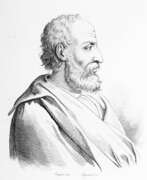


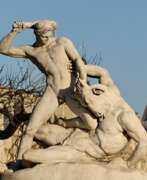







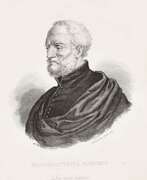


Jean Ranc was a French painter, mainly active in portraiture. He trained under his father Antoine Ranc and his father's former student Hyacinthe Rigaud and served in the courts of both Louis XV of France and (from 1723 onwards) Philip V of Spain.
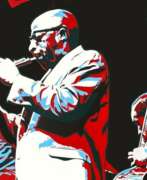


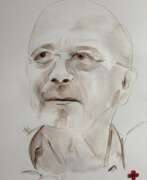

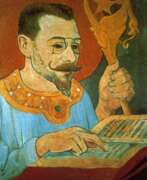

Paul-Élie Ranson, a French painter and writer, emerged as a prominent figure in the late 19th century art scene. Born in Limoges, he was raised by his grandparents and father after his mother's demise during childbirth. Ranson's early artistic inclinations were nurtured with drawing lessons from his grandfather. His educational journey in the arts began at the École des Beaux-Arts Appliqués à l'Industrie and later continued at the Académie Julian in Paris.
Ranson was a pivotal member of "Les Nabis," a group instrumental in transitioning from Impressionism to modern art. Along with notable contemporaries like Paul Sérusier, Pierre Bonnard, and Maurice Denis, he helped establish an art movement that blended elements of Symbolism, Art Nouveau, and Japanese prints. Ranson's role extended beyond painting; he was actively involved in the Symbolist performances at the Théâtre d'Art and directed a notable performance of "Ubu Roi" by Alfred Jarry.
Ranson's artistic oeuvre is marked by a fascination with Theosophy, magic, and occultism, themes that increasingly influenced his work. His paintings often delved into mythology, witchcraft, and anti-clerical subjects. Some of his notable works include "Christ and Buddha" (1880), "Witches Around the Fire" (1891), and "The Blue Room" (circa 1900). These works exemplify his unique blend of thematic and stylistic elements, setting him apart from his contemporaries.
Tragically, Ranson's life was cut short by typhoid fever in 1909. However, his legacy continued through the Académie Ranson, founded by his friends in Les Nabis. This institution, managed initially by Ranson and later by his wife Marie, remained active until 1955, perpetuating his influence on future generations of artists.
For art collectors and experts, Ranson's work offers a unique window into the transitionary period of late 19th-century art, showcasing the interplay of traditional and emerging styles. His contributions to the Symbolist and Nabi movements are particularly noteworthy.
To stay updated on new product sales and auction events related to Paul-Élie Ranson, sign up for our updates. This subscription service is tailored to keep art aficionados informed about the latest developments and opportunities related to Ranson's art.
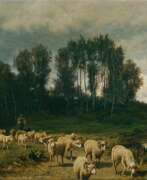

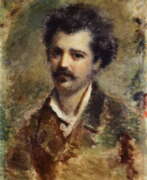

Daniele Giovanni Ranzoni was an Italian Impressionist painter of the second half of the 19th century.
Ranzoni very early showed a talent for drawing and, in addition to private lessons, studied at the Brera Academy, the Albertina Academy in Turin and the Giuseppe Bertini School of Nudes. In the mid-19th century, he co-founded the artistic and literary group Scapigliato, considered the first avant-garde in Italian art.
A turning point in Ranzoni's artistic career was his acquaintance with the Princes Trubetskys, at whose villa he settled in 1873. He was engaged in the education of the little princes Pierre, Paolo and Gigi, at the same time creating his works and participating in the social life of his patrons. This period was a very fruitful one for the artist. After a few years, Ranzoni moved to England, where he became the most sought-after portraitist among the English nobility. Daniele Ranzoni made a significant contribution to the development of Lombard painting in the portrait genre.


Hans Ranzoni the Elder was an Austrian painter who painted genre scenes, architecture, and landscape works.
His son Hans Ranzoni the Younger (1896-1991) is known as a graphic artist, particularly for exlibris and stamps.
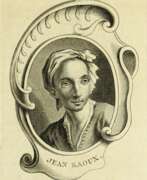

Jean Raoux was a French painter.
After the usual course of training he became a member of the Academy in 1717 as an historical painter. His reputation had been previously established by the acclaimed decorations executed during his three years in Italy on the palace of Giustiniani Solini in Venice, and by some easel paintings, the Four Ages of Man (National Gallery), commissioned by the grand prior of Vendôme. To this latter class of subject Raoux devoted himself, refusing to paint portraits except in character. The list of his works is a long series of sets of the Seasons, of the Hours, of the Elements, or of those scenes of amusement and gallantry in the representation of which he was immeasurably surpassed by his younger rival Watteau. After his stay in England (1720) he lived much in the Temple, where he decorated several rooms.
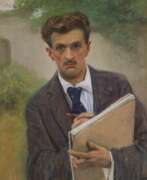

Józef Rapacki was a talented Polish painter and graphic artist who is best known for his nostalgic landscapes of Mazovia.
At the age of fourteen, Rapacki enrolled in a drawing class taught by Wojciech Gerson. Later he enrolled at the Krakow Academy of Fine Arts, where he studied under Isidor Jabloński, Florian Czink and Felix Szynałewski.
At first he painted genre scenes. In 1889, Jozef Rapacki travelled to Munich, where he studied for two years under the portraitist Konrad Fehr and was influenced by the Munich school.
He also began doing drawings for several Warsaw periodicals and illustrated the works of Ignacy Krasicki. Rapacki exhibited extensively, including at the World's Fair (1900).
In 1907, Rapacki and his family moved to Olszanka, where his house became a gathering place for artists and writers. It was here that he concentrated on landscapes and created some of his best known works. During World War I, he drew many pictures of the German occupation for the Warsaw press.
Józef Rapacki's artwork is still popular and appreciated for its unique style and unique atmosphere.
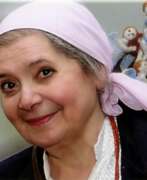


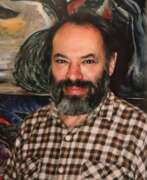

Boris Mendelevich Rapoport (Russian: Борис Менделевич Рапопорт) was a Soviet and Russian artist of the last third of the twentieth and early twenty-first centuries. He is known as an expressionist painter who worked in the genres of landscape, still life and portraiture.
Boris Rapoport at different periods of his career he worked as an architect and painter. His style reflected the expressionist traditions of the turn of the 19th and 20th centuries with a bias towards romanticism and a personal perception of the world. Since 1992 he has been a freelance artist and his work remains an important contribution to the art of this time.
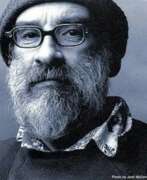


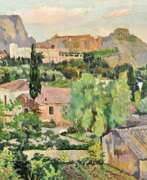



Gernot Rasenberger was a German painter, grandson of the famous 19th century painter Alfred Rasenberger (1885 - 1949).
Gernot graduated with honors from the Academy of Fine Arts Düsseldorf. He paints in the style of the traditional "Düsseldorf school", one of the founders of which was his grandfather. He is called a painter of cityscapes, although he also has river landscapes and others.