

Famous people


Adalbert Waagen is a German landscape painter. Studied in Munich and Milan. In Munich he founded his studio. In 1869 he moved with his wife to Berchtesgaden and opened a studio with a direct view of Mount Wachsmann. The artist received commissions from all over Europe. His focus was on landscapes, primarily mountains. His work can be seen in the Martin von Wagner Museum, the Julius-Maximilian University of Würzburg and the Munich City Museum.
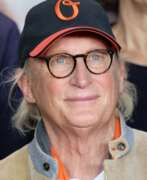

Otto Gerhard Waalkes is a German comedian, cartoonist, actor (including voice actor), musician, director and screenwriter. He has won many prizes and awards, among them the Order of Merit of the Federal Republic of Germany.
The little elephant Ottifant, which he invented, became the symbol of Otto Walkes' art and also the character for a series of comics and cartoons.
In the late 1970s and early 1980s Valckes turned his attention to comedy, appearing on stage and on television. He became known for his wry humour and his ability to create humorous characters and voices. His performances often include a mixture of stand-up comedy, skits and musical numbers.
Wallkes has also had a successful career in film and television. He has appeared in numerous German films. He also provided the voice for several animated films.
Otto Gerhard Wallkes is a well-known philanthropist, supporting various charities in Germany and around the world.
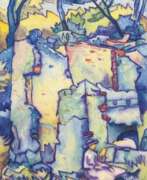

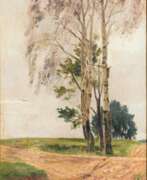

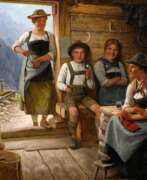

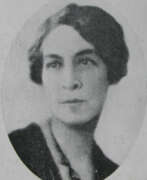

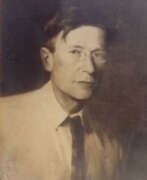

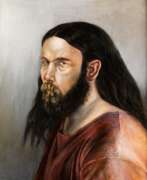


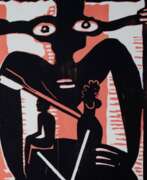

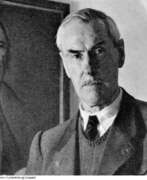

Josef Wackerle was a German sculptor. Educated in Munich, he became the artistic director of the Nymphenburg Porcelain Manufactory at a young age. Wackerle's influence extended beyond porcelain, as he contributed significantly to public art and architecture, particularly in his hometown. His works include various monuments, sculptures, and reliefs that demonstrate his commitment to integrating art within public spaces and everyday life.
Josef Wackerle's talent was recognized internationally, and his sculptures played a part in the art competitions at the 1928 and 1932 Summer Olympics. Despite the complex historical context in which he worked, including the Nazi era, Wackerle continued to receive commissions after World War II, demonstrating his art's enduring appeal. He contributed to the architectural and cultural fabric of Garmisch-Partenkirchen through numerous public artworks, including fountains, monuments, and building decorations.
For collectors and art experts, Josef Wackerle's work represents a blend of technical skill and a deep connection to Bavarian cultural identity. His contributions to porcelain art, particularly with Nymphenburg, highlight his versatility and innovation in working with various mediums.
If you're interested in staying updated on Josef Wackerle's works, particularly in the context of auctions and new discoveries, consider signing up for updates. This subscription will ensure you're informed about new sales and auction events related to Wackerle's art, providing valuable insights for collectors and enthusiasts alike.


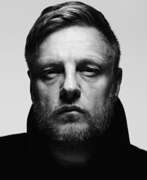

John Rankin Waddell, known as Rankin, is a British portrait photographer, fashion photographer, director, and publisher.
He works in fashion and portrait photography and has created portraits of many famous personalities of the world. Rankin also shoots music videos, documentaries, feature films, and commercials. He publishes his own photography magazines and books.


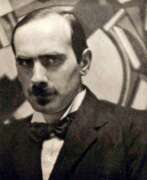

Edward Alexander Wadsworth was an English avant-garde artist, an active participant in the radical "Vorticism" movement that emerged in London just before the First World War. He contributed to the further development of the British avant-garde, bringing to it the ideas of Surrealism. He was a member of such significant creative associations as the Parisian group Abstraction-Création. After the war, the theme of the navy was one of the main themes in his work. Wadsworth painted coastal landscapes, abstracts, portraits and still lifes in tempera and also produced works printed with wood and copper engravings.
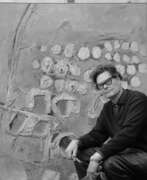

Jaap Wagemaker was one of the first Dutch artists to work in the style of materialism and established himself as a prominent representative of the international informal art movement of the 1950s and 60s. His technical categorisation of "painting of matter" has its origins in the artistic currents of Paris after 1945.
Born in Haarlem in 1906, Wagemaker showed artistic ability from a young age, studying architecture and decorative arts. He was a skilful draftsman, but his passion was painting, which led him to create more than 200 works. Wagemaker is known for his unique approach to using different materials, such as sand and wood, in his paintings.
Collectors, auctioneers and art experts appreciate Wagemaker's work for its innovative methods and contribution to the development of material painting. His work is represented in many galleries and auctions where it can be seen and purchased.
We invite all those interested in art and antiques to subscribe to our updates to learn about new products and events related exclusively to Jaap Wagemaker. Don't miss the opportunity to expand your knowledge and collections.


Wilhelm Wagenfeld was a German industrial designer and former student of the Bauhaus art school. He designed glass and metal works for the Jenaer Glaswerk Schott & Gen., the Vereinigte Lausitzer Glaswerke in Weißwasser, Rosenthal, Braun GmbH and WMF. Some of his designs are still produced to this day.

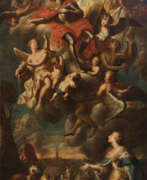


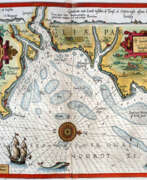

Lucas Waghenaer, full name Lucas Janszoon Waghenaer, was a famous Dutch cartographer, navigator, navigator and writer of the Golden Age.
Between 1550 and 1579, Waghenaer sailed the seas as a senior assistant captain and probably socialized with Portuguese, Spanish, and Italian navigators. The knowledge of nautical charts and the instructions Waghenaer received as a result of these contacts had a great influence on his later work as a cartographer. It is evident that the charts he made had to be based on his observations, and in all his work he had to draw on his own extensive experience of practical navigation. His book Spieghel der Zeevaerdt ("The Navigator's Mirror") or Speculum nauticum super navigatione, first published in 1584, occupies a unique place among the nautical printed works of the sixteenth century, for it is the first printed work with maps.
Moreover, in terms of the magnificent design of the maps and text, it surpasses all other editions of this period and served as a model for pilotage guides and folios with maps even a century later. It is an atlas of nautical charts with instructions for navigation in the western and northwestern coastal waters of Europe. Thanks to the unrivaled skill of engravers Baptiste and Johannes van Deitekom, Waghenaer's original maps were transformed into the most beautiful maps of the time. This book was a huge success, reprinted several times and translated into English, German, Latin and French.
In 1592, Waghenaer's second pilot book Thresoor der zeevaert ("Treasure of Navigation") was published, and in 1598, the third and last publication Enchuyser zeecaertboeck ("Enkhuizen Book of Nautical Charts").

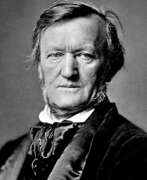

Wilhelm Richard Wagner was a German pioneering composer, conductor and opera reformer.
His first proper Symphony in C major was performed at the Leipzig Gewandhaus concerts in 1833. Wagner lived in a colony of poor German artists and made his living in music journalism. Nevertheless, in 1841 he wrote his first representative opera, The Flying Dutchman, based on the legend of a ship captain doomed to sail forever. In 1842 his Rienzi was triumphantly performed in Dresden, after which Wagner was appointed conductor of the court opera and held this position until 1849.
In 1848-49 Wagner became involved in the German Revolution, wrote a number of articles in support of it, and took an active part in the Dresden Uprising of 1849. When the uprising failed, he was forced to flee Germany. His subsequent years were occupied mainly with writing theoretical treatises on philosophy and music. Wagner held anti-Semitic and Nazi views. And reflecting on the future of music, he predicted the disappearance of opera as an artificial entertainment for the elite and the emergence of a new kind of musical stage work for the people, expressing the self-realization of free humanity. This new work was later called "musical drama."
By 1857 his style had been enriched with new interpretations, and Wagner had composed "Rheingold," "Die Walküre," and two acts of "Siegfried." By 1864, however, unwise financial habits had driven him into debt and ruin, and he was forced to flee from prison to Stuttgart. He was rescued by King Louis II, an ardent admirer of Wagner's work. Under his patronage for six years in Munich, the composer's operas were successfully staged. The King also practically ensured him a trouble-free life, thanks to his support Wagner built his own opera house (Bayreuther Festspielhaus), in which many new constructive ideas were realized. The premiere of "The Ring" and "Parsifal" took place here.
As a result of all Wagner's creative innovations and methods, a new kind of art emerged, the distinctive feature of which was a deep and complex symbolism, operating in three inseparable planes - dramatic, verbal and musical. He had a significant influence on European musical culture, especially on the development of opera and symphonic genres.
Richard Wagner's major works include The Flying Dutchman (1843), Tannhäuser (1845), Lohengrin (1850), Tristan und Isolde (1865), Parsifal (1882), and his great tetralogy, The Ring of the Nibelung (1869-76).

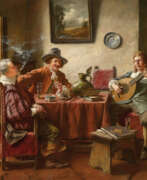

Fritz Wagner was a German painter who studied in Munich with Karl Roth and Rudolf von Seitz. After his studies he settled in Frauenchiemsee, near Lake Kimsee, where he produced a wide range of works including historical paintings, landscapes, portraits and scenes from everyday life. Travelling in Italy, Hungary and Romania inspired him to become a successful artist. His work was exhibited in Munich and gained popularity with the public. During his forty-three years of life, Fritz Wagner achieved recognition and left a significant artistic legacy that can be seen in the Rosenheim Museum, other German museums and European private collections.
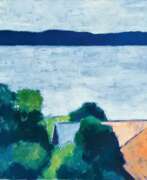

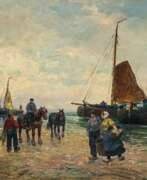




Karl Wagner (full name Karl Ludwig Friedrich Wagner) was a German painter, member of the Malkasten association of artists.
He was educated at the Karlsruhe Art Academy and painted on themes of historical events. Wagner created numerous portraits of politicians of his time, such as Bismarck, Emperor Wilhelm I, Duke Friedrich I and others. He is also known for port and fishing scenes and cityscapes.
Karl Wagner's daughter Juliette and son Cornelius also became painters.
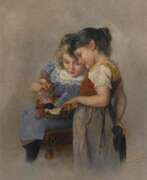


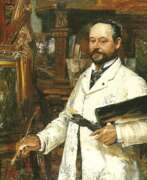

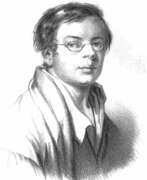

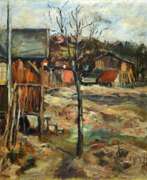


Walter Wahlstedt was a German constructivist painter, trained as an artist at the School of Applied Art in Hamburg. Already in the early 1920s he was creating constructive cubist linocuts. He also drew cityscapes and portraits. And in 1922 the Kunsthalle Hamburg acquired a painting by the young artist.


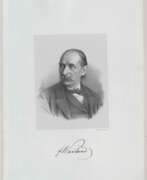

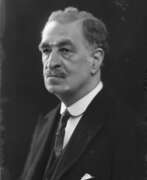

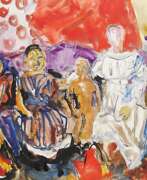

Alfred Wais was a painter, graphic artist and member of the Stuttgart New Secession. After training as a teacher in Kirchheim/Teck and Backnang, he began studying sculpture with Ulfert Janssen at the Technical University of Stuttgart. From 1927 he studied at the Academy of Fine Arts Stuttgart. During his studies he made contact with the members of the Stuttgart New Secession, whose exhibitions he took part in for the first time in 1932. In 1952 he initiated the Free Group of Swabian Painters and Sculptors as a successor organization to the New Secession. In 1980 he was appointed professor.
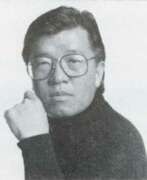

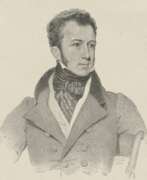

Edward Gibbon Wakefield was a politician, economist, writer and one of the British masterminds behind the colonization of Australia.
Edward was born into a respected Wakefield family in London, received a good education and served in the British Foreign Office. However, he was convicted for a marriage adventure and, sitting in prison, thought out a policy of colonization of Australia and New Zealand. In 1929, Wakefield published "An Outline of a Proposal for the Colonization of Australasia" and then published "A Letter from Sydney: the Chief City of Australia" on behalf of a certain expert on Australia. He proposed a scheme now sometimes called the Wakefield Scheme: it was aimed at settling the new colony of South Australia with able-bodied laborers, traders, artisans, and representatives of capital. It was to be financed by the sale of land to capitalists, who would thereby support other classes of emigrants. The colony was founded on December 28, 1836.
Wakefield was also the inspiration for the Durham Report (1839) on Canadian colonial policy. Wakefield subsequently created the blueprint for the Church of England settlement, Canterbury, on the South Island of New Zealand. From 1847 to 1850 the bulk of the "Canterbury Pilgrims" emigrated there, and in 1853 Wakefield became a member of the New Zealand General Assembly.
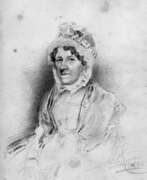

Priscilla Wakefield, née Priscilla Bell, was a British Quaker feminist, philanthropist, and writer.
Wakefield was well-read, enthusiastic about education and learning, as well as the economic emancipation of women, political issues of the day, and topics of science, history, and geography. She was one of many late eighteenth-century English women writers who began to demand women's empowerment. Her book on feminist economics, Reflections on the Present State of the Female Sex with Suggestions for its Improvement, was published in 1798. She was also widely known for her moral and instructive writings for children and young people. Wakefield participated in Quaker campaigns for the abolition of slavery and prison reform. She also founded England's first savings bank, a maternity hospital, and the Women's Welfare Club.
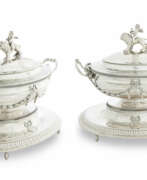

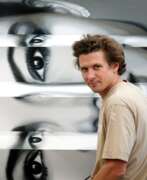

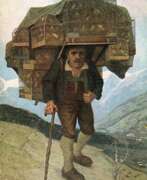


Franz Walhegger is an Austrian artist, a pioneer of modern painting in Tyrol. Born in Linz. He studied at the school of drawing and painting in Innsbruck, and then at the Vienna Academy of Fine Arts (from 1938 to 1942). During World War II he was drafted into the German army, but continued to paint and create frescoes in Olomouc (Czech Republic). After the war he returned to Linz. He created many works, including portraits, landscapes and paintings on religious themes. Walhegger developed his own style, incorporating elements of naturalism and cubism. The artist left behind a significant creative legacy. His works have been exhibited in various cities and can be found in public collections.
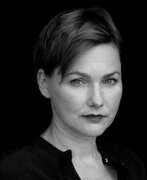

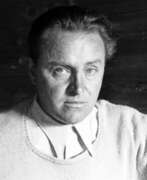

Alfons Walde was an Austrian expressionist painter and architect.
He studied architecture at the Higher Technical School in Vienna, but became interested in painting, found his muse in his native Kitzbühel Alps and became famous for his paintings of their snow-covered slopes and mountain huts. He was particularly fascinated by the dashing skiers of the time. Walde's popularity grew along with the popularity of the ski resort. Walde was also an active graphic artist and designed many posters.
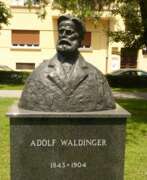

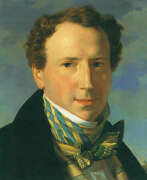


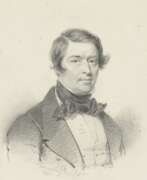

Anthonie Waldorp or Antoine de Saaijer Waldorp was a Dutch painter and predecessor of the Hague School. He studied in The Hague under the renowned decorative painter Joannes Brackenheimer, Jr. He began painting stage sets. Later he concentrated on home and church interiors and portraits (people in 17th century costumes).
Anthony Waldorp specialised in river and seascapes (paintings, drawings and watercolours). This proved to be a wise decision as it led to international recognition. He also did lithography.


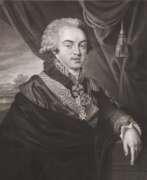

James Walker was a British artist and engraver, academician of the Russian Imperial Academy of Arts.
In England, James Walker was famous as an outstanding master of the mezzotint technique. At the invitation of Empress Catherine II in 1784, Walker arrived in St. Petersburg and was appointed engraver to Her Imperial Majesty. He was commissioned to create mezzotint engravings of Old Master paintings from the Imperial Collection, which were then published in two albums entitled A Collection of Engravings of the Most Famous Paintings in the Gallery of Her Imperial Majesty Catherine the Great. Walker also engraved portraits of the imperial family and the Russian aristocracy. He spent a total of about 20 years in Russia.
James Walker also collaborated with the artist Atkinson John Augustus in the creation of an illustrated work "A Pictorial Representation of the Manners, Customs and Amusements of the Russians in One Hundred Colored Plates", published in London in 1803-1804.
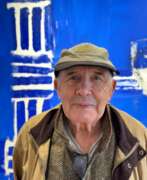

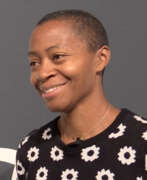

Kara Elizabeth Walker is an American contemporary painter, silhouettist, print-maker, installation artist, filmmaker, and professor who explores race, gender, sexuality, violence, and identity in her work. She is best known for her room-size tableaux of black cut-paper silhouettes. Walker was awarded a MacArthur fellowship in 1997, at the age of 28, becoming one of the youngest ever recipients of the award. She has been the Tepper Chair in Visual Arts at the Mason Gross School of the Arts, Rutgers University since 2015.
Walker is regarded as among the most prominent and acclaimed Black American artists working today.
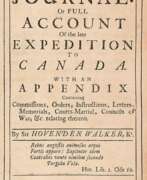




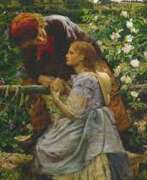



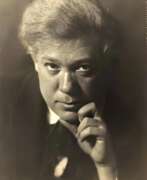

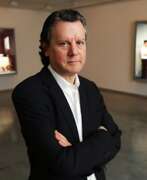

Jeff Wall is a renowned Canadian artist, celebrated for his large-scale backlit Cibachrome photographs and insightful art history writings. His artistic journey began in the late 1970s, creating images that balance between painting and photography, often resembling movie stills in their complexity and narrative depth. Wall's unique approach involves elaborate setups with actors, sets, and post-production, akin to single-frame movies, leading to works that demand viewers' attention similar to paintings or films.
His seminal piece, "Picture for Women" (1979), reflects his deep engagement with art history, referencing Édouard Manet's "A Bar at the Folies-Bergère" and exploring themes like the male gaze within a contemporary context. Another notable work, "A Sudden Gust of Wind (after Hokusai)" (1993), showcases Wall's digital montage technique, combining numerous photographs to create a seamless image that reimagines a 19th-century Japanese print in a modern setting.
Jeff Wall's transition to using digital technology in the 1990s allowed him to merge various negatives into a coherent whole, pushing the boundaries of traditional photography. His works, often displayed as transparencies on lightboxes, introduce a novel way of experiencing photographic art, blending narrative depth with meticulous attention to detail.
For art collectors and experts, Jeff Wall's work represents a profound intersection of photography, cinema, and painting, offering a rich field for exploration and appreciation. His pieces, found in major museums and galleries worldwide, continue to influence and inspire discussions in the realms of art and photography.
Stay updated on new exhibitions, sales, and auctions related to Jeff Wall by subscribing to updates, ensuring you're informed about the latest developments and opportunities related to this influential artist.


Claude Wall is a German artist who was born in 1951 in Eschweiler, a town in the Rhineland region of Germany. He studied painting at the Stuttgart Art Academy from 1969 to 1974, under the guidance of Professor Paul Uwe Dreyer.
Between 1980 and 1994, Wall lived and worked between Milan and Stuttgart. During his career, he has been awarded several prizes, scholarships and awards, including the Förderpreis für farbige Plastik of the Kulturkreis im BDI in 1984, the Second Ateliers Internationaux des Pays de Loire, and the artist-in-residence at the University of Missouri, St. Louis. He was also the recipient of the scholarship of the state of Baden-Württemberg and was an Artiste-en-atelier au F.r.A.C. Bourgogne, Dijon.
Wall is known for his colorful and abstract sculptures, often made of metal, that explore the relationship between form and space. His work has been exhibited widely both nationally and internationally, including at the Venice Biennale and Documenta in Kassel.
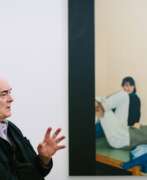

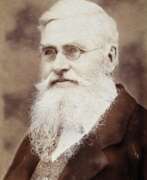

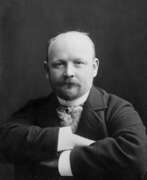

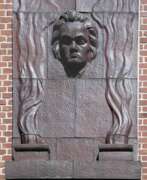

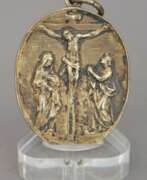

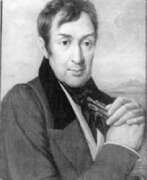

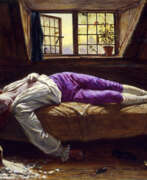

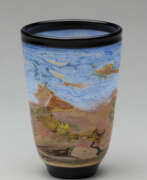

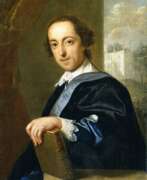

Horace Walpole, 4th Earl of Orford was an English writer, founder of the Gothic romance, bibliophile, and collector.
Born into an aristocratic family, Walpole received a classical education worthy of a young aristocrat at Eton College, then studied at Cambridge University and traveled widely in Europe.
Later he settled in his castle Stroberry Hill, where he gradually amassed one of the largest and richest art galleries in England. Here Walpole also wrote the first Gothic novel, Ontario Castle (1764), which became a prototype of horror literature that made him famous. Walpole also left an extensive private correspondence of some 4,000 letters, a most interesting survey for scholars of the history, manners, and tastes of his era.
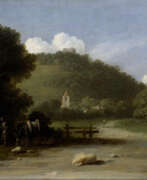

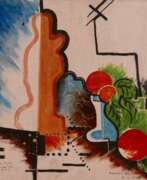


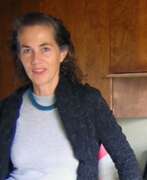

Joan Waltemath is a contemporary American artist. Her abstract paintings focus on constructing spatial voids using harmonic progressions and non-traditional, reflective pigments in oils as well as drawings in diverse materials. Shown in New York, Chicago, Los Angeles, Portland, London, Basel, and Cologne, her work is in the collections of the Museum of Modern Art, the National Gallery of Art and the Harvard University Art Museum among others. She has written extensively on art and served as editor-at-large of the Brooklyn Rail since 2001. In 2010, she was appointed the Director of MICA’s Hoffberger School of Painting. She was named a Creative Capital grantee in 2012.










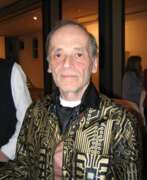

Petrus Wandrey (German: Petrus Wandrey, full name Ulrich Carl Peter Wandrey) is a German digital artist.
In his youth he was influenced by Surrealism, the Pop Art movement and Dadaism. But later Wandrey became so impressed by the culture of science, technology and digital images that he became one of the pioneers of the digitalization movement. In his work, Wandrey often uses digital combinations, pixel sequences and even computer trash.
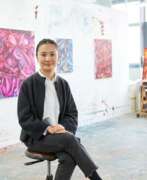


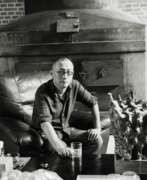

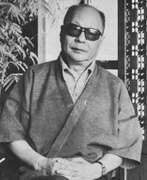




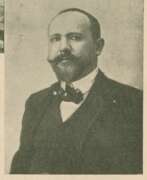


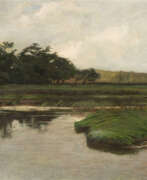

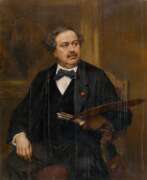

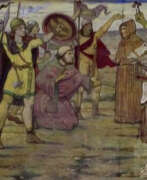

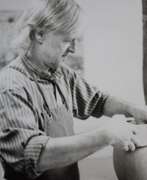

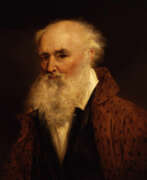

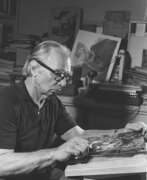

Lynd Kendall Ward was an American artist and novelist, known for his series of wordless novels using wood engraving, and his illustrations for juvenile and adult books. His wordless novels have influenced the development of the graphic novel. Although strongly associated with his wood engravings, he also worked in watercolor, oil, brush and ink, lithography and mezzotint. His best-known books are Gods' Man and his Caldecott-winning children's story, The Biggest Bear.


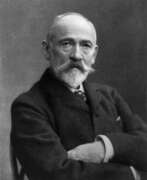

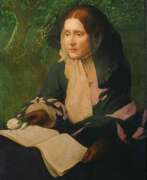

Julia Ward Howe is an American writer and poet, philosopher, abolitionist, and feminist.
Born into a well-to-do family and privately educated, Julia Ward married educator Samuel Gridley Howe and settled in Boston. She published her first collection of poems, Passionate Flowers, in 1854.Julia's early poems were praised by Hawthorne, Whittier, and Longfellow for their intellectual intensity. For a time Howe published the abolitionist newspaper Commonwealth with her husband. And in February 1862, The Atlantic Monthly published her poem "Battle Hymn of the Republic," which became the semi-official Civil War song of the Union Army, and Howe gained fame.
After the war, Howe began fighting for women's rights. In 1868, she was elected the first president of the New England Women's Suffrage Association. In 1868, she helped found the New England Woman's Club and became its president in 1871, the same year she became the first president of the American branch of the International Women's Peace Association. She was later active in the International Federation of Women's Clubs. Howe continued to write throughout her life, publishing travel books, poems, collections of essays, and biographies.
In 1870, she co-founded Woman's Journal and then served as its editor for 20 years. She traveled extensively until her advanced old age. In 1908, she became the first woman elected to the American Academy of Arts and Letters.
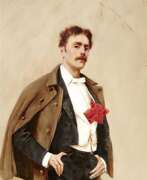


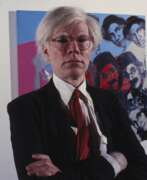

Andy Warhol, born as Andrew Warhola Jr., was an American visual artist, film director, and producer, who played a pivotal role in the development of the Pop Art movement. His art delved into the interplay between artistic expression, advertising, and celebrity culture, especially prevalent in the 1960s. Warhol was renowned for his diverse range of media, which included painting, silkscreening, photography, film, and sculpture.
Warhol's journey began in Pittsburgh, where he was born and raised, initially making a name for himself as a commercial illustrator. His New York studio, "The Factory," became a famous hub for intellectuals, celebrities, and various artistic minds. He was known for creating the notion of "Warhol superstars" and popularized the phrase "15 minutes of fame."
His contribution to the art world is significant, with notable works like "Campbell's Soup Cans" (1962) and "Marilyn Diptych" (1962), as well as his experimental films like "Empire" (1964) and "Chelsea Girls" (1966). These works not only define his career but also underscore the essence of the Pop Art movement.
Warhol's influence extended beyond his artwork. He managed and produced the experimental rock band The Velvet Underground, founded Interview magazine, and wrote several books, including "The Philosophy of Andy Warhol" and "Popism: The Warhol Sixties." Living openly as a gay man before the gay liberation movement, Warhol's personal life was as influential as his professional endeavors.
Tragically, Warhol's life was nearly cut short in 1968 when he was shot by radical feminist Valerie Solanas. He eventually passed away in 1987 due to cardiac arrhythmia following gallbladder surgery. His legacy continues, with The Andy Warhol Museum in Pittsburgh standing as the largest U.S. museum dedicated to a single artist.
Warhol's art remains highly collectible and valuable. His works, like the "Silver Car Crash (Double Disaster)" and "Shot Sage Blue Marilyn," have fetched staggering amounts at auctions, signifying his enduring impact on the art market.
For art collectors and experts, Andy Warhol's work represents a crucial intersection of pop culture and fine art, offering a unique perspective on consumerism and celebrity. His pieces are not just art; they are historical landmarks that capture a transformative era in both art and society.
To stay updated on new products, sales, and auction events related to Andy Warhol, sign up for our updates. This subscription will keep you informed about all things Warhol without overwhelming you with unnecessary information.


Gregory Warmack, better known as Mr. Imagination was an American outsider artist. He worked in a variety of forms and his work often made use of sandstone and bottlecaps and other re-purposed materials.

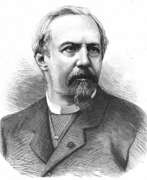

Arthur Warocqué was a Belgian industrialist, philanthropist, politician and artist.
He was the managing director of the coal mining companies Charbonnages de Mariemont and Bascoup, a member of the Belgian House of Representatives, and a collector.
Warocqué also had a passion for painting, studying under the Belgian illustrator Paul Lauters (1806-1876). While traveling through Scandinavia as a young man, Warocqué captured views of Sweden, Norway, and Lapland, from which he published a series of prints.
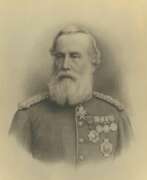

Henry James Warre was a British officer, traveler and artist.
Educated at the Royal Military College, Sandhurst, Warre began his service in British North America, including Canada, as adjutant (aide-de-camp) to his uncle, Sir R. D. Jackson, commander-in-chief of British forces. From 1845-1846, he traveled the country on a reconnaissance tour, visiting Oregon and British Columbia. Henry Warre later participated in the Crimean War, served as a colonel in New Zealand from 1861-1865, and made a sea voyage to the South Island.
Warre had a brilliant military career, rising to the rank of lieutenant general, commander of the Bombay Army. In 1881, while still in India, he retired and returned to London.
Henry Warre was a talented artist, and drew the surrounding vistas and landscapes in pencil and watercolor. He is best known for his books of colored plates, Sketches of North America and the Oregon Territory (1848) and Sketches in the Crimea (1856).