la conner wa

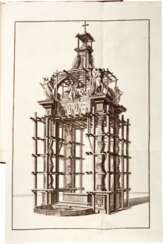

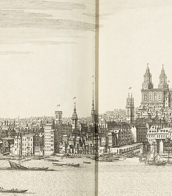
![QUADRI, Antonio (1776-1849) - Il Canal Grande di Venezia. Venice: Tipografia Andreola, 1828 - [LEGATO CON:] - La Piazza di San Marco. Venezia: Tipografia del Commercio, 1831.](/assets/image/picture_1242414/78273/uxyonczhqtkfqr2zzeyho7j94xvwgct2w9f599ggk2gwip21ixp9j3dq3mvowknr1608651686jpg__fix_374_244.jpeg)
![QUADRI, Antonio (1776-1849) - Il Canal Grande di Venezia. Venice: Tipografia Andreola, 1828 - [LEGATO CON:] - La Piazza di San Marco. Venezia: Tipografia del Commercio, 1831.](https://veryimportantlot.com/assets/image/picture_1242414/78273/uxyonczhqtkfqr2zzeyho7j94xvwgct2w9f599ggk2gwip21ixp9j3dq3mvowknr1608651686jpg__fix_374_244.jpeg)





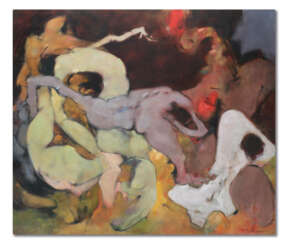

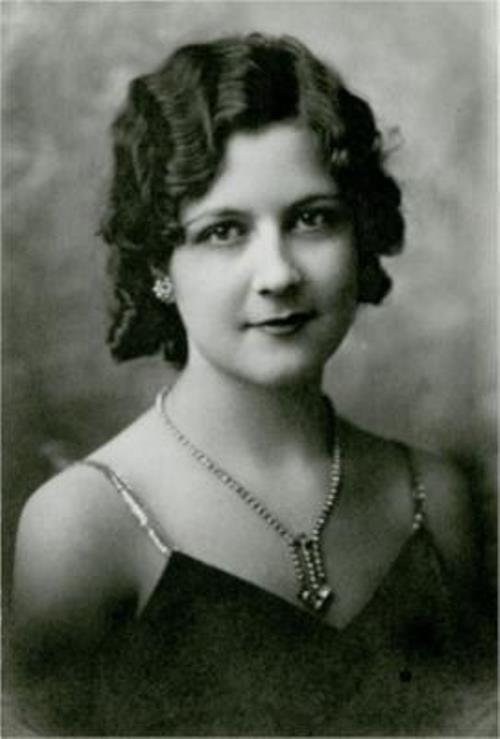
Dorothea Margaret Tanning was an American surrealist painter, printmaker, sculptor, writer and poet.
In 1935 Dorothea came to New York and worked as an advertising artist until she was inspired by the paintings of the famous Surrealists at an exhibition. She began to paint and exhibit and made numerous acquaintances among contemporary artists. In 1946 she married the artist Max Ernst, and this marriage lasted 30 years. They lived in Paris for a long time, and after his death in 1976, she returned to New York.
As an artist, Dorothea Tanning was self-taught, and her style was constantly changing. At first close to surrealism, by the late 1960s her paintings had become almost entirely abstract. Among her artistic accomplishments are paintings, prints, sculpture, stage design, costume and set designs for ballets, and her work has been exhibited at the Guggenheim Museum, the Metropolitan Museum of Art, the Tate Modern, and the Philadelphia Museum of Art.
In the late 1980s, Tanning began writing poetry, and her work has subsequently been published in various publications. Her first collection of poems, A Table of Content, was published in 2004. The multifaceted and versatile artist died in New York City at the age of 101.
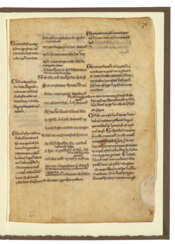
![[Pedro IV of Aragon (1319-1387)]](/assets/image/picture_3927881/4831f/947e4e5d2212170f44c0f15c745e65e81718056800jpg__fix_374_244.jpeg)
![[Pedro IV of Aragon (1319-1387)]](https://veryimportantlot.com/assets/image/picture_3927881/4831f/947e4e5d2212170f44c0f15c745e65e81718056800jpg__fix_374_244.jpeg)

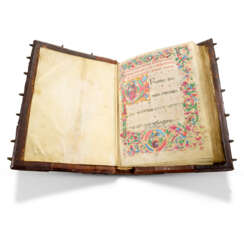

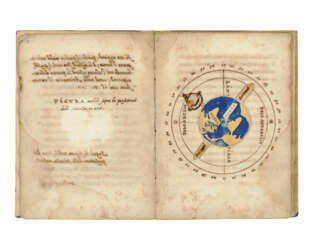

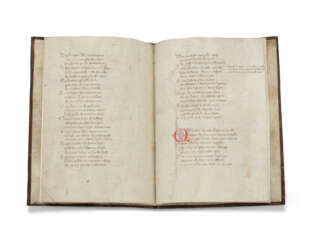








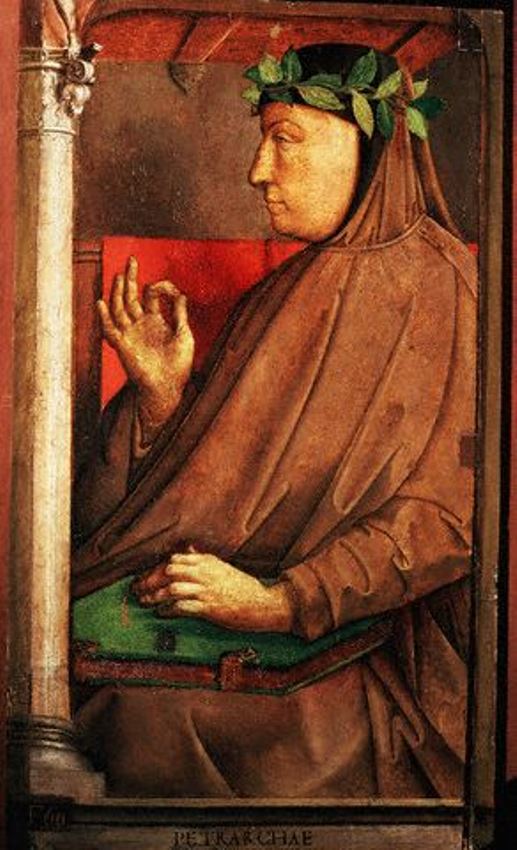
Francesco Petrarca was an Italian poet, the founder of European humanism, and one of the greatest figures of the Italian Proto-Renaissance.
Petrarca studied at the University of Montpellier, then at the University of Bologna, in 1330 entered the service of Cardinal Giovanni Colonna as a chaplain. Then he made various pilgrimages, in 1353 settled in Milan at the court of Archbishop Giovanni Visconti, and carried out important diplomatic missions. Petrarca spent the last years of his life in the village of Arquà near Padua.
Since 1337 Petrarca began to write literary works: these were historical poems in Latin and lyric poems in Italian. In 1327 Francesco saw Laura for the first time, undivided love for which was the main source of his poetry. Laura was for him an object of adoration and pure platonic love. Despite the fact that they saw each other only a few times and were not really acquainted, Petrarca carried this feeling through his life.
Passionate about ancient culture, Petrarch deciphered and commented on the manuscripts of Cicero, Quintilian and others. He opposed medieval scholasticism interest in the earthly purpose of man, argued that the nobility of man depends not on the nobility of origin, but on his virtue. Petrarca highly valued the mind and creative abilities of man, and these humanistic ideas found vivid expression in his lyrics, revealing the inner world of man. Petrarca's work laid the foundation for the formation of Italian humanism. He also dreamed of the unification of Italy, the revival of the former greatness of Rome.
Francesco Petrarca had one of the richest libraries of his time, where ancient Roman writers, poets, historians, philosophers were represented. He was one of the brightest representatives of the culture of the Renaissance. Petrarca's works are characterized by perfection of form and musicality of verse, which played a significant role in the development of European poetry. Among his works are the poem "Africa" about the Second Punic War in Latin, allegorical pastoral eclogues "Bucolics" (1346/1357), a book of songs "My Italy", "Noble Spirit", sonnets, etc.







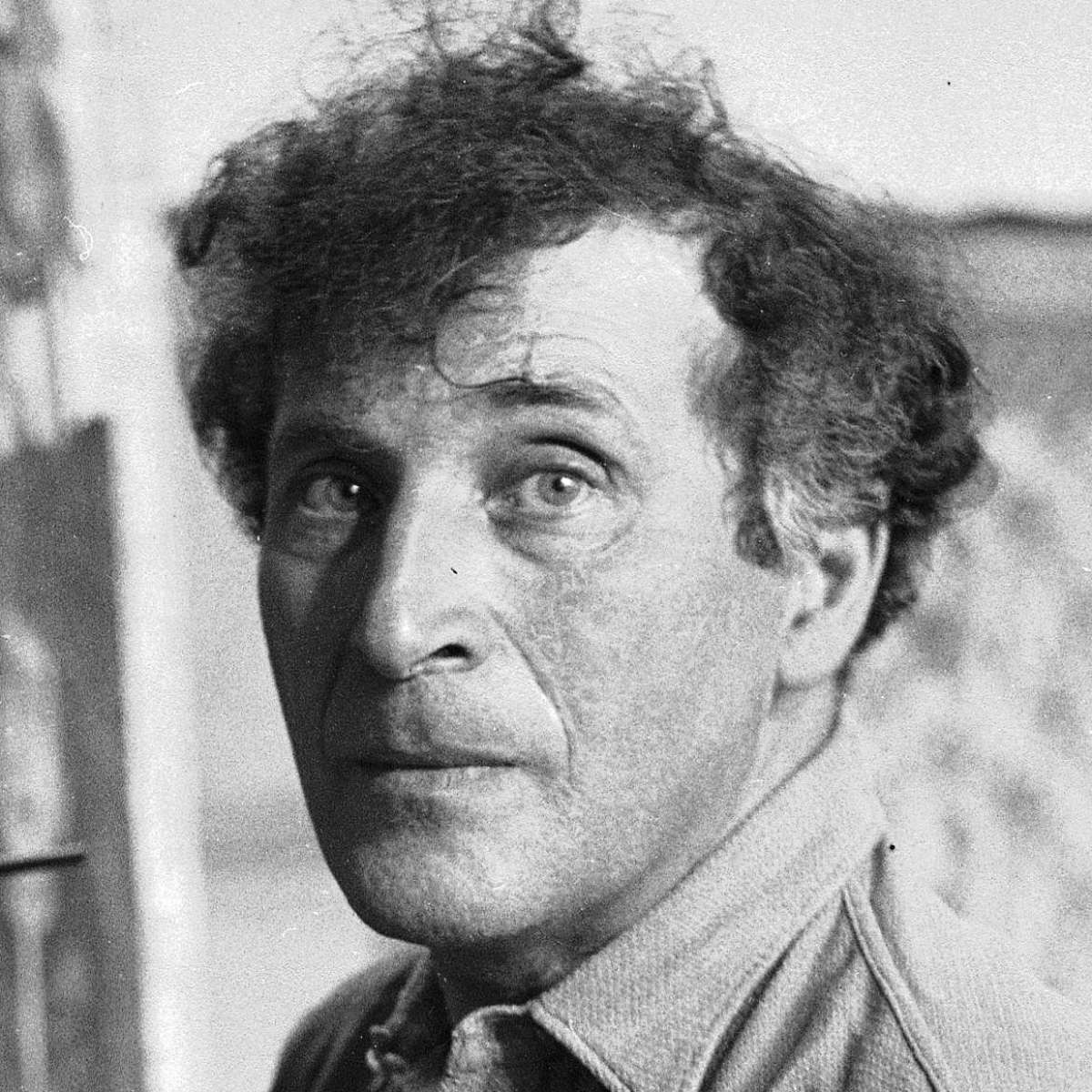
Marc Chagall (Russian: Марк Заха́рович Шага́л), born Moishe Shagal in 1887 near Vitebsk, Belarus (then part of the Russian Empire), was a Belarusian and French artist celebrated for his pivotal role in the avant-garde movement and his unique integration of Eastern European Jewish culture into modern art. His contributions spanned several artistic formats including painting, stained glass, stage sets, ceramics, tapestries, and fine art prints. Chagall's early modernist tendencies were enriched by his experiences across Saint Petersburg, Paris, and Berlin before World War I, leading to a distinctive style that melded Cubism, Symbolism, and Fauvism with his Jewish heritage.
Chagall's work is recognized for its emotional depth, often exploring themes of love, memory, and Jewish folklore through vibrant colors and dreamlike imagery. Notably, art critic Robert Hughes described him as "the quintessential Jewish artist of the twentieth century," a sentiment echoed by art historian Michael J. Lewis who regarded Chagall as a significant figure within European modernism and as the world's preeminent Jewish artist of his time.
Among Chagall's famed contributions are his stained-glass windows for the cathedrals of Reims and Metz, the UN, and the Jerusalem Windows in Israel. His monumental paintings include parts of the ceiling of the Paris Opéra and works that explore biblical themes, a hallmark of his oeuvre that underscores his enduring engagement with spiritual and religious motifs.
For art collectors and antiques experts, Chagall's works are notable not only for their artistic innovation but also for their rich cultural and historical significance. His art is housed in many prestigious museums worldwide, including the Marc Chagall National Museum in Nice, France, which focuses on his works inspired by religion and houses the series of paintings illustrating the biblical message.
For those interested in exploring Chagall's legacy and the vibrant intersection of culture, art, and history his work represents, signing up for updates on new product sales and auction events related to Marc Chagall can provide invaluable insights and opportunities. This is an invitation to engage more deeply with the world of art and culture that Chagall so uniquely encapsulated in his work.
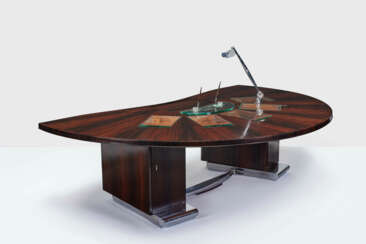

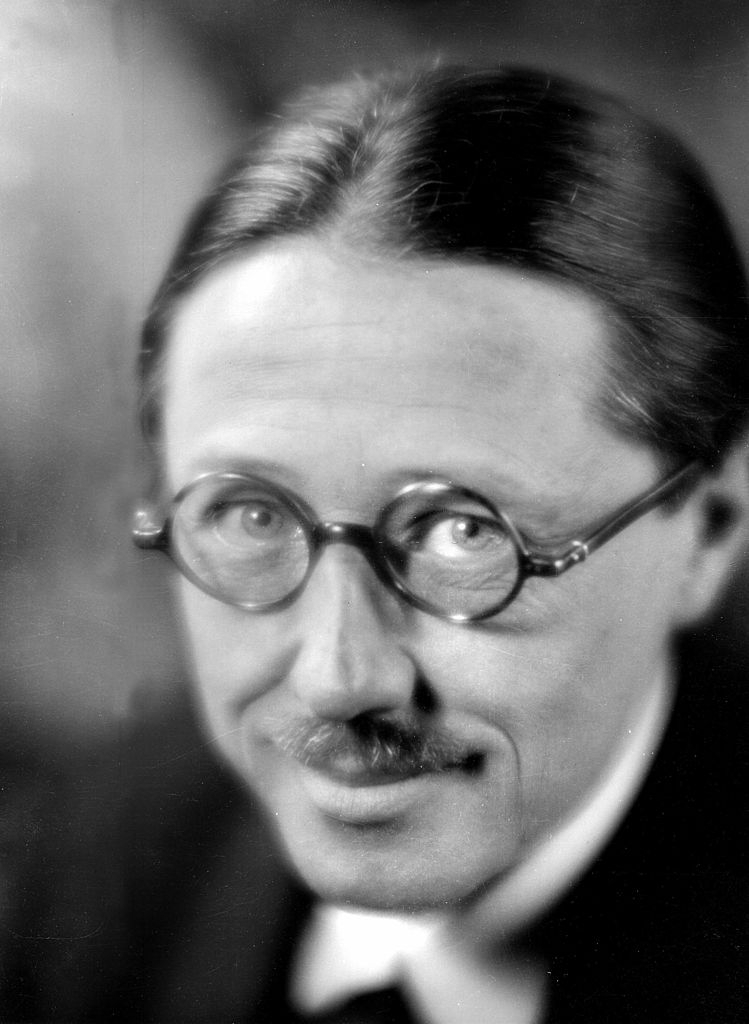
Émile-Jacques Ruhlmann, (sometimes called Jacques-Émile Ruhlmann), was a French furniture designer and interior decorator, who was one of the most important figures in the Art Deco movement. His furniture featured sleek designs, expensive and exotic materials and extremely fine craftsmanship, and became a symbol of the luxury and modernity of Art Deco. It also produced a reaction from other designers and architects, such as Le Corbusier, who called for simpler, functional furniture.
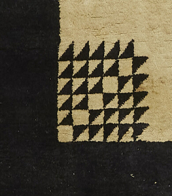
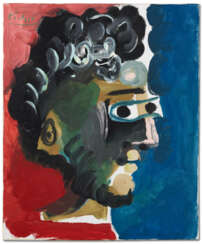

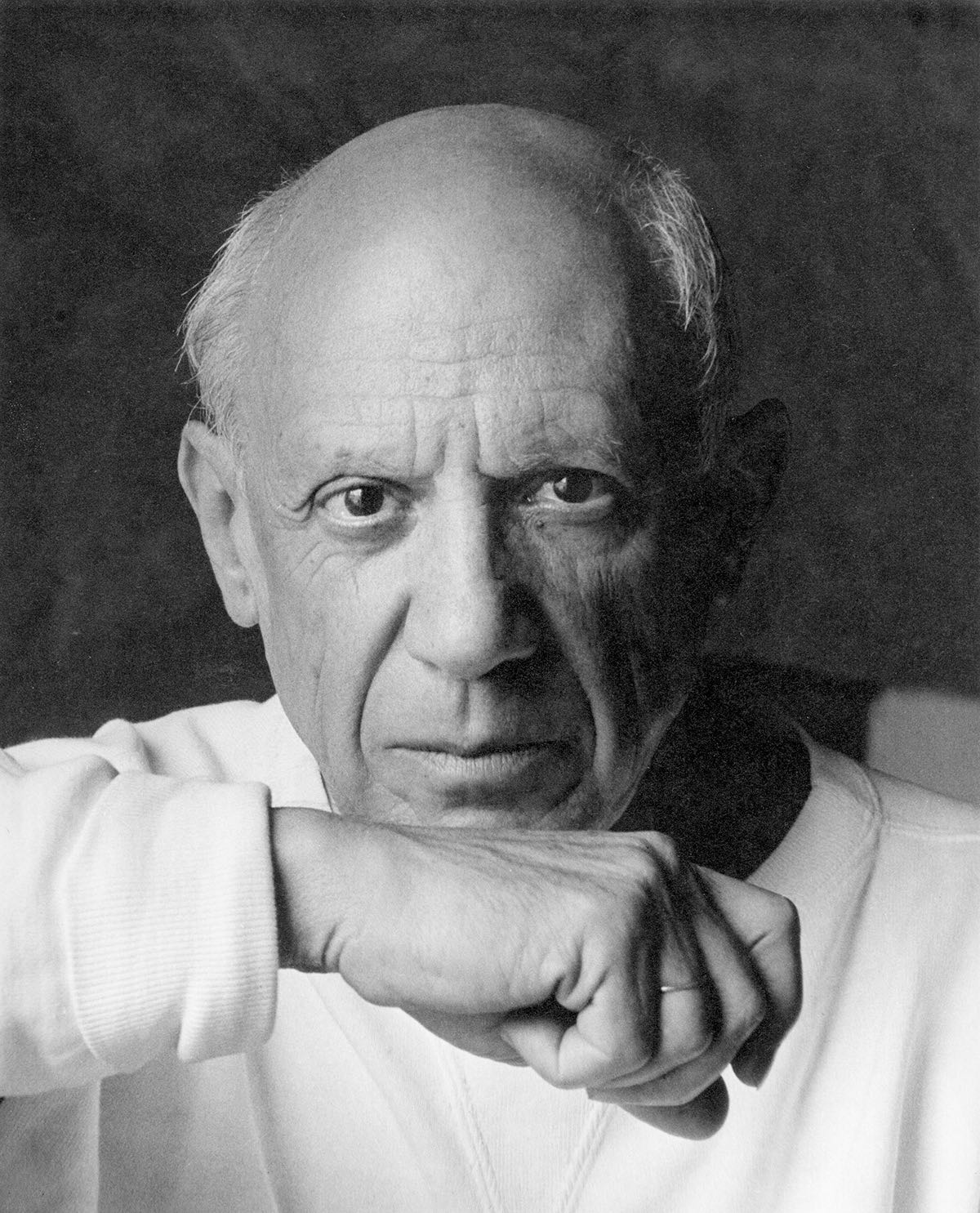
Pablo Ruiz Picasso, a Spanish artist renowned for his revolutionary contributions to the 20th-century art scene, is a figure that resonates profoundly with collectors and art experts. His unique blend of talents in painting, sculpture, printmaking, and ceramic art, infused with his time in France, positioned him as a pivotal character in modern art history.
Picasso's artistic journey was marked by distinct periods, each showcasing his evolving style and genius. His early years were characterized by the Blue Period (1901-1904), followed by the Rose Period (1904-1906), and then the African-influenced Period (1907-1909). Picasso's name is synonymous with Cubism, a movement he co-founded, which significantly altered artistic perspectives and methods. Works like "Les Demoiselles d'Avignon" (1907) and "Guernica" (1937) are emblematic of his cubist legacy, the latter being a poignant anti-war statement that remains influential.
His later years saw a return to more traditional styles, with neoclassical and surrealist influences becoming evident. Works from these phases reflect a deep engagement with mythological themes, as seen in "Faun with Stars" (1955), symbolizing his late-life romance with Jacqueline Roque, his second wife.
Picasso's prolific output and innovative spirit made him a legend in his own time, a status that only grew after his death. His works, housed in major museums and private collections worldwide, continue to captivate and inspire.
As a collector or expert in art and antiques, staying informed about Picasso's works, their auction events, and sales is essential. To stay updated on the latest developments and opportunities related to Pablo Picasso, sign up for our specialized updates. Rest assured, this subscription will focus solely on new product sales and auction events pertaining to Picasso's art, ensuring that you receive only the most relevant and valuable information.


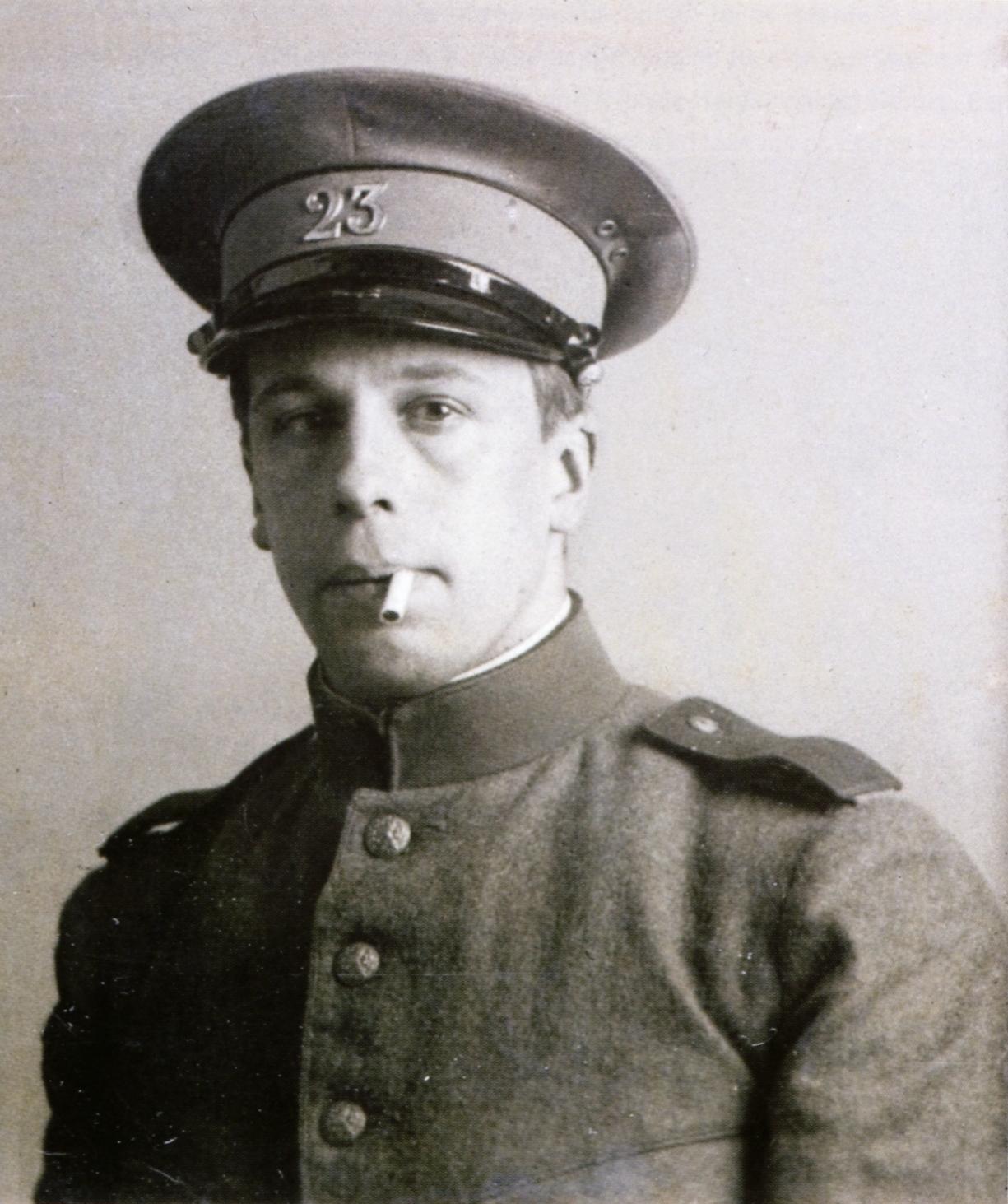
Theo van Doesburg, real name Christian Emil Marie Küpper, is a Dutch painter, architect and sculptor, art theorist, co-founder of the Style Group and of Neoplasticism.
Theo van Doesburg co-founded with Piet Mondrian the De Stijl abstract art movement. The basis of van Doesburg's views was the attempt to reduce all forms of objective harmony in a work of art to certain geometric elements. These new principles soon had a significant influence on the development of architecture, literature, graphics and music.

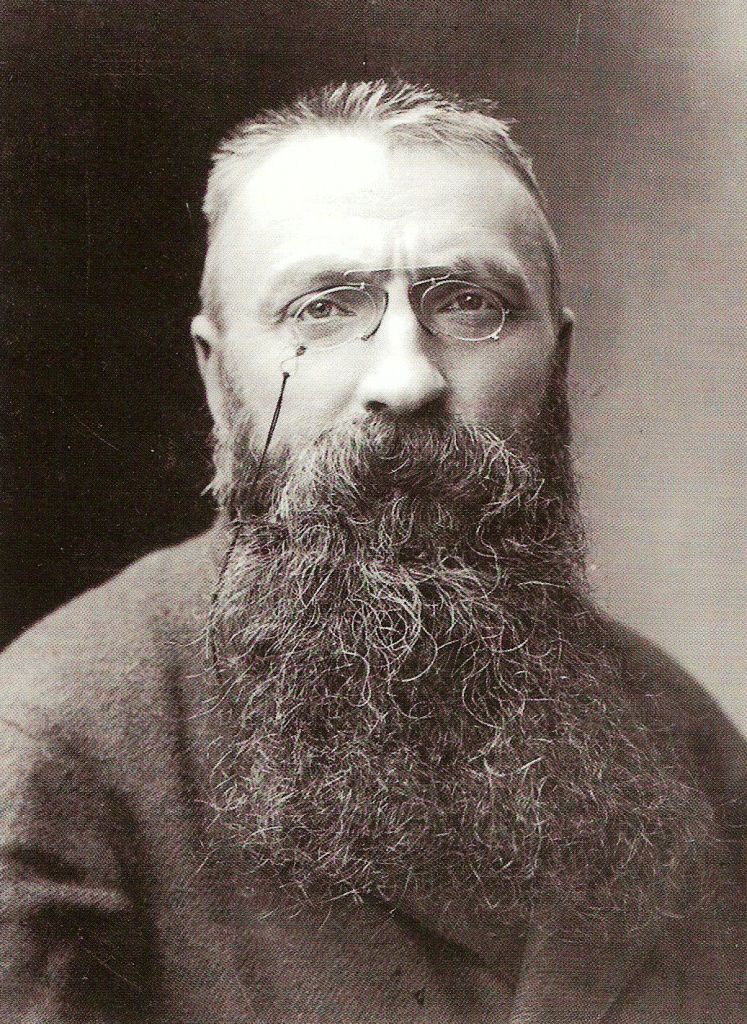
François Auguste René Rodin was a French sculptor, generally considered the founder of modern sculpture. He was schooled traditionally and took a craftsman-like approach to his work. Rodin possessed a unique ability to model a complex, turbulent, and deeply pocketed surface in clay. He is known for such sculptures as The Thinker, Monument to Balzac, The Kiss, The Burghers of Calais, and The Gates of Hell.
Many of Rodin's most notable sculptures were criticized, as they clashed with predominant figurative sculpture traditions in which works were decorative, formulaic, or highly thematic. Rodin's most original work departed from traditional themes of mythology and allegory. He modeled the human body with naturalism, and his sculptures celebrate individual character and physicality. Although Rodin was sensitive to the controversy surrounding his work, he refused to change his style, and his continued output brought increasing favor from the government and the artistic community.
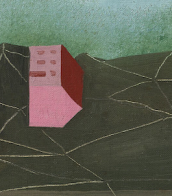


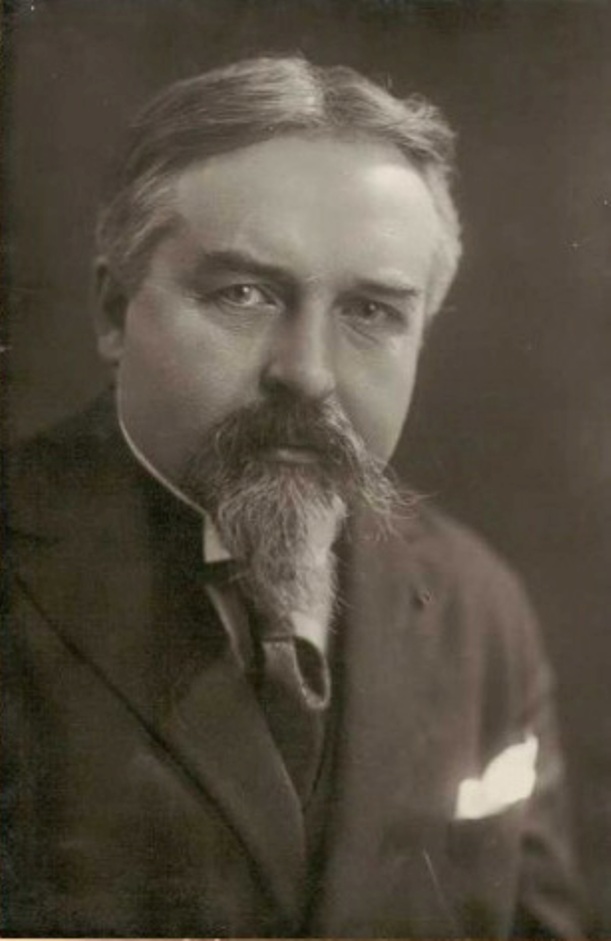
Maurice Denis, a French painter and writer, was an influential figure in the transition from impressionism to modern art. Born on November 25, 1870, in Granville, France, Denis's artistic journey began at the Académie Julian in Paris. Here, he met future collaborators like Paul Sérusier and Pierre Bonnard, with whom he later formed the Nabis group, a collective deriving its name from the Hebrew word "Nabi," meaning "Prophet".
Denis's style evolved from neoimpressionism, influenced by artists like Seurat, to a more decorative and colorful approach under the influence of Gauguin. This shift is evident in works like "Taches du soleil sur la terrace" (1890). He famously stated, "Art is no longer a visual sensation... it is a creation of our spirit," highlighting his belief in art as an idealistic expression, transcending mere imitation of nature.
Denis was also impacted by Japanese art, which influenced his compositions and styles, contributing to his unique and recognizable approach. His philosophy on art, encapsulated in his 1890 essay published in "Art et Critique," emphasized the importance of color and form in creating emotional depth, a notion that laid the groundwork for modernism. He argued that a painting's essence lies in its colors and composition, rather than its subject matter.
Throughout his career, Denis's work evolved towards a more classical approach. His involvement with the Ateliers d'Art Sacré, founded in 1919, demonstrated his interest in religious art and decoration. His notable works include "The Legend of Saint Hubert" (1897) and "The History of Music" for the Théâtre des Champs Elysées (1912-1913).
Tragically, Maurice Denis's life ended on November 13, 1943, when he was struck by a truck during the German occupation of Paris. However, his legacy endures through his contributions to modern art and symbolism, his influence on fellow artists, and his works displayed in various museums and galleries.
For collectors and art experts, Denis's work offers a unique glimpse into the evolution of modern art. His blend of symbolism, color, and form marks a significant shift in art history. To stay updated on new sales and auction events related to Maurice Denis's work, sign up for our newsletter. This subscription will keep you informed about the latest developments in the world of this remarkable artist.
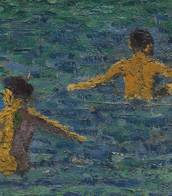


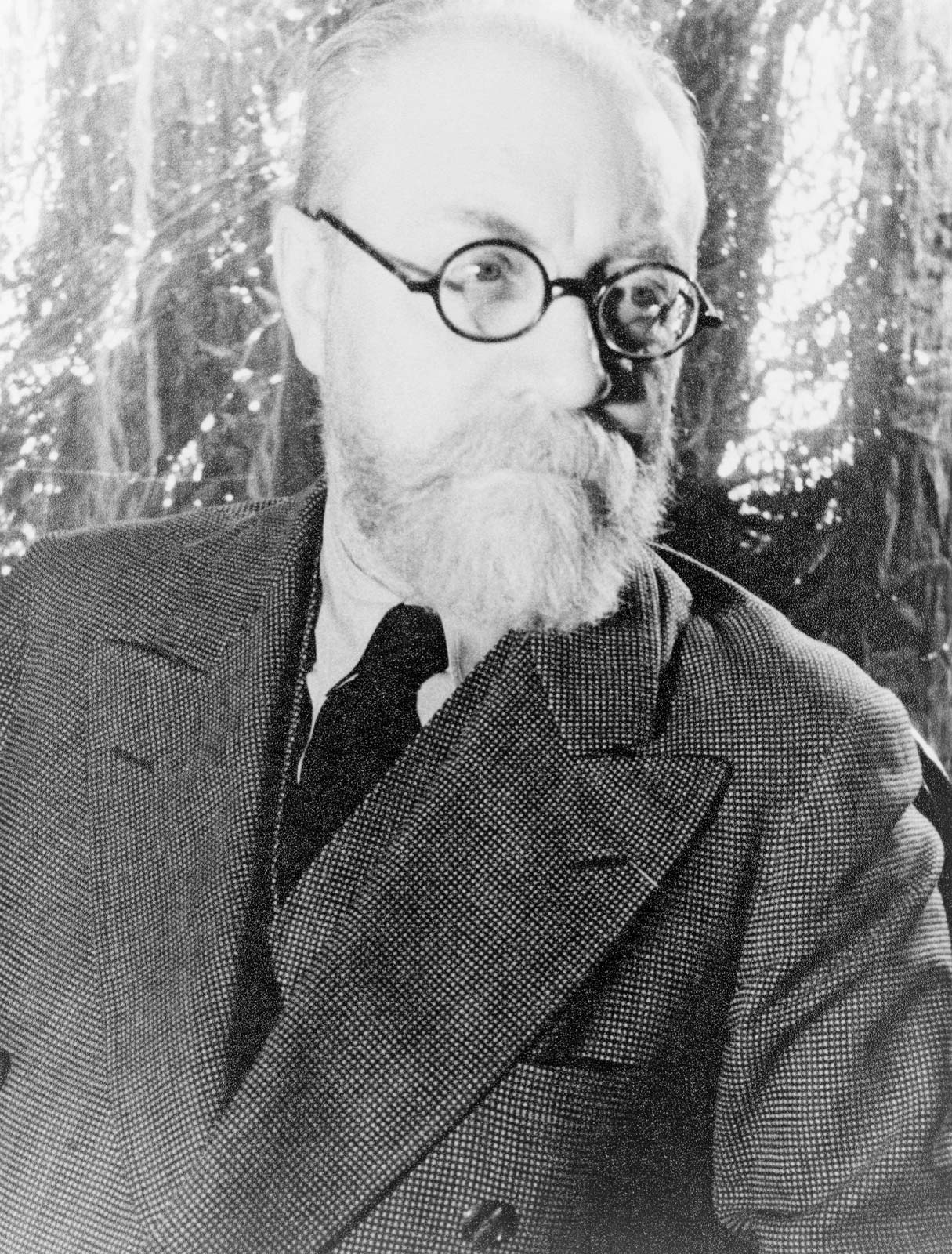
Henri Matisse, a renowned French visual artist, was celebrated for his vibrant use of color and fluid, original draughtsmanship. Born on December 31, 1869, in Le Cateau-Cambrésis, France, Matisse initially pursued a career in law before turning to art. He first began painting in 1889, a change inspired by convalescence art supplies his mother provided. This marked the beginning of a journey that would see him become a leading figure in modern art.
Matisse's career is notable for its stylistic evolution yet consistent aim to capture the "essential character of things." His early works, characterized by intense colorism, earned him recognition as one of the Fauves, or "wild beasts." The period from 1908 to 1913 was marked by significant developments, with works like "Reclining Odalisque" and "The Red Studio" showcasing his mastery in balance and serenity. In the 1920s, his style evolved to more relaxed forms, with a focus on light, color, and decorative patterns in paintings like his odalisque series.
Matisse's exploration of various mediums, including sculpture and paper collage, reflects his innovative spirit. His later years were dominated by cut paper collages, as health challenges limited his ability to paint. These works, alongside his bold drawings and sculptures, cemented his status as a pioneer in visual art.
For collectors and art experts, Matisse's work remains a testament to creative evolution and expressive use of color and form. His masterpieces can be found in prominent museums and galleries worldwide, continuing to inspire and fascinate art enthusiasts.
To stay updated on new product sales and auction events related to Henri Matisse's art, sign up for our updates. This subscription will keep you informed about opportunities to appreciate and acquire works connected to this iconic artist.
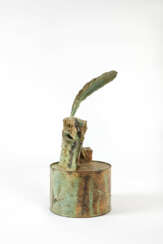

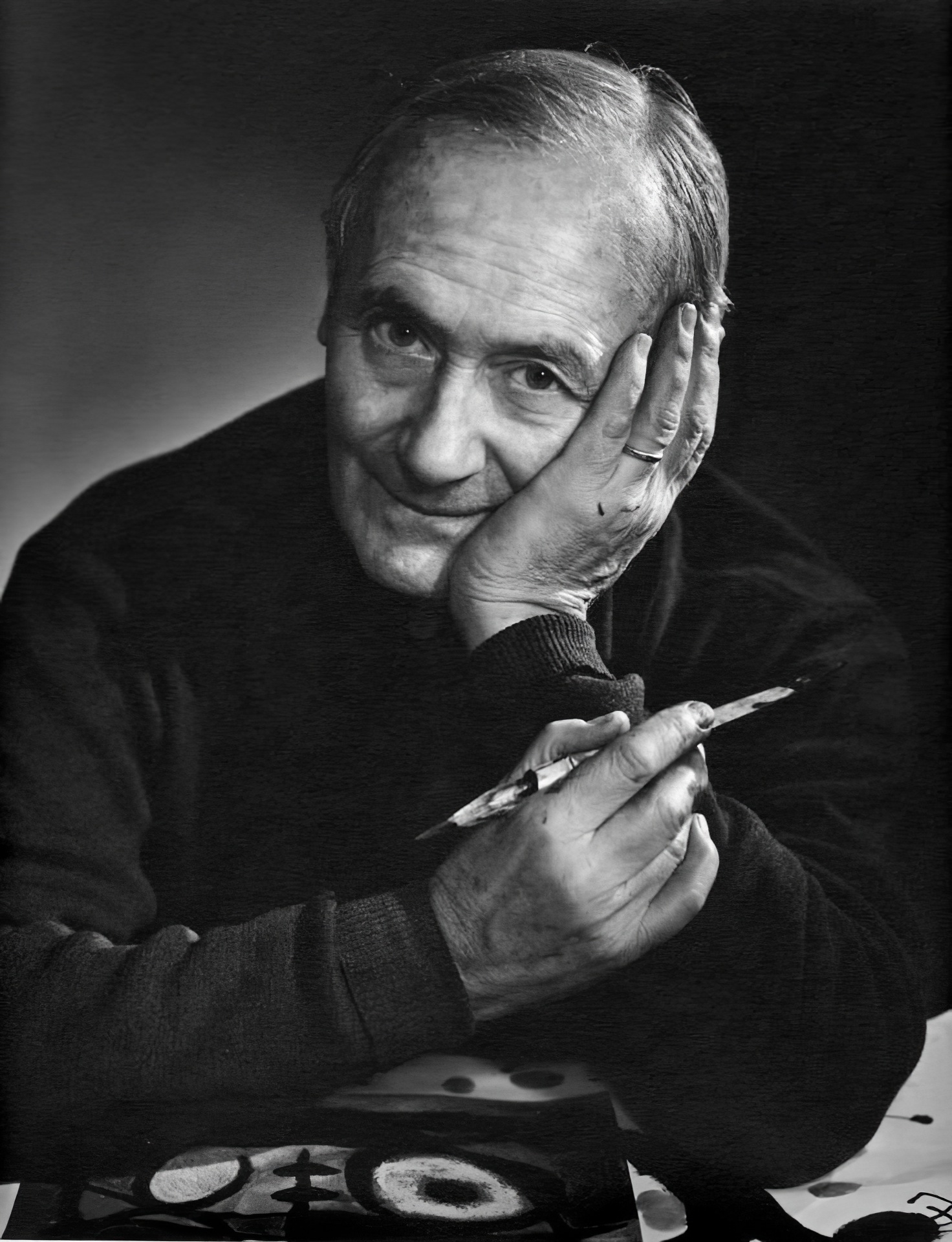
Joan Miró, a celebrated Spanish artist, was a master in painting, sculpture, and ceramics, renowned for his unique style that blurred the lines between Surrealism, Fauvism, and Expressionism. Born in Barcelona to a family of a goldsmith and a watchmaker, Miró grew up immersed in the rich cultural heritage of the Barri Gòtic neighborhood. His artistic journey began with drawing classes at the age of seven and continued at the prestigious La Llotja art academy. Despite an initial venture into the business world, Miró's passion for art prevailed, leading him to abandon his clerical career after a nervous breakdown.
Miró's work is noted for its exploration of the subconscious, often depicting a childlike perspective. This approach was both a critique of traditional painting methods and a means of expressing Catalan pride. His art, challenging to categorize, often featured symbolic elements and nationalistic qualities. One of his notable early works, "The Farm," reflects a transition to a more individual style, blending elements of his Catalan roots with broader artistic influences. This piece, later purchased by Ernest Hemingway, encapsulated the essence of Spain in its imagery.
In Paris, Miró joined the Surrealist movement in 1924, where his work began to reflect the influence of automatism, emphasizing spontaneous, automatic, or subconscious creation. He experimented with various mediums, including painting-poetry and collage, and even ventured into set and costume design for Sergei Diaghilev's Ballets Russes.
During World War II, Miró remained in Spain, and his work from this period, including the 22 Constellations series, reflected an interest in the night, music, and stars. His forms became increasingly abstracted, and he experimented with various techniques, often incorporating primary colors and evocative titles.
Miró's career spanned several decades, during which he continually evolved his style and explored new mediums. His contributions to art were recognized with numerous awards and retrospectives, including a major career retrospective at MoMA in 1941 and the Spanish Gold Medal for Fine Arts in 1980. Among his last major works was a tapestry for the World Trade Center in New York City, created in 1974.
For art collectors and enthusiasts, Joan Miró remains a figure of immense interest, not only for his distinct style and contributions to Surrealism but also for his ability to blend poetic imagery with political commentary. To stay updated on new product sales and auction events related to Joan Miró, sign up for our updates and immerse yourself in the world of this extraordinary artist.